
Trigger Sensors in RFID Production – Get It Right

Sep 06, 2023

In the past couple of years, I have been following several projects where the Voyantic Tagsurance systems have been integrated into production machines.  Surprisingly often, the biggest problems have been related to triggering – “seeing” accurately when a label enters the system. The experience even turned into a rule of thumb: “If something does not work correctly, first check the triggering”. I have realized that getting the triggering to work correctly is of utmost importance.

At the same time, I have been pleased to see plenty of new Tagsurance features that help to avoid challenges with triggering.  

In this article, I will discuss:

  • Why it is so critical to get triggering to work perfectly?
  • Why triggering can be difficult?
  • How do Tagsurance 3 features help get the triggering reliable?

Principle of Triggering

All (or most?) trigger sensors work with the same few simple principles:

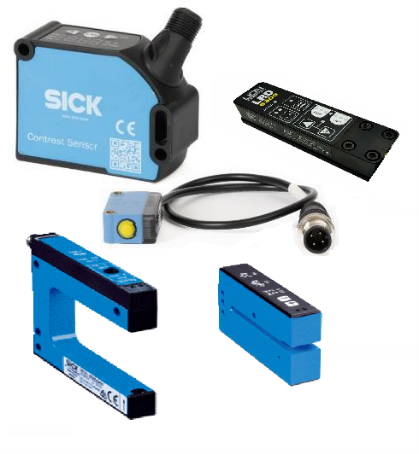
  • Each sensor has a physical parameter it monitors. Depending on the sensor type the parameter can be the strength of light of a certain color (through a beam sensor), amount of conductive material (an inductive sensor), darkness of view (a contrast sensor), darkness and shade of color in view (a color contrast sensor), and so on.
  • The sensor has a window of view.  It only senses the parameter within this window of view.
  • The sensor is trained/programmed to recognize when the parameter passes a threshold value. For example, if a view of a contrast sensor gradually turns from white to light grey to darker greys and black in the end, the sensor is trained to see a specific point in the continuum as the threshold point.
  • At the threshold point the trigger sensor’s digital output changes from 1 to 0 (or vice versa, or the trigger sends a pulse).
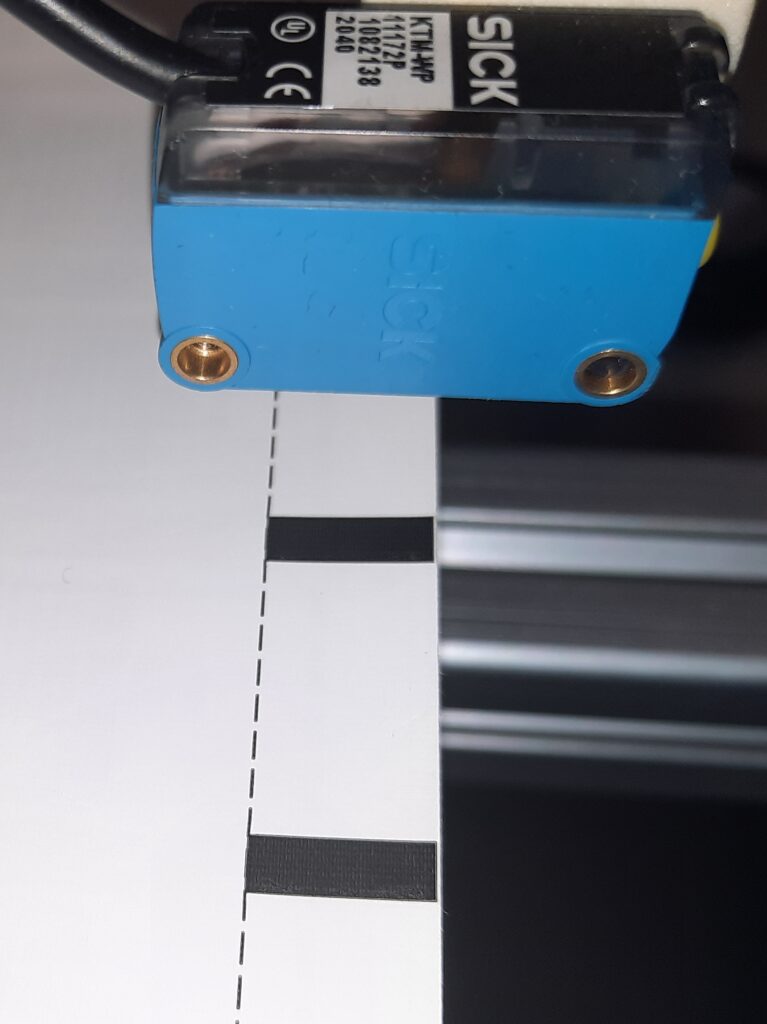
A contrast sensor is designed to see the edge between light and dark areas when the edge passes the window of view. In the sample, the labels have a printed trigger mark to make the triggering easy.

Why does triggering need to be perfect?

Any problem in triggering will affect the overall quality system performance, production machine performance, and production process accuracy and efficiency. Some triggering problems are obvious, some are more subtle.

  • Missed triggers
  • Double triggers
  • Not detecting missing labels
  • Suboptimal timing
  • Suboptimal positioning

If a trigger is missed on a tag, that tag flies through the machine undetected. It would not be tested or otherwise processed. It would not be recorded in production logs. It would not be counted to output quantity. But it would be on the roll and get delivered to the customer – free of charge, of unknown quality, and probably incorrectly processed. With a high likelihood, there would be problems awaiting the customer.

A double trigger is an opposite issue. One label is counted twice and attempted to be tested and processed twice. There is a high likelihood that one or both of the process actions fail. The customer would only receive one label instead of the two that were counted.  Counts, log files, yield data, and so on would be incorrect.

In some processes, a label can be detached from the liner. Recognizing these missing labels can be important for keeping the entire process optimal. The challenge is to notice when a label does not pass the trigger sensor when expected. A bit of smartness needs to be added to the trigger signals.

In RFID label production machines, there are usually only a few milliseconds to test an individual tag. Accurate results are based on the inlay being at the right position on top of the test coupling element when the test is made.  

In this example, a label can move 7 mm on top of the Snoop Pro coupling element while being tested. With 60 m/min lane speed, this gives 7 ms of test time. If 1 mm is wasted because of suboptimal or non-consistent triggering, the test time is reduced to 6 ms (about 14.2% less time available).

Why triggering can be difficult?

The root causes for triggering difficulties vary:

  • One sensor type may not fit each produced material.
  • The “edge” may not be clear enough for the sensor in use.
  • There may be multiple edges per inlay at the path crossing the window of view.
  • When the liner moves, it may also drift across the lane, or vibrate up and down.
  • Materials have imperfections.
  • With fast-moving material, it is not easy to see the exact position of triggering – optimization is difficult.

In RFID label machines typical materials to trigger are:

  • Inlays
  • Cut labels
  • Uncut labels
Cut RFID labels

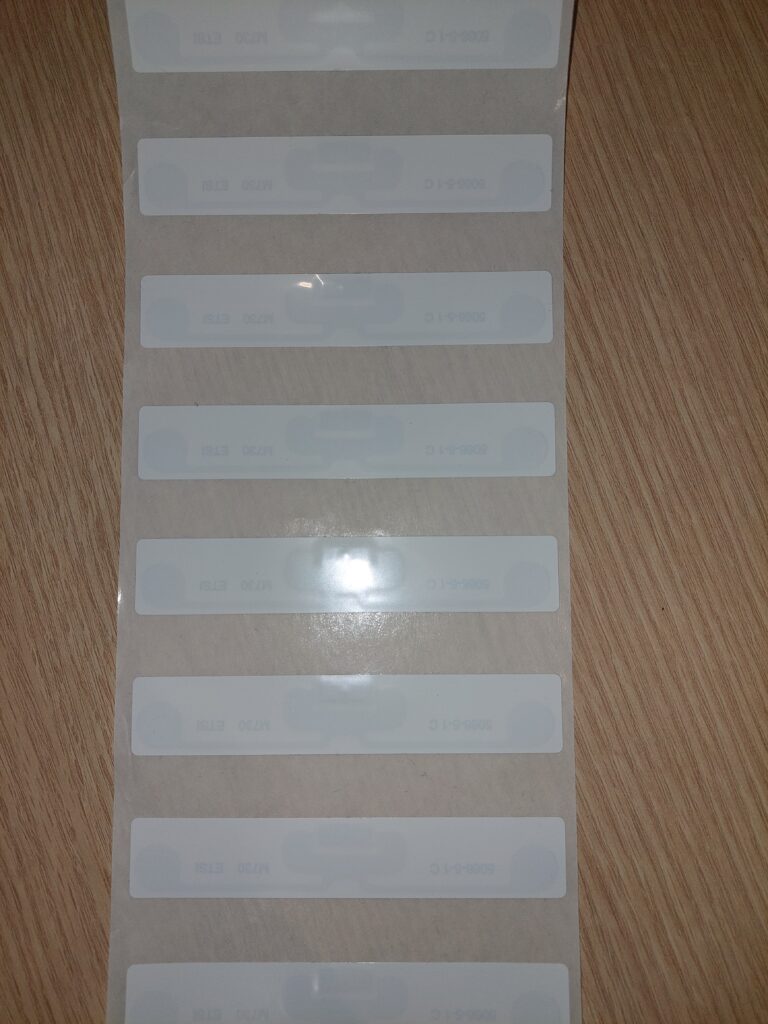
Cut labels are usually the easiest material with clear edges between the label and out of the label.  Triggering issues may arise, for example, if lighting conditions change. Glossy materials would amplify the difficulty. The issue is that the threshold position within the window of view can drift if the sensor receives a variable amount of light. If the color of the liner is close to the color of the label, detecting the edge may not work with a contrast sensor.

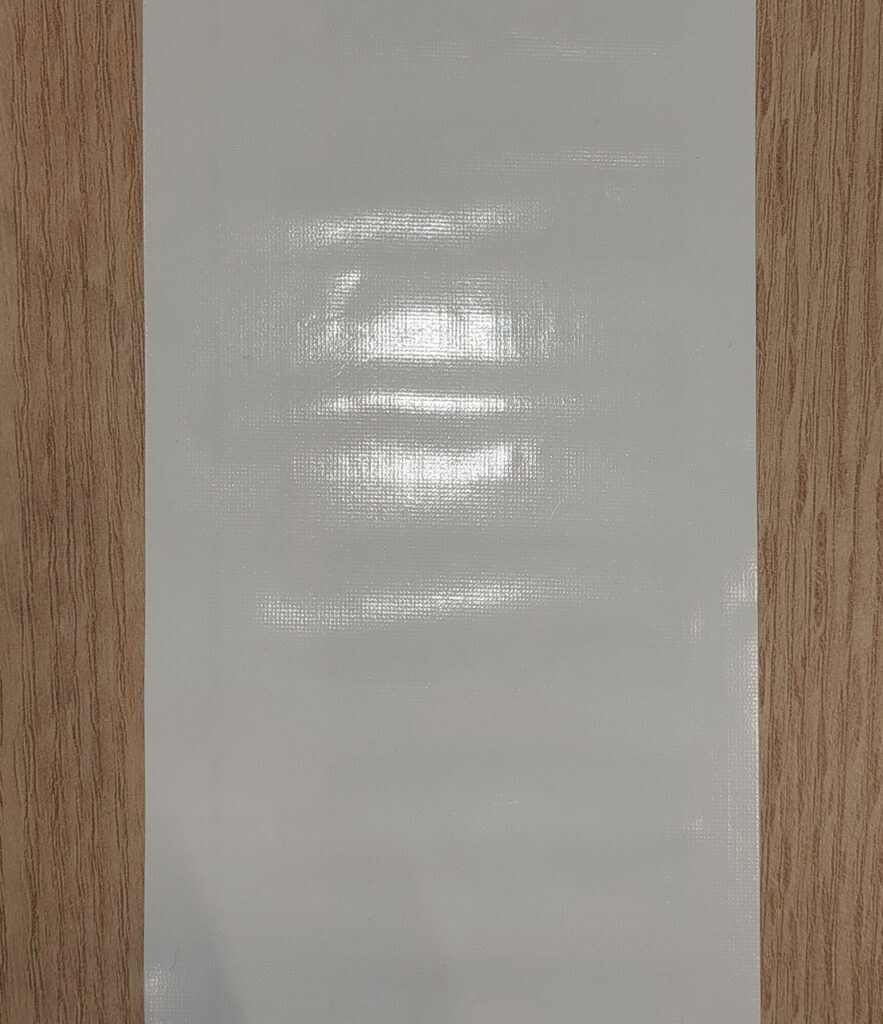
Uncut RFID labels. Note also material being wavy, this is a potential problem for accurate triggering.

Uncut labels without a trigger mark cannot be triggered with contrast sensors. Depending on the material a through-beam sensor or metal sensing inductive or capacitive sensor is needed.

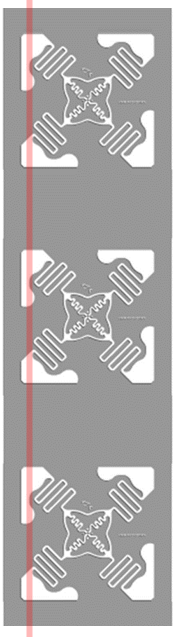
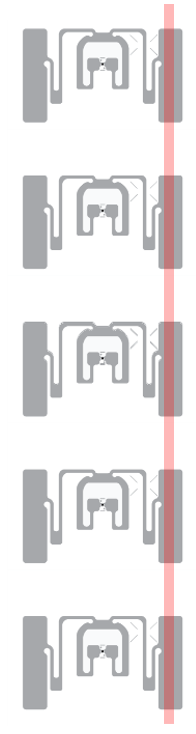
Inlays with no single-edge trigger path (multiple edges per label).
(inlay outline from www.tageos.com)

Some inlays (antenna on a transparent liner) may not have a clear trigger path, but the trigger sensor would fire multiple times per inlay. Sometimes the antenna shapes are small compared to the window of view, in this case, even the smallest drift across a lane could be a problem.

Inlays with a clear trigger path (inlay outline from rfid.averydennison.com)

In label machines lane speeds are typically tens of meters per minute and can be even hundreds of meters per minute. At high speeds, materials start easily vibrating. If the material happens to jump when the edge is in the window of view, there is a risk of double trigger.

Voyantic Tagsurance 3 system has several built-in features that help with triggering.

The Tagsurance 3 system has features that help in avoiding typical trigger problems. When used correctly, the Tagsurance triggering is 100% reliable.

Tagsurance 3 Triggering Features

The Tagsurance 3 features that help with triggering include:

  • Support of multiple sensor types
  • Advanced pattern recognition
  • Simulated triggers
  • Visibility on trigger performance
  • Strobe light

Tagsurance 3 Supports Multiple Trigger Types

Several types of trigger sensors can be used in the Tagsurance system. All these sensors are plug-and-play compatible with the Tagsurance system.

  • Contrast sensors (grayscale or color contrast) recognize differences in color or darkness, such as the edge between a liner and a label, as long as there is a contrast difference.
  • Through-beam sensors sense changes in materials’ capability to pass light, as long as some part of the material passes light.
  • Capacitive triggering senses edges between metal and non-metal
  • Ultrasonic triggers sense differences in material thickness
Several trigger sensor types can be used in the Tagsurance 3 system.

Pattern Trigger

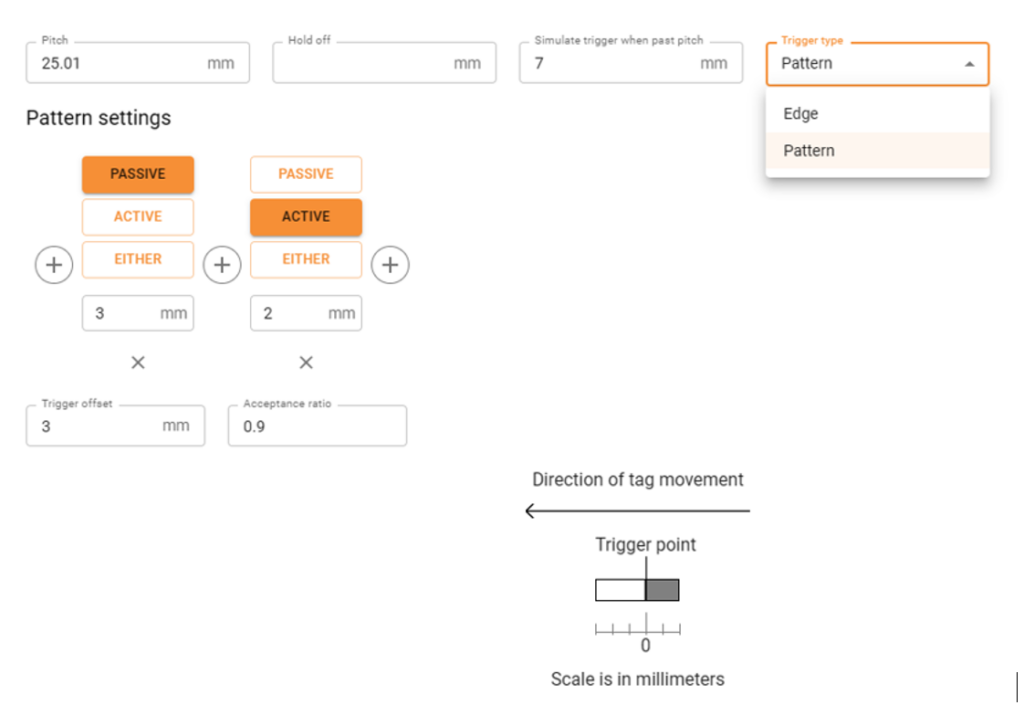
Pattern trigger is a feature that can always be used.  Defining a simple pattern has proven to be an efficient way to avoid double triggers regardless of the root cause. It eliminates double triggers arising from complex antenna patterns, varying light conditions, a vibrating liner, and so on.

An example of a simple pattern trigger settings.

The above picture illustrates settings defining a simple pattern. This pattern replaces a plain edge recognition, by expanding the edge. In this pattern, when the label passes the window of view of the trigger sensor, the sensor must first see 3 mm white, and then 2 mm color (trigger mark). When the defined pattern is seen, the trigger is fired at the actual edge position inside the 5 mm long pattern.

This pattern efficiently eliminates double triggers. If the trigger saw 2 edges – for example, because of liner vibrating, the pattern rule would not be met. This is when simulated triggering comes into play.

Simulated Trigger

In the above settings, the repeat length, aka pitch, is defined to be 25.01 mm, and a simulated trigger is generated after 7 mm has passed from the expected trigger position. The following actions are performed at the expected label position (and not 7 mm off).  

The trigger is simulated if the sensor doesn’t fire as expected, regardless of the reason. Reasons for not triggering could be poor-quality printed trigger marks, missing labels, lane drifting, or trigger patterns not matching the set trigger pattern conditions.

The simulated trigger feature fixes most of the issues causing the trigger sensor not to see the edge as expected.

The simulated trigger feature is also used in detecting missing labels.

Hold-off Distance

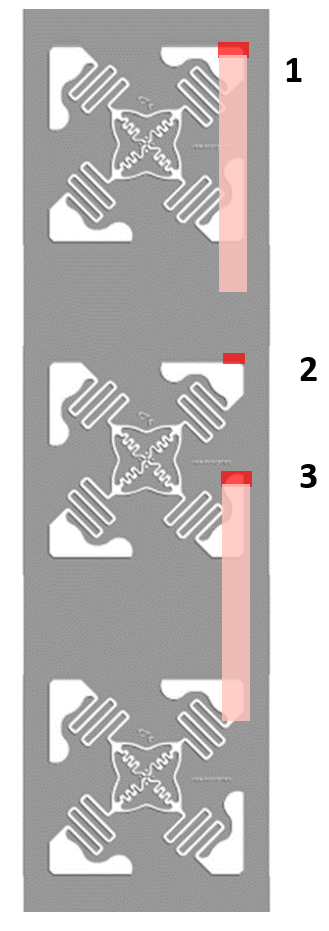
Another possibility to avoid double triggers is to set a hold-off distance. With this feature, a double trigger is discarded within the hold-off distance. For example, if a 0.5 mm hold-off distance is set, it eliminates most of the double triggers.

Hold-off distance should be used with caution when used to avoid double triggers in complex inlays.

Use hold-off distance with caution. In the example, an inlay is normally triggered on the first edge, and triggering on the second edge is avoided by setting a hold-off distance (1). But, if a trigger is missed (2), the triggering will permanently go off sync (3).

Visibility into Triggering

Tagsurance 3 system provides visibility on trigger reliability.  The trigger sensor view shows the actual repeat length as seen by the trigger sensor.

Trigger sensor view

In the above example, there is periodically one repeat that is about 0.5 mm longer than others. This 0.5 mm must be considered when optimizing the trigger position. An additional 0.5 mm safety margin must be used.

Trigger sensor view – missing label

In this example, the liner drifted and for a short period, triggers were missed. The scale of the repeat length changes for a while because of the exceptionally long trigger interval. Similarly, double triggers would be observed as exceptionally short trigger intervals.

Strobe Light

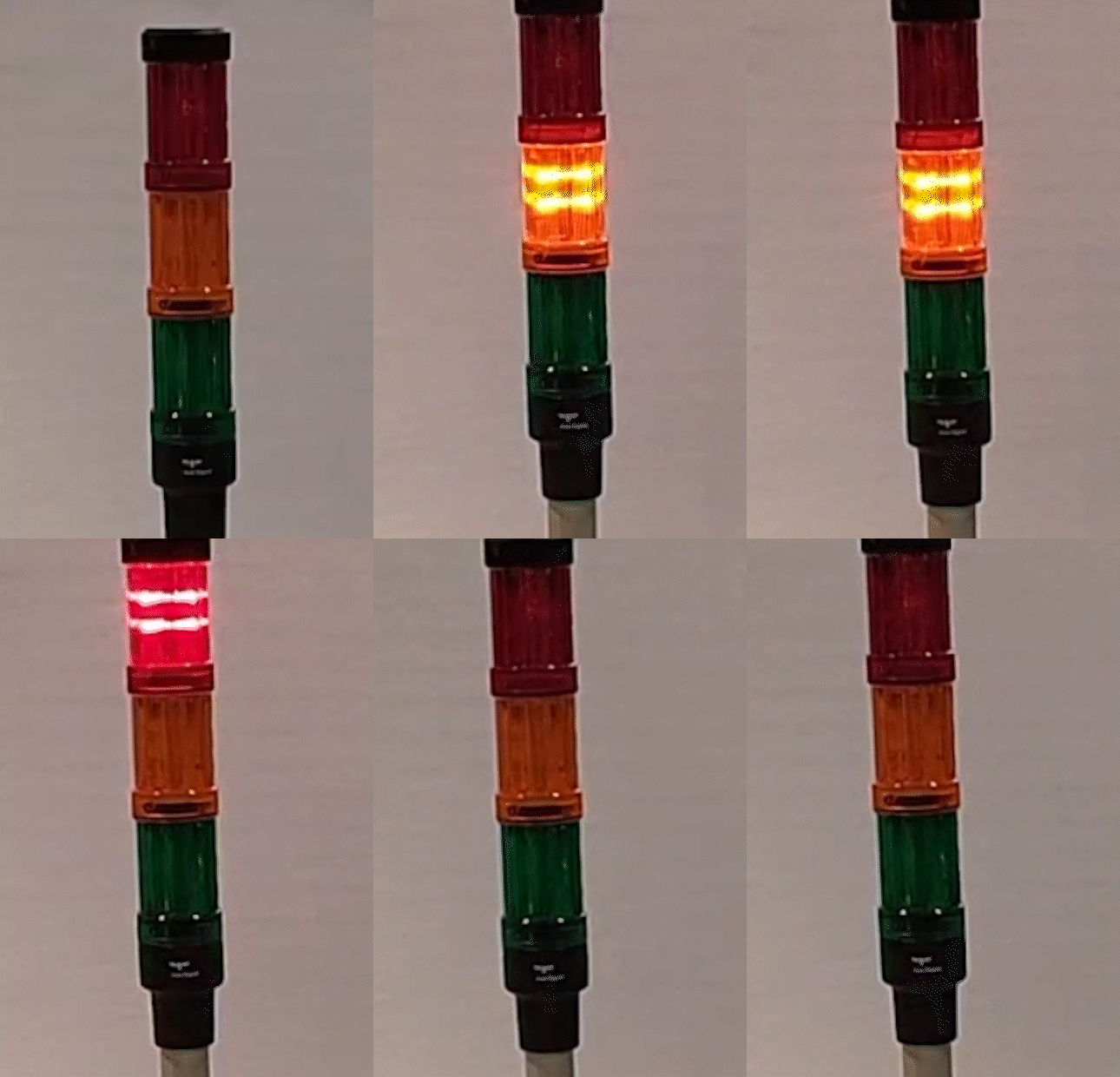
For optimizing trigger position Voyantic offers a strobe light that automatically synchronizes with trigger signals. The strobe light flashes whenever a label is in the test position. And because the human eye works as the human eye works, the strobe light shows perfectly where the label is on the coupling element when testing starts.  Optimizing trigger positioning becomes easy.

When the trigger position is adjusted in the GUI, the trigger mark shift can be observed with the help of the strobe light. (Note that the video with frame rate limitations does not do justice to the strobe light, the real-life view is even better)

Recommendations – How to Make Triggering Perfect

  1. Select a sensor type that matches the material.
  2. Use the pattern trigger feature combined with simulated triggering.
  3. Confirm reliable triggering with the trigger sensor view.
  4. Use strobe light to fine-tune the trigger position.

With the above principles, the trigger sensor will work perfectly.


See Tagsurance 3 in Action

Book an online demo

Fill in your details, and we’ll be in touch to schedule an online demo.

Why Label RF Quality Matters – Excellence in RFID

Aug 23, 2023

Summary

  • Bad RFID tag production quality = unacceptable variance in tags’ sensitivity = inconsistent performance / read ranges = unreliable RFID system performance = unhappy customers = bad for business
  • Quality can only be checked with professional RFID testing and quality control systems
  • Voyantic can help you improve design and manufacturing quality

Voyantic has published a lot of content about RFID technology, the market, and quality testing practicalities. But I wanted to understand what quality really means in RFID. And why should label converters and tag manufacturers care? Read on to find out what I learned.

Framework of RFID Tag Quality

The quality of RFID tags and labels boils down to RF performance – how consistent is the performance compared to the RFID tag specifications? RF quality cannot be seen with the human eye. Nor can the RF performance of a smart label or inlay be checked with any camera, x-ray, or machine vision. The quality can only be checked with RF (radio frequency) measurement system.

(Note: The other aspect of RFID tag quality, that will not be covered in this post, is tag data content. Learn more about tag data and encoding here: https://landing.voyantic.com/webinar-rain-rfid-encoding-for-barcode-professionals)

With that in mind, the following framework describes the levels of defining smart label RF quality, from design quality to documented production quality control: 

  1. Design Quality means fit-for-purpose
    RFID tags are designed for different use cases and applications. Good quality design means that the tag has the required performance and durability for the intended use case, taking form factor and unit cost into consideration as well. In practice, performance translates into readability and read range of the tag in the environment it was designed for: from how far the tag can be read, and from which angles, what type of items is it a good fit for?
  2. Tags can be functional but not-fit-for-purpose
    Taking a simple approach, the functionality of the tag can be checked with any reader – if the tag ID can be read, it is a functional tag. Sadly, this approach does not reveal aspects of quality, or if the tag meets the requirements or not.

    Consider an analogy to a tag functionality test from the automotive sector: at the end of a car factory line, someone only looks at and listens to the cars: “I see a car and hear the engine – Quality check ok!”
  3. RFID tester verifies that tags meet the specifications 
    A proper quality test measures the RF performance of the tag, preferably on the production line. Voyantic’s Tagsurance 3 RFID production quality control system checks the tags’ performance against pre-set criteria. The system gives a pass/fail result based on the requirements for each RFID tag passing through the system. 
  4. Knowing the production variance is the key to improving your process
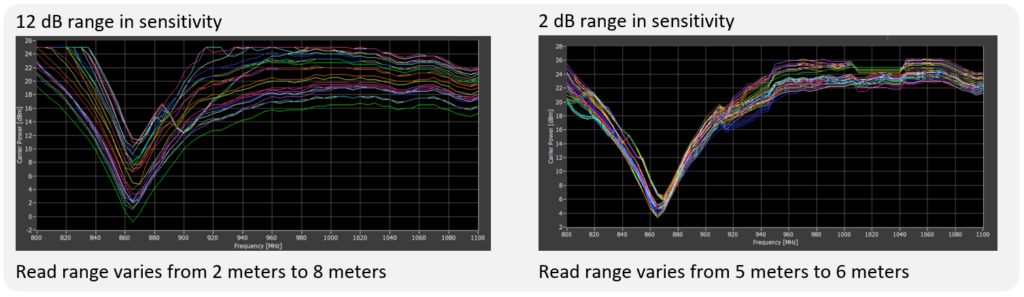
    Quality testing also reveals the variance in the tested tags’ performance. The variation in the tags’ sensitivity in practice means the differences in the tags’ read range. Tag sensitivity is the measure of how much power is needed to wake up a tag. Variance is inherent to mass production – manufactured tags are never perfectly identical. Quality requirements set the acceptable variance limits for the tags’ sensitivity, ensuring they meet requirements for consistent performance, i.e., consistent readability of the tags.

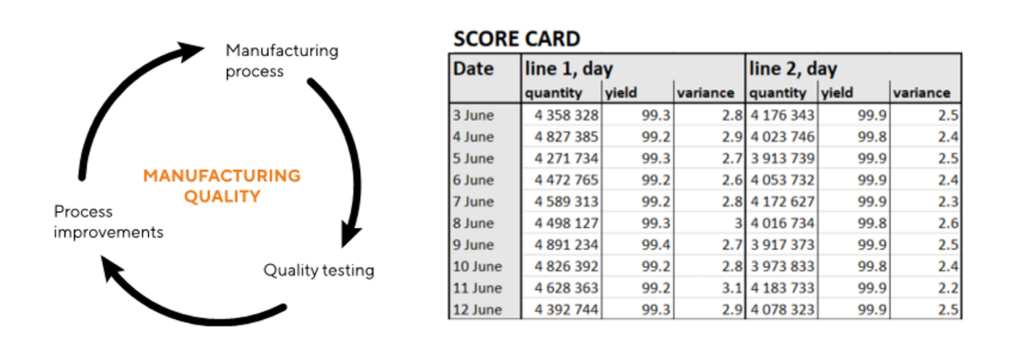
    Knowing the variance is essential for internal development: for discovering good practices, and making comparisons – comparing machines, production teams, materials, settings, and so on.
  5. Customers expect proof of quality
    The highest level is to be able to prove the quality in detail. A professional quality control solution automatically records a log of all tests with the tag’s unique codes along the log data. This record can be used to prove the quality of the production batch and to prove the quality of each individual tag.
Testing in RFID inlay and label production is required to verify the produced tags meet the designed sensitivity.

Why Quality Matters…

…for the RFID system end-users?

Variation in sensitivity causes the readability of the tags to vary. Differences in tags’ read ranges lead to missed readings, and ultimately, decreased reliability of the whole RFID system.  High variation in tag sensitivity also indicates variation in durability – some tags may last longer than others. End users will not be happy to see the reliability of the RFID system decrease.

Customers expect consistency and for each tag to perform according to its datasheet information. As customers’ knowledge and experience of RFID technology increases, they also expect a documented quality program and, in some cases, require documented proof of quality from the tag supplier, and even compliance with a quality standard. 

…for manufacturing?

Quality management is the bedrock of RFID inlay and label manufacturing. A complete RFID quality control system gives visibility into the production process to catch production line issues early on before more tags start to fail, thus reducing waste and improving yield. 

The statistical quality data also enables comparing machines, production lines, and shifts. Good practices can be adopted, and poor performance can be addressed, improving the overall efficiency of production.

… for management?

A company’s top management typically focuses on the long-term growth and profitability of the company. High-quality products contribute to customer satisfaction, thus helping to drive more recurring sales revenue. Higher production yields, reduced waste, and increased production efficiency also contribute to better margins.  

The measured quality data is the basis for continuous operational improvements and long-term profitability. In practice, data enables optimizing investments: Which machines and materials work the best, and where there is room for improvement?

The Cost of Bad Quality

As the industrial scale of a company increases, the importance of good quality and reliability gets to a whole new level. Two very typical use cases for RFID are inventory tracking and supply chain management. Big brands and retailers may have hundreds of millions of items tracked and traced with RAIN RFID throughout their supply chain and retailer networks. If you consider, for example, that 1 percent of the RFID tags used to track items do not work well, that doesn’t initially sound too bad. But when you are tracking hundreds of millions of items, 1 percent translates into millions of products being lost from inventory tracking and considered stolen, wasted, or otherwise unaccounted for. 

The Experts in RFID Testing and Quality Control

Voyantic’s core business is to measure the performance of RFID tags and inlays – to help our customers make sure every delivered tag works right, and enable engineers to make better products. Our vision is that every RFID tag and label have been tested and verified in the production process with our quality control system

Get in touch to see if we can help you with your RFID projects!

Learn more:

Testing Tags for ETSI EN 302 208

May 05, 2023

We are getting a fair amount of questions on “how to approach ETSI EN 302 208” and I figured I would first give you all the painful details and then summarize what I believe is the right advice. My message is: EN302 208 testing can be made really fast and easy. Read on to find out how!

A bit of history

Right from the early days of the European Union and the UHF band RFID, the “EN 302 208” has been the well-known and unified standard describing how to set up and test RFID equipment to be declared as radio devices in Europe.

The first version was published back in 2004 describing reader requirements, but also briefly touching on the subject of RFID tags by setting a limit for their out-of-band spurious emissions. Most probably this was taken more as input by reader designers to limit Back Link Frequency (BLF) in their ETSI mode, and not really as impacting the work of tag designers. After all, it’s the reader that sets the carrier frequency, and power level and has command over all of the tag’s settings, right?

Well, nine standard versions later we are now at v3.3.1 which has limits for both tag out-of-channel emissions as well as outright limits for backscatter levels both for the ~865 MHz “lower” and ~915 MHz “upper” band ETSI channels. In the last few years, tag manufacturers’ interest to produce and offer labels fulfilling the standard has steadily grown. Most probably as a result of RAIN technology entering new market verticals with longer and stricter traditions of following all kinds of standards.

Feels a bit complicated, why is it so?

The standard has been a tough one for tag manufacturers to decipher as it is written in the form of a traditional EMC standard talking about power spectral densities, transmit masks, and resolution bandwidths.

This makes it harder to compare the limits against more typical RFID tag results that we have gotten accustomed to, such as “power on tag reverse”. However, the greatest layer of fuzziness comes from the fact that the standard is a generic standard, as it understandably needs to be, providing absolutely no help in associating the tests with RAIN technology, GS1 Gen2 protocol, and the equivalent ISO counterpart 18000-63 that 99% of all the UHF tags utilize. This unfortunately leaves a lot of room for interpretation.

The actual test to be performed, according to the standard, sounds relatively straightforward: 1) Radiate the tag by a field strength equivalent to 2W ERP from 20cm away. 2) Record the tag’s modulation spectrum. 3) Compare against limits. Well, a tag doesn’t backscatter anything on its own unless a proper command is given. So, a command is needed in the form of Query, Query+Ack or Query+Ack+ReqRN+Read. For the lower band a BLF of ~300kHz should be targeted and for the upper band ~600kHz. In Gen2, these in practice will often be rounded up to 320kHz and 640kHz as those are the frequencies that all tag ICs can divide their clock down to. The problems arise trying to capture the tag’s response with a spectrum analyzer. The response is always very short, typically only a few hundred microseconds and inconveniently only some 30 µs apart from the immensely more powerful command itself. Accidentally analyze any part of the command or any part of the silence after the tag’s answer and the outcome will be hugely incorrect.

So what is left for interpretation?

According to the standard, the answer should be recorded with a resolution bandwidth of 1kHz around the carrier frequency. This indirectly implies that the answer should be much greater than 1ms for this to be even theoretically possible. So, the exact correct resolution bandwidth can rarely be used except for some high Miller modes in combination with the lower ETSI band’s lower BLF.

This brings us to the perhaps biggest question: Which modulation type and data content should be used in the tests, and is the test supposed to be passed for all of these modes, a typical one, or for any selected single mode of use? The difference in passing or failing the test can be as big as 15 dB between these several modes! In simple terms, a tag that always modulates with a fixed amplitude between the same two impedance states while backscattering will always produce an equal amount of total backscatter power. What is different, is how spectrally spread or focused this power will be. And for the ETSI test, what is recorded in the end, is the strength of the peak spectral feature. So, it will be much easier to pass the test with the power spread across the frequencies as evenly as possible. 

Let’s compare the spectra

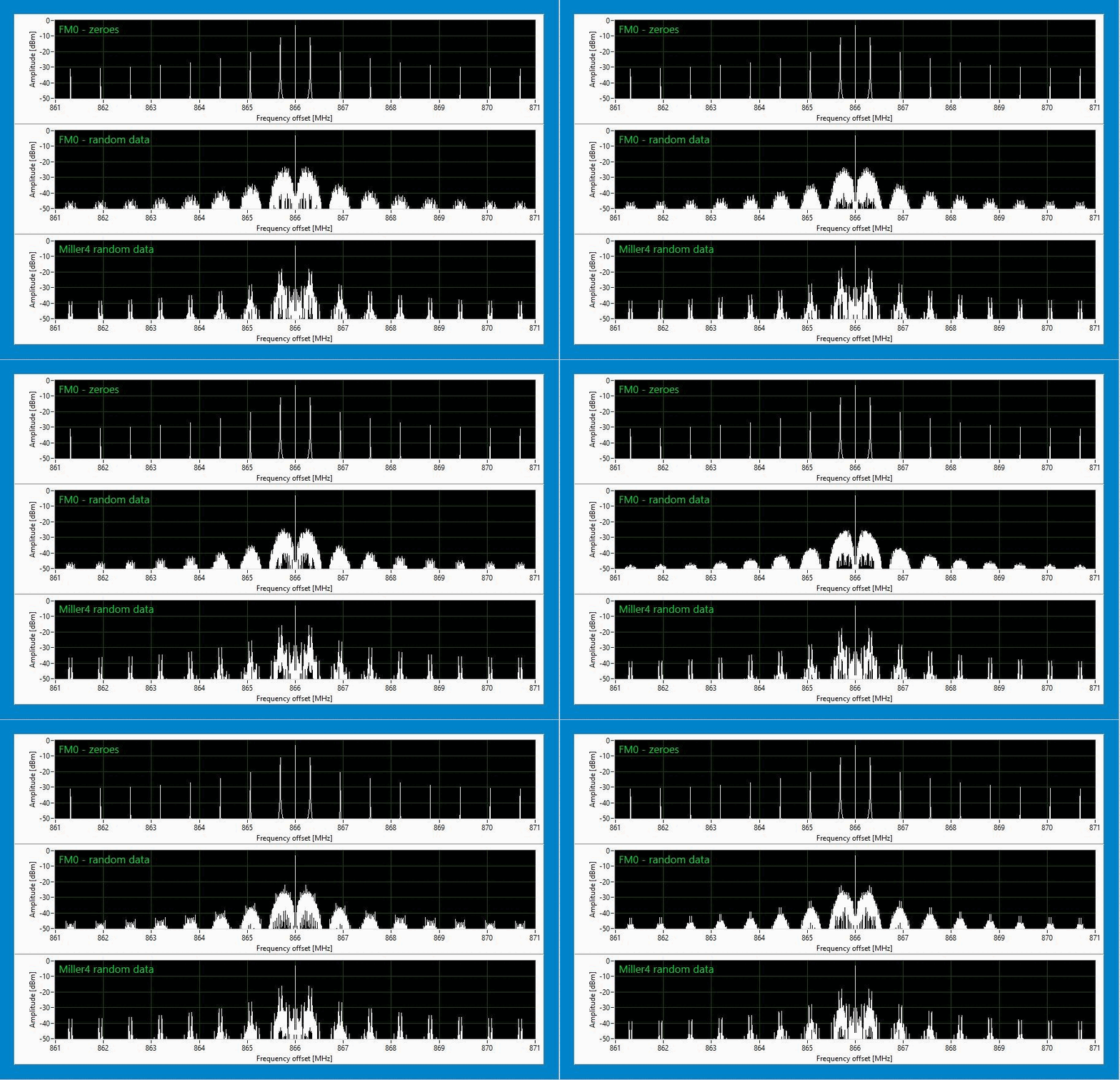
The absolute worst case for the ETSI tag emission test will be a “continuous square tone”. That is, a symmetric square wave modulation as in the case of sending a long train of data zeros with FM0 decoding. The same square wave modulation also happens in the miller modes when the extended preamble is requested by the reader. The square-wave backscatter modulation of the tag will create a Fourier-series type of spectrum with almost all of the power concentrating on exactly carrier +/- (n*BLF), where n is an odd integer. This is the absolute most difficult mode to pass the test with and that’s why in the Tagformance system this is referred to as the “worst case” from release version 13.5 onwards. Pass this and you will pass everything else too with no need to test for anything else.

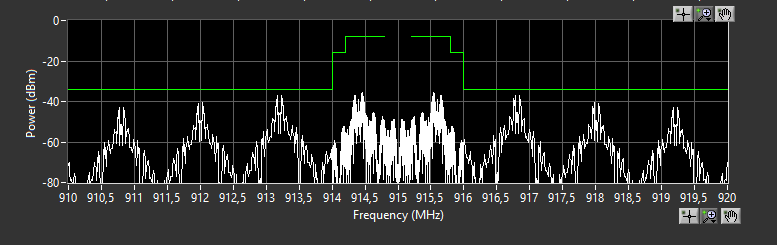
Comparison of spectra of equal power backscatter signals with different coding type and data content.

Ironically, if FM0 is the “worst case” to pass, it is also the “easiest case” when the packet data is randomized. Having a roughly equal distribution of zeroes and ones in random patterns will with high probability create a very spread out spectrum. A spectrum with no predictable high peaks which could breach the mask and fail the test.

Somewhere between the worst and easiest cases fall all the Miller modes producing their tell-tale double-peak “rabbit ear” spectra. Miller modes, ranging from M2 through M4 to M8, are often favored by the readers for their decode sensitivity. This is why we have chosen the M4 with a randomized data packet to be our most “typical case” for tag emission testing.    

The Voyantic way

Currently, Voyantic offers two approaches in the Tagformance system to test for tag emissions. The perhaps more traditional and thorough approach makes use of a separate calibrated Rohde-Schwarz spectrum analyzer which is synchronized to the Tagformance system to record just at the correct moment and for the correct duration to hit the tag answer.

The alternative method is the “simulated spectrum” method, as it is referred to in the Tagformance user interface. Despite its name, it is a tag measurement, where the tag backscatter is measured for amplitude and frequency. The point where a measurement turns into a simulation is when the measured parameters are taken to recreate a prototype of a waveform, the spectrum of which is then evaluated against the mask limits. The simulation assumes a sharp backscatter modulation between two discrete states utilizing a random data packet which is selected to be as average and representative as possible. This is very close to reality, and what is important, is that the reality can only be more forgiving. So, if you pass with the simulation, you will pass in the spectrum analyzer measurement too. The great advantage of a recreated data packet is that it can be created to be of any suitable length and thus analyzed with any resolution bandwidth.

A simulated backscatter spectrum in relation to the ETSI limit in Tagformance. A finer ResBW of 1kHz is used in the central 2MHz according to the standard.

Conclusion

An easy option is to take the EN302 208 testing as a part of the design process as the testing can be made really fast and easy. It is adequate to use the simulated mode as in reality, things are not going to be worse. So if you pass, you pass.

This really means that the measurement system and setup are exactly the same as you would use for tag measurements.

Using Tagformance Pro and a Voyantic measurement cabinet, the result is just a few clicks and a few seconds away at any given time. Simply place the tag on the measurement platform as you would with e.g. threshold or read range measurements and run the tag emission test.

Finally, Just wanted to take this opportunity to mention that our C50 cabinet has a really nice very-low-echoic rotation system, and having a Tagformance Pro and C50 on one’s lab enables truly complete measurement capabilities from basic frequency response (threshold, read range) measurements to EN302 208 and ARC pre-testing. All in one system, easy to buy and use – and to maintain for several years to come.

Ah, one more thing, get the latest version of Tagformance Pro UHF software to have the well-recommended “typical” simulated results at your disposal! No spectrum analyzer? No problem!

NRF 2023 Recap – Inventory Management is a Priority and Self-Service Increases

Jan 19, 2023

After two years of idle time I attended the NRF Big Show in New York from 14th to 17th Jan 2023. Three full days of walking was definitely worth the effort. My takeaways from the event are as follows:

Liz Ann Sonders: GEL and demographics

The clarity and reasoning by which Liz Ann Sonders, the Chief Investment Strategist of Charles Schwab & Co., Inc., presented her views on the state of US markets and economy were unprecedented. I made two pages of notes and became her fan. 

Her message in a nutshell as understood by me: the world has exited the era of cheap Goods, cheap Energy and cheap Labour (GEL). That change will also affect the balance of power between capital and labour. For the last 20 years, capital has had the advantage. Going forward, much of the power will transfer to labour.

Factors are numerous, and demographic development is an even stronger force than inflation or the rampart war in Europe. The outcome is that digitalization continues and supply chains will be more carefully managed than ever before.

Outlook of the retail market (Sonders cont.)

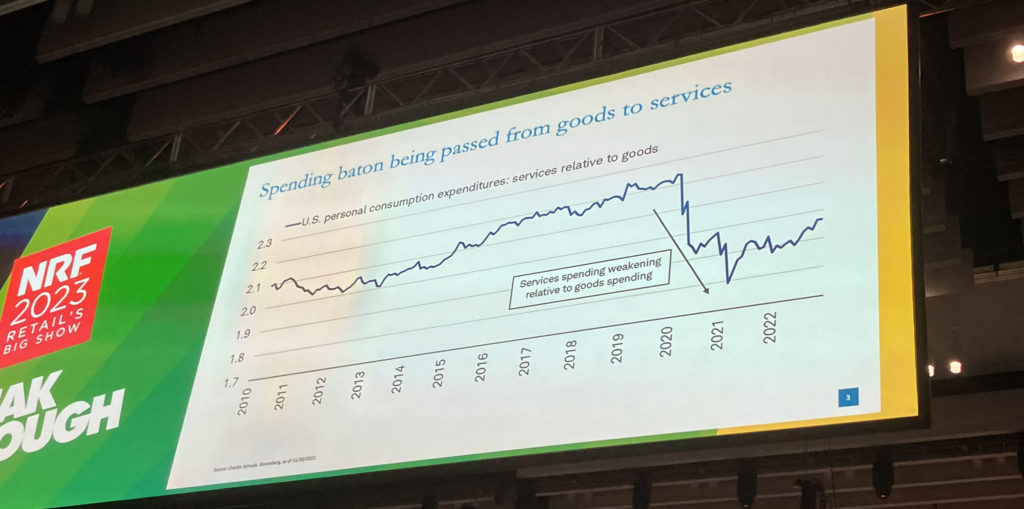
While consumer confidence has gone down, the savings rate has been high because of the fiscal stimulus during the pandemic. Due to the accrued excess savings, consumer spending still continues at a high level, but the notable change is the spending baton that is being passed from goods to services.

As a result, many retailers currently carry excessive inventory levels. The industry will work through that, but by now many have learned to be cautious against excess inventory.

Remember this driver (Sonders cont.)

The change in demographics has already shaped many industries in Asia and Europe. Automation and digitalization will increase, due to the increasing struggle to hire and retain the hands that do the manual work. The long-term driver to learn and remember therefore is labour shortage.

Observations from the exhibition floor

I saw more self-service check-out counters being promoted than in prior years. Additionally, the count of robot demonstrations impressed me. Robot applications range from warehouses to shop-floor replenishment, and from inventory scanning to customer service.

The increasing usage of automation obviously makes companies more resilient against labour shortage. It also helps in talent retention, as more time is spent on creative and complex tasks.

Outlook of the RAIN RFID market

(For simplicity, I will discard demand forecasting as it has little to do with RFID.)

Inventory control requires supply chain management, and today’s supply chain management leans on item-level traceability. For technology vendors, the welcome result is that the demand for RAIN RFID technology remains at a high level. What I also heard several label suppliers state is that after a few agonising years, the supply of RAIN RFID tag ICs is getting better. Lastly, I heard the adoption of this technology is finally taking off big time in the logistics industry.

Folks, we are in the right business.

Label-based tagging keeps on increasing

On a high level, several tagging approaches are available: sticker-type labels, hang tags, rugged tags and embedded tags. Labels and hang tags fulfil the scanning requirements of supply chains, and the scalable supplier ecosystem efficiently supports the approach.

I came to estimate that the yearly RFID labels production quantity is already enough to wrap the whole Javitz congress center with RFID labels for its outer surfaces.

At the NRF what I didn’t hear American retailers talk about was product life cycle traceability, digital product passport, and digital twin. They seem to be concepts of the future, which marks a major difference compared to European retailers. I am curious to see if EuroShop presents a different tone.

RFID applications closing in on the US consumers

Millions of American consumers that work in the supply chains already use RAIN RFID every day. At work, they have learned to appreciate the efficiency and convenience that RAIN brings. My question goes: when will they start requesting the same efficiency and convenience in managing their personal inventories and households?
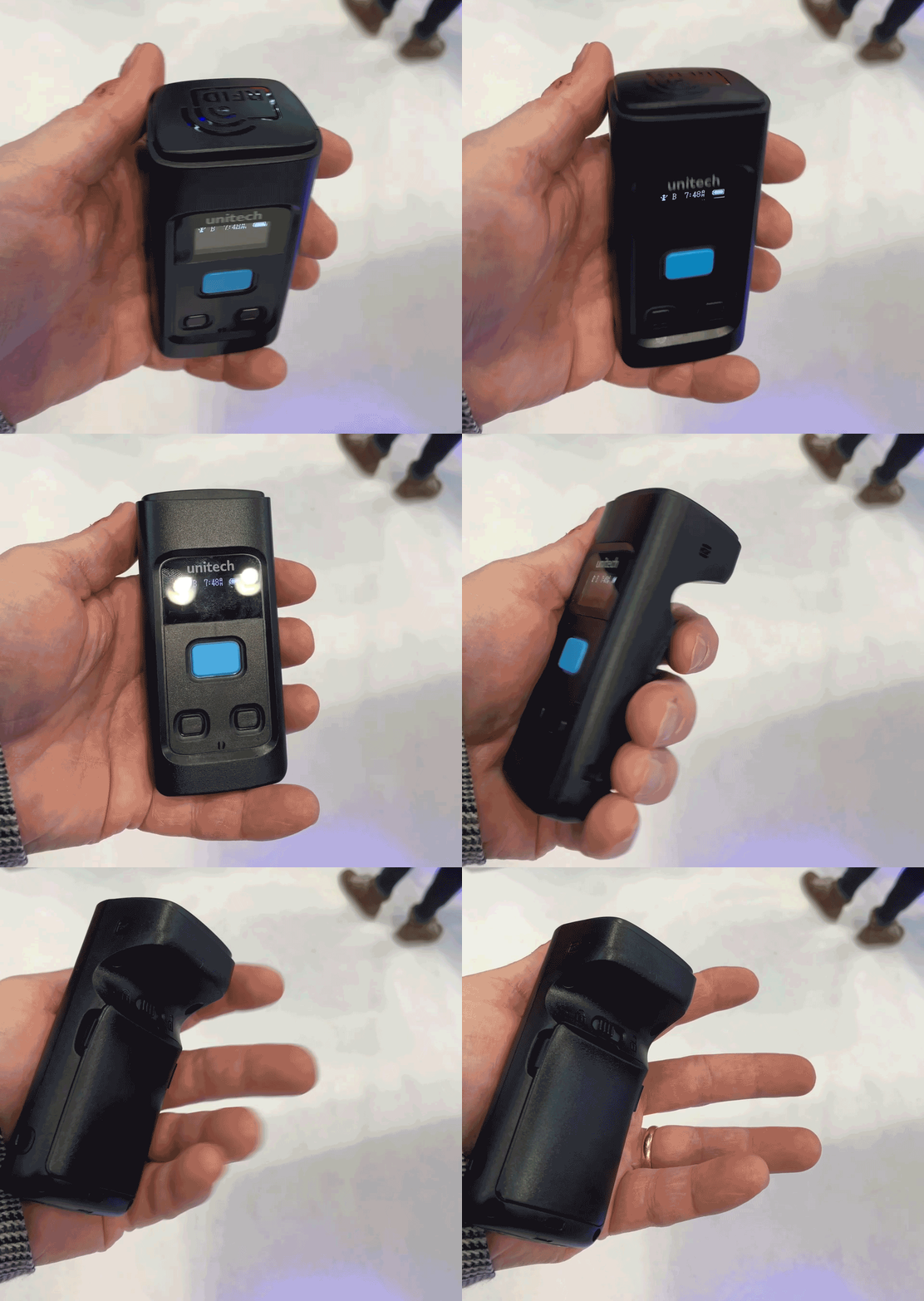
I gather that the world is becoming ready for such a leap as more consumer-friendly RAIN RFID reader products are finally emerging. Sledge-type of readers, that attaches to your smartphone, have been in the market for years already. Recently more slick and  pocket-sized alternatives have been launched, just have a look at the BlueBird VX500 and Unitech RP902. The former is a RAIN-enabled smartphone, and the latter device connects to Android and Apple phones wirelessly.

I believe these products are game-changing as they expand the usage of RAIN RFID well beyond the supply chains and point-of-sale. As the embedded and durable tagging of products increases in the coming years, I am sure consumers find delight and convenience in RFID also outside of their working hours. 

Passive Bluetooth 

Wiliot was already a familiar name from several prior industry events. Wiliot is an IOT platform that connects BLE-based sensors, “IoT Pixels” as Wiliot calls them. The sensors carry an ID and sensing capabilities. The sensors don’t require a battery, instead, they harvest energy from nearby transmitters, which makes them relatively cheap and small, practically stickers. Additional gateways pass the encrypted sensor data to the cloud.

The difference to RAIN in Wiliot is that the IoT Pixel data can only be accessed via cloud. Wiliot runs a SaaS business. The Bluetooth infrastructure and consumables are relatively cheap, and a Wiliot system is easy to set up.

Three additional findings from the exhibition floor are worth mentioning:

  1. Another company Nexite also utilizes BLE technology and follows a similar SaaS business model
  2. There is an emerging paper-thin ecosystem of suppliers that produce Wiliot labels. 
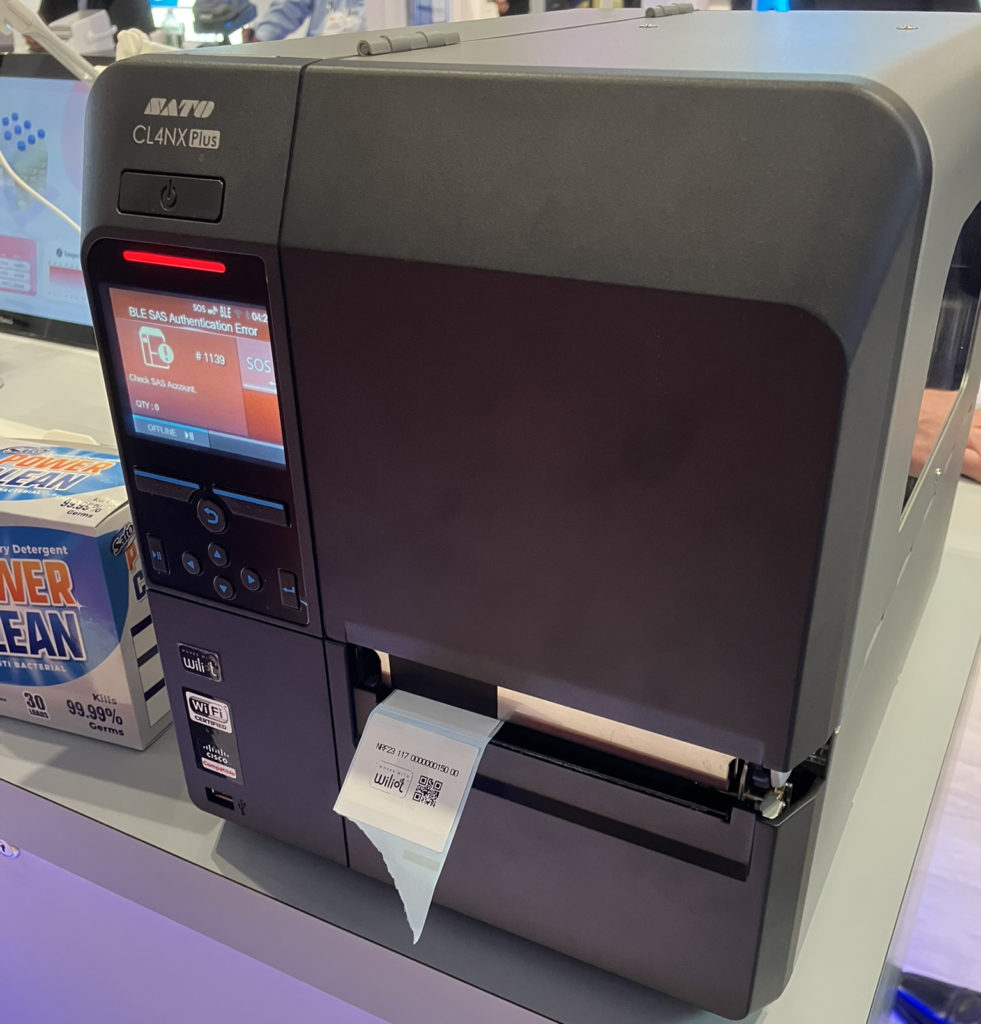
  3. I came across a Wiliot-enabled prototype printer.

In my assessment, passive Bluetooth is in its infancy the same way as RAIN RFID was 20 years ago. Technology itself is demonstrated to work, although practically the sensors cannot yet be read with smartphones. All in all, I remain curious to see how passive Bluetooth takes off.

Final thoughts

The NRF Big Show is overwhelming in its size and range of content. After three days at the exhibition and conference, I was left with a warm comforting view that the growth of the RAIN RFID market is set to accelerate. It is a very exciting business to be in. 

Upper European RAIN RFID Frequency Band Increases Adoption

Nov 10, 2022

How cool is NFC in that it simply works all over the globe: 13,56 MHz everywhere? How cool do you think it is, that RAIN RFID today enjoys the same: several reader channels between 902 and 928 MHz on all the continents!

Status up until 2018: two regulatory regions with no overlap

Traditionally, the end users and RAIN solution providers have accepted and adapted the fact, that in Europe RAIN deployments have been limited to operate at the 866-868 MHz range, also known as the ETSI range, where the four reader transmit channels are. The rest of the world utilized reader transmit channels somewhere between 902 and 928 MHz – the so-called FCC range.

The EU decided to harmonize the RAIN RFID band in 2018

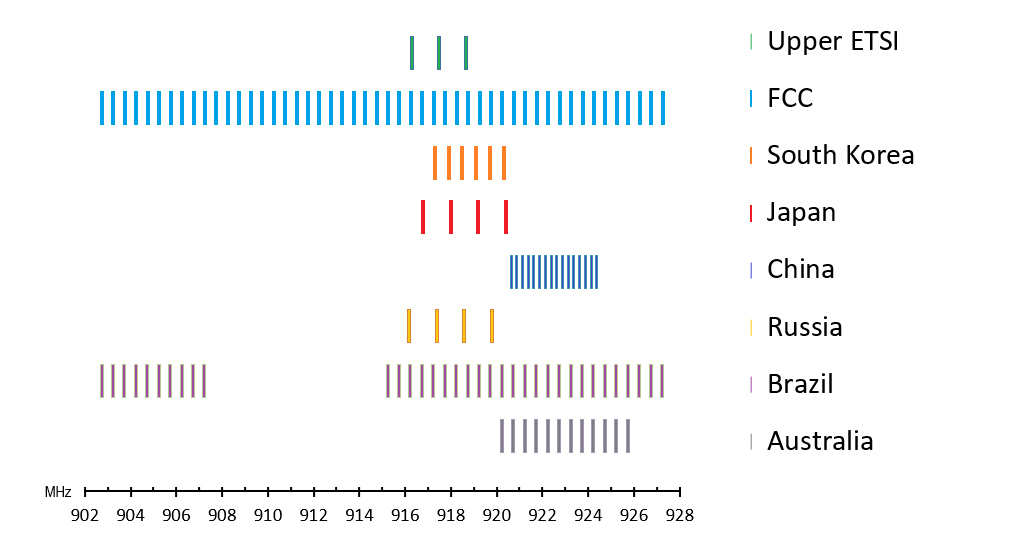
After years of CEPT (short for European Conference of Postal and Telecommunications Administrations) technical studies and mounting pressure from the RAIN end users, the Commission Implementing Decision (EU) 2018/1538 specified three reader channels at 916,3 MHz, 917,5 MHz, and 918,7 MHz. The Commission also defined the implementation deadline as 1st February 2019 but acknowledged several exceptions for existing regional radio systems, such as military and railway deployments.

The picture above shows how well the European new RAIN RFID reader channels fit among the other global regulatory regions.

Status today: 902-928 MHz covered by a grand majority of countries!

As we study the RAIN RFID regulatory status document maintained by Mr. Craig Alan Repec of GS1 Global Office, out of the listed 81 countries with known status, 55 offer RAIN RFID reader channels between the band 902 – 928 MHz. Out of the CEPT 46 member counties, 25 have partial or full implementation for the upper European RAIN RFID channels, and that number is rising every year.

Performance benefits are significant

As one looks behind the numbers, you come to realize that specifically, the upper European band is wonderful news: more of everything! 

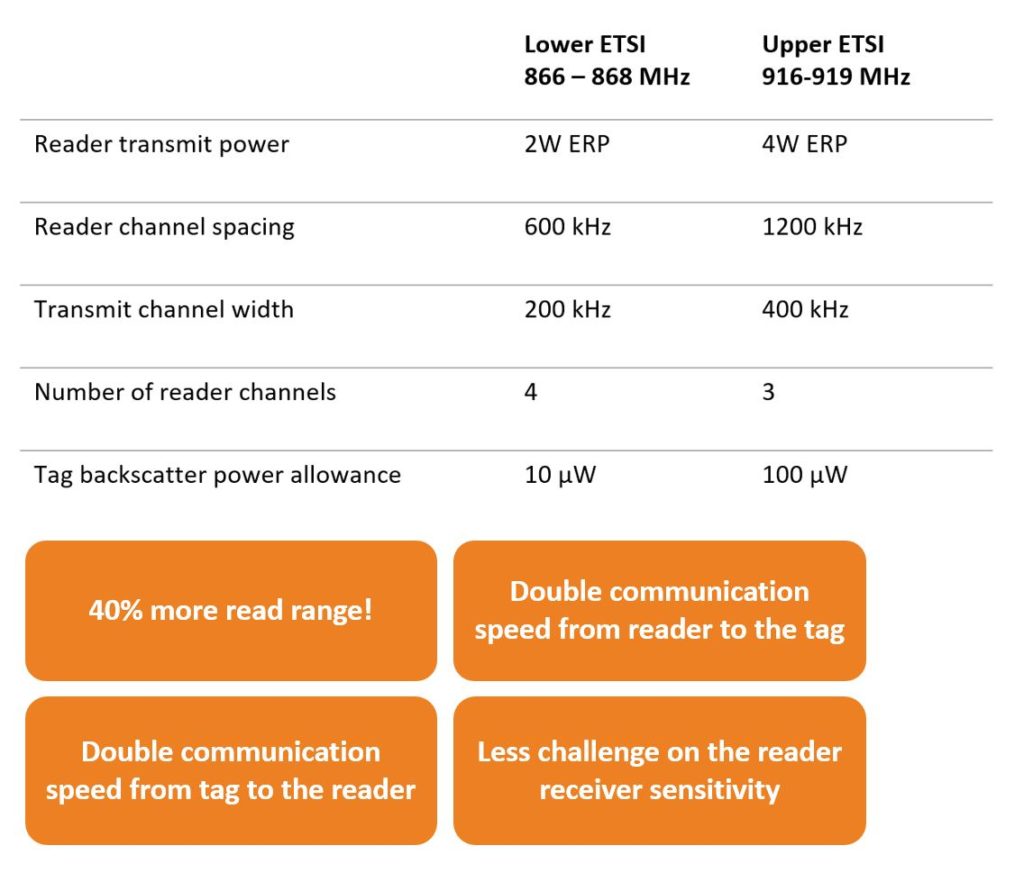
Comparison of lower and upper European RAIN RFID frequency channels

“The upper European frequency band definitely offers dramatically more wiggle room for RAIN engineers to optimize system and component designs,” says Dr. Jesse Tuominen, the CTO RFID of Voyantic.

Business benefits 

As most supply chains are global, it makes sense to keep the RAIN tagging specs at 860 – 930 MHz. This way tagging is responsive all around the globe, which adds simplicity to the deployments.

In certain applications, it might even make sense to narrow down the tagging specs to 902-928 MHz, as tagging and reader antennas can be further optimized for performance, footprint and, ultimately, cost. I believe this opportunity is especially interesting in applications, where there are severe space or area constraints for either the readers or the tagging.

What’s up with the slow adopters

Well, all I can say is that the RAIN RFID end users in Germany, the Netherlands, Croatia, Greece and a few other countries are in a totally unfair situation – they are outliers that remain limited to the lower European RAIN frequency bands for the time being.

For future-proofing RAIN RFID deployments also in Germany, please prepare to upgrade systems to support the Upper ETSI frequency band.

Having said that, I foresee that nuisance to eventually pass. My advice is to prepare to upgrade deployments as those reader channels become available later on. Practically that means requiring the deployments to be compatible with and upgradeable to the 915-917 MHz in the RAIN project specifications.

Bottom line: use the upper European reader channels and be appreciative of them!

The awareness around the global harmonized RAIN frequency band has been slim. However, numerous end users are embracing it. “Most of the main RAIN users in France have declared they are going to use the upper bandwidth for their deployment to get all benefits from this new frequency possibility”, says Hervé d´Halluin, Leader RFID & Traceability of Decathlon. “This represents tens of thousand of locations spread all over France.”

What about the appreciation? Regulatory advocacy is an area where industry stakeholders need to pull their ranks together. With the help of industrial associations, such as the RAIN Alliance, AIM and GS1, we’ve done just that. If you’re in the RAIN RFID business for the long run, make sure your company supports these associations by becoming their member, because regulatory work never ends.

Life of Voyanticians – The Lazy Engineer

Oct 13, 2022

Content Warning! This post includes some serious engineering terminology. Reader discretion is advised! 😉

“Being Lazy”

At Voyantic we value “lazy engineers”, a term that often is linked to efficiency in the engineering context. One key aspect of efficiency in software development is automation, and software engineers have been working with CI (continuous integration) / CD (continuous delivery) systems for eons to have their code automatically built, tested, and deployed. Typically these CI systems run neatly on the cloud, either self-hosted or as a service.

The same CI / CD practices are not nearly as widely adopted on the embedded side as those are on the server-side software. This was also true for Voyantic, but we have decided that there are no excuses not to have HW part of the CI cycle, especially when the other option is to do manual regression testing – ouch!

In this blog post, I’ll describe how we try to be lazy while leveraging automation in our development and testing practices.

Efficient Test Automation

4 Key aspects for efficient test automation

  1. Test triangle as a guideline
  2. Automate everything
  3. Fast feedback loop for development
  4. Reliable tests and automation

How these are applied at Voyantic

For those unfamiliar with the test triangle, it is best depicted by the following diagram.

Lower-level tests are running faster and have the opportunity to test corner cases more easily but are run in isolation, without testing the interoperability of the code and components. Capability for rapid code changes requires fast test cycles. Pull request (PR) builds are running unit tests and integration tests to have that fast feedback cycle, typically within minutes, and covering both the fine-grained unit tests and integration tests ensuring interoperability.

Unit test definition always seems so clear until you realize that developers have vastly different unit sizes that they test. Our approach is to test code in isolation, one file/module/class at a time, and mock anything external. Truly testing just the unit.

At the integration test level, we prefer the real thing over mocks. Firmware changes are flashed to the device and tested using its API and cloud services are deployed and tested using their API. If a tested piece of a component depends on other services or hardware, then real hardware or deployed service is used instead of the mock. In some cases, it is not possible to avoid mocking or simulation but those are the exceptions that make the rule. Mocking is avoided for a couple of different reasons; 1. There is a significant amount of development and maintenance required to mock something. 2. Mock always fails to simulate the real thing perfectly, allowing bugs to go unnoticed.

End to End tests are gating software release and performed on a high level, simulating the end-user behavior, potentially having a long execution time. For example, we are using Playwright to test ReactJS-based Web UIs. This category includes also other long-running test types, like soak tests, where for example our Tagsurance 3 system is run for days without interruption to simulate its usage on the production line producing RFID tags. These types of tests will catch issues that only manifest over time, like a slow memory leak, data store efficiency with bigger data sets, overheating, etc. 
Theory Meets the Hardware

The above diagram depicts the high level CI-system architecture. Jenkins leader is running on a dedicated AWS CI account. The leader is starting on-demand Jenkins followers for build jobs not requiring access to the Voyantic hardware devices. Build jobs using Voyantic hardware devices are run on the on-premise Jenkins follower. This gives us the ability to test cloud services efficiently with co-located cloud-based followers, as well as embedded software running on our own HW devices connected to our on-premise servers.
All continuous integration pipelines are fully automated. Once the developer creates a PR, it will start the Jenkins pipeline to build the code, run static checks and unit tests, deploy it to its target environment, and run integration tests. After merging the PR to the main branch, the pipeline is started again and the same tests are executed but in addition, E2E tests are run too. 

Not to be overly rosy in this description, this does not apply to all of our git repositories and some are lacking direly behind but all new software is following this model and we are relentlessly working to add all other SW components under active development to this model.

The last key aspect of test automation is reliability. Regular failures due to badly designed tests will cause failing test jobs to be ignored, leading to gradual test deterioration. This matters a great deal, especially on the e2e test phase – since e2e tests are not gating the PR merging to the main line, it makes it easier for developers to ignore. Rather test less and more reliably, than have complex brittle tests.

Summary

After reading the above “Wikipedia” page of the testing and falling asleep, here are a few key points to take home.

  • Use the test pyramid as a guideline to define and understand your test levels on CI
  • Aim to have a fast feedback cycle
  • Simple reliable tests over complex but brittle ones
  • Provide infrastructure to support the continuous integration with your own devices
  • Be “lazy” and automate all repetitive tasks

RAIN RFID on Label Processing Machines: An Overview to Help with Your Choices

Oct 28, 2021

Traditional label producers entering the RAIN RFID business are faced with strategic and practical questions:

In this third blog of the series created with NXP® Semiconductors, we specifically address production machinery. Read on to learn about the machine types, what approaches to consider, and how to avoid pitfalls that would cost you time, money, and nerves.

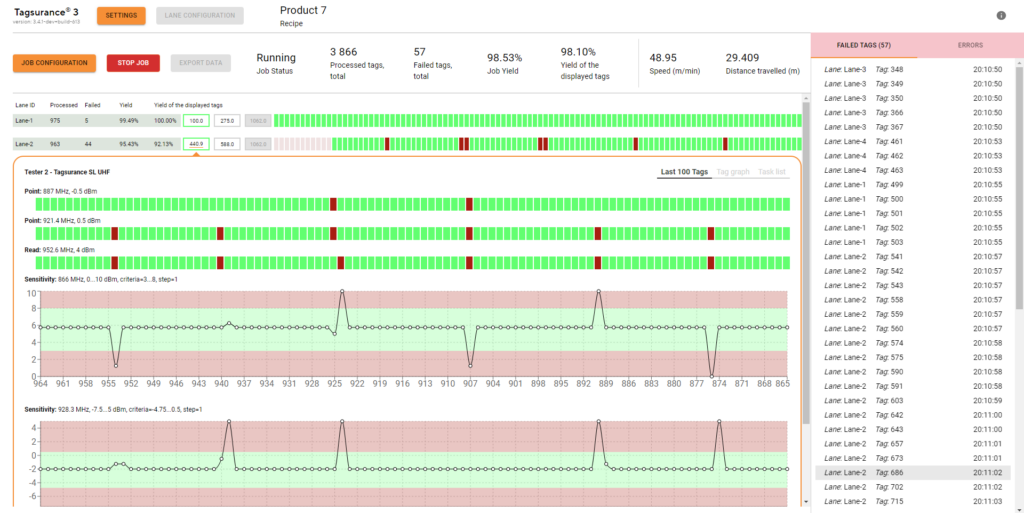
A picture of Tagsurance 3 software in action.

Quality Control for RFID Label Production Lines

Many variables in the RFID inlay and label production processes affect the RF performance of the finished product. Voyantic provides the industry-standard quality inspection systems for measuring the RF performance every tag on the production line.

Yes, There Is a Growing Market!

RAIN RFID adoption is growing at an unprecedented rate; with those markets that have already seen the benefits of the technology, such as retail and automotive, continuing their adoption. Other markets are emerging, for example parcel services, which is driven by the e-commerce boom.

Majority of these applications are based on RAIN enabled labels being added to the item. If you are already supplying labels to consumable products, the day will come when your customer asks you to add the RAIN labels on your supply program.

It Is Easy to Get Started with Outsourced Inlays

If you already have the ability to produce labels, adding RAIN RFID inlay on the backside of your current products would be one easy way to get started. You will need a capable inlay vendor, and you will need to teach the basics of RAIN RFID to your sales and production staff. Investments required to upgrade your current machines are modest, and inlay vendors are easy to find.

As you learn and build your customer base, it is possible later to expand your business also to cover the inlay part. At that point you will likely need to do a few new hires for development and production, as well as make investments on new machinery – the stakes become higher.

Manufacturing Process is No Magic

The manufacturing process of smart labels follows quite a standardized flow, as in the picture below. While some companies cover most of the process steps in-house, other manufacturers have assumed a more networked business model. Traceability across processes is a tremendous asset for failure root cause analysis, which is one cornerstone for enabling continuous improvement in any organization.

The three essential machine types that you should become familiar with are presented in the next picture:

Let’s understand these machine types and some of the related choices.

The IC Attach Machine Is Where the Inlay Quality is Achieved

The main technologies are flip-chip, and direct die attach. The RAIN IC placement on the dipole antenna requires high precision. Precision, combined with high line speed and sophisticated mount pressure control, makes the IC placement head the most expensive subassembly of the whole machine. You should make sure that the placement head is compatible with current and future RAIN IC’s.

As you look at the machines, you will quickly realize that the number of lanes in the machines varies. Multilane machines typically have higher throughput than single-lane machines, at the expense of added machine complexity. On the positive side, a multilane machine does not need that high line speed to reach an impressive throughput, which may lead to a more straightforward technical construction on the IC placement head. If you’re focusing on bulk, go with a multilane system.

A single lane IC attach machine is less complicated and thus easier to operate. It’s also easier to configure for new antenna models, making it better suited for smaller production runs. The capital investment is also lower.

Three Topologies of Converting Machines

In label converting, different material layers are added on top or under the inlay. There may also be cutting and testing involved. Converting machinery is more versatile, but three separate machine families can be found:

You can have a single lane machine that runs in a continuous mode very fast. Alternatively, you have a multilane machine running slower, and even in intermittent mode. At the end of such a machine, you may have a cutting and slitting module to separate single reels from a web.

A third approach, especially for traditional label suppliers, is to start with an industrial press, and add an inlay insertion section on the machine. An outcome is a multilane machine running in continuous mode.

Personalization Makes Labels Unique

Personalization focuses on getting the data right. Data on the tag is stored both in optical and electrical forms. Therefore, most personalization machines handle both printing and RFID encoding.

While that may sound trivial, managing the data, performing all the needed data conversions correctly, and keeping all the process peripherals in sync is easier said than done. When process speed increases, you will need to pay more attention to details, such as triggering. When working with variable data, you should make sure the optical markings match the unique identifier encoded in the RAIN IC.

Got Machines Already? Consider a Retrofit

It is often possible to retrofit the needed RAIN RFID peripherals on an existing production machine. With a low capital expenditure and a short lead time you’re able to pursue your first RAIN projects.

Voyantic delivers solutions to control sub processes, manage the data between the processes and keep both data and sub processes in sync. We also offer transferable bolt-on alternatives. Such frames come complete with the needed sensors, cabling and antennas, and won’t require changes on the signaling of your current machine.

You don’t need to figure all these details out. Let our experts talk with your machine vendor, and come up with a proposal!

Contact us


On-Demand Webinar:

Quality Management Approaches in RAIN RFID and NFC Manufacturing

Hear industry experts share their experiences in RFID tag manufacturing and quality management. The webinar includes case examples and presentations on how to set quality goals, which standards are relevant, and best practices for quality testing — from setting up the quality program to managing the day-to-day activities.

Watch now

Smart Label Durability – Bring Facts to the Table

Aug 18, 2021

When there is a need to increase smart label production volumes, it can be done by adding new machinery, more lanes to existing machinery, or by increasing production speeds. All these methods are in use, and they are combined frequently. For example, new production machines have more lanes and higher lane speeds.

At Voyantic, we are seeing that increasing lane speeds combined with smart label component development has put durability testing into the spotlight. In this article, I analyze the reasons behind the increased interest in smart label durability testing, and I will share the basics of the test methodology.

Why is the interest in durability testing increasing?

I believe that part of the increased interest can be seen as a healthy sign of technology maturation and market growth. RAIN RFID and NFC just work. Technology suppliers do not have to fight with the basic functionality and the focus is shifting to scalability. Outside of some special use cases, durability has been taken as given.

Let’s have a look at the drivers that are now challenging label durability.

Decreasing IC sizes

The latest generation of RAIN tag ICs is becoming smaller. When ICs are getting smaller, a natural question is what happens to the connection between the IC, the antenna, and the liner. And what is the effect on the inlay durability?

The latest generation of RAIN tag ICs is becoming smaller

The transition from plastic to paper-based labels

Due to ecological aspects, paper is used increasingly as label base material. The “stickiness” of antennas and ICs to paper is different compared to a plastic liner. Paper also stretches and bends differently than PET.

All paper is not just paper, but different additives and fillers are used to create different properties. All these properties, whiteness, polishing, and so on, may affect how the antenna and IC stick to the paper. Finally, add humidity as an environmental variable, and the durability of the paper-based label needs to be studied for sure.

Faster IC attach processes and new bonding epoxies

IC attach machine speeds keep on increasing and the machine vendors are working their way towards 100,000 UPH. The stress to an inlay with a freshly attached IC is higher when lane speeds increase. There is also less time to cure the bonding glues, which has led to new glues being introduced. These new glues require less time to cure, but may need higher curing temperatures. Again, a question about durability comes up: How to fine-tune the bonding process so that the label durability is not compromised?

Faster converting machines

Converting process speeds are also increasing. Higher machine speeds stress the inlays and labels. An obvious worst-case to avoid would be inlays starting to break already during the converting process. Do the inlays survive intact through these fast processes?

Label type NFC tags

Traditionally a label has been one of the major RAIN RFID tag formats. NFC tags have been made more as smart cards, various key fobs, and other more rigid formats. Lately, NFC label production has also started to grow. This extends the label durability question from RAIN RFID to also NFC. Are NFC labels also durable enough to survive through the label life cycle?

All the above changes are happening in parallel. The combined outcome is what matters. Are the inlays durable with all the new materials, components, and processes?

Standard durability test method

Test principles

The basic principle of durability testing is to compare a meaningful parameter before and after a stress, and to analyze the results to determine whether the stress creates unwanted consequences. Because the tags under testing are stressed, potentially to the point of breaking them, the method cannot be used for testing every individual tag. It is rather used to test the designs, and indirectly the manufacturing processes.

For many electronics products, heat cycling is a standard durability test method. Also, drop tests, pressure tests, tumble tests, and shear tests are frequently used. For smart labels, the default test method is bend testing. The need for bend testing comes from the typical smart label failure methods.

The two most likely points to fail in smart labels are chip bonding and the edges of the IC. Bend testing is a way to verify the sufficient durability of both of these possible failure points.

Test method

At the beginning of the test, a baseline performance needs to be measured. The baseline performance of the sample set consists of the threshold sweep result of each of the tags in the sample. The threshold sweeps can be done with Voyantic Tagsurance® devices. The curves describe how much power is needed for waking up the tags at different frequencies.

Threshold sweeps of 98 pieces of RAIN RFID inlays before the durability testing

After the baseline test, stress is applied to the tags, and then the tag performance is tested again.

This cycle of test rounds and stressing the labels are repeated until a targeted performance decrease has been reached. The more test rounds an inlay (label) survives, the better is the durability test result aka durability rating.

Threshold sweeps of 98 pieces of RAIN RFID inlays after several rounds of stressing

The test method document describes the details of the test parameters and stress parameters.

Download the detailed standard test method description

Special tags

There are some special tags where bend testing is not (the only) relevant durability test method. For example, aerospace tags are tested according to the SAE AS5678 standard, which defines environmental conditions such as temperatures, vibration, etc., which the tag must sustain. With these standards, the tag is stressed with vibration and extreme temperatures instead of the typical bend testing, which is designed to highlight the common failure methods of cracked bonding and cracked ICs.

The same test principles can also be combined with other durability testing methods. For example, laundry tags could be tested using ISO15797 standard, which defines how garments are stressed with washing cycles. The idea is the same: to find out whether the tag performance decreases too much when stress is applied.

Also, specialty tags that are intended to be used in extreme conditions, exposed to heat, cold, or chemicals, should be tested in combination with applicable stress methods. IEC60068-2 standards (environmental testing of electronics products) provide help for these. IEC60068-2-2 (dry heat) and IEC60068-2-14 (temperature variation) are likely useful methods, and both can be combined with Tagsurance testing. The IEC60068 family also includes test methods for different mechanical stress types, chemicals, humidity, and so on.

In these special tag durability tests the RFID testing, both baseline and the test after stress, can be made with Tagsurance® systems. Between the RF tests, different stress is applied with the Voyantic Bendurance machine.

Voyantic Bendurance™

How durable is good?

An obvious question related to durability testing is: How durable is durable enough? Or: How durable is good and what is not good enough?

There is no clear answer to these excellent questions. Laundry standard ISO15797 has its criteria and a way to define what is durable enough. SAE AS5678 similarly has its criteria for aerospace tags. But those criteria cannot be extended to other use cases and tag types.

One answer could be: Durable enough is when a smart label survives its intended life cycle. That answer does not help in practice.

Another way is to look at comparison data. It doesn’t give a simple answer but probably helps in practice. If an inlay is as durable as others, most likely it is durable enough. And on the other hand, if an inlay is less durable than a typical inlay, a closer look should be taken, and possibly an improvement is needed.

Comparison data in mind we tested some dry inlays with the following results.

Change of dry inlay yield after each test round

There were significant differences in the dry inlay durability. With the weakest dry inlay model, over 90 % of the inlays broke beyond specified performance with the first test round. The strongest inlays survived more than 10 stress rounds.

  • About 20 % of the dry inlays got a durability rating of 1-3
  • About 60 % of the dry inlays got a durability rating of 4-9
  • And about 20 % of the dry inlays got a durability rating of 10 or higher
  • Median durability rate for all the tested dry inlays was 4, and average about 5.5

This suggests that dry inlay durability could be considered typical if the durability rating is between 4 and 9.

Summary

Faster manufacturing machines and new materials have increased the need for testing the durability of RAIN RFID and NFC inlays.

Voyantic Bendurance is a durability test system focusing on bending, the typical failure mechanism of the inlays. Bendurance with its standard test method gives comparable durability data of the inlays.

A similar approach can also be used with other durability testing such as the SAE AS5678 test for aerospace tags, ISO15797 tests for laundry tags and tags integrated into apparel, and IEC60068-2 for durability against extreme temperatures, other types of mechanical stress, chemicals, and so on.

Download the standard test method description

Request a Bendurance demo

Request a durability test system quotation

Switching into a New IC in Inlay Design – Is There a “Quick n’ Dirty” Way?

Jul 01, 2021

A few months ago, I started receiving questions about switching to a new IC in inlay manufacturing. All these vendors had done several IC changes over the years, but there was something new going on. The questions were centered around possible shortcuts in the process.

  • “What if I just change the IC and don’t change the antenna design at all?”
  • “What if I don’t waste time in machine settings and just do it quick n’ dirty?”
  • “Are there any ICs that are ‘plug and play’ with other models?”

Unfortunately, I could not offer any help. I did find the question interesting though. At first, I tried to figure out some approaches on my own but did not get past the very basics. That is when I asked help from my colleagues Juho Partanen and Jesse Tuominen, and started doing some research on the topic.

In scale comparison of Impinj M750 and Monza R6

Together with Juho and Jesse we put together a whitepaper that outlines the process and key considerations for switching from one IC to another.

Download the white paper

Key considerations for switching from one IC to another

The IC vendors have plenty of helpful material available:

  • IC Datasheets
  • Reference antenna designs
  • Industrialization guides.

Some of the material is not publicly available, so reaching out to the IC vendor for help is a good starting point.

  • Start by verifying the suitability of the IC functionality.
    If you only need 96bit EPC pretty much any IC can do it. But some IC’s have a lot more functionality. More EPC memory, different amounts of user memory, and they support various optional EPC gen2 commands.
  • Then focus on production.
    Getting all the details and settings in the IC attachment process adjusted for the new wafer, for the new IC, and possibly for the new bonding paste can take time. This is also a time to check the durability of the new IC attachment.
  • When the production compatibility is confirmed, focus on the antenna design.
    Optimizing antenna design is always recommended, and with the IC vendor’s reference designs as a starting point, the design is not that huge of a project. In some cases, it is possible to take small shortcuts, but the time saved is not much. A good and optimized design is a better approach.
  • Focus on quality.
    As with designs, shortcuts do not make sense. The best approach is to fully utilize the new IC and optimize the tag performance and quality.

Learn How to Switch from One RAIN RFID IC to Another

Learn more about each step in the process of switching from one IC to another

RAIN RFID Industry Paving the Way for Eco-friendly Tagging

Jun 11, 2021

For more than a decade, RAIN RFID tag antennas were etched, and the substrate was PET film. Copper was first substituted with aluminum, and various other technologies have emerged, such as printed antennas, and cutting, milling, or laser engraving metal foils.

More recently we have seen antennas being applied on paper and even directly on the packaging and on other surfaces. Much of that development has been driven by cost, but the ecological and sustainability aspects are rising in importance.

Juho Partanen recently moderated an online panel discussion on various aspects and implications of sustainability and eco-friendliness of RAIN RFID tagging. The panelists included Sipi Savolainen from Stora Enso, Jerome Lemay from Decathlon, and Emmanuel Arene from Primo1D. The discussion ranged from ecological tag materials to the technology itself contributing to system-level sustainability through enabling and driving applications for the circular economy.

Watch the panel discussion recording

Before the discussion started, we asked the attendees how they would rate various aspects of eco-friendliness? A quick poll revealed the following:

The initial attendee views support the notion that although moving to renewable and recyclable materials for the tags is a no-brainer in terms of eco-friendliness, there needs to be a more holistic view of the whole system – how the technology enables cradle-to-grave traceability, waste reduction, efficiency improvements, transparency plus other aspects crucial for driving the circular economy and sustainable consumption.

We received a lot of attendee questions during the discussion and since the webinar time was limited, we were not able to address them all during the live session. So we asked our panelists to provide some additional answers for this blog.

Follow-up Q&A from the panel discussion

The responses to the following questions have been written by Mr. Sipi Savolainen from Stora Enso.

Question: If a tag is paper-based, could it be placed in the paper recycling bin, as it includes electronics and metal?
Answer: All paper and cardboard recyclability testing is based on the ability to separate non-fiber-based materials from fiber materials and screen those components before re-pulping. According to the results of PTS RH 021/97 Recyclability of Packaging Products and TAPPI UM 213 Repulpability testing (mod.), ECO tags are recyclable within paper and paper board recycling processes.

Question: According to WEEE regulation, RFID label is still regarded as electrical waste, I doubt if the paper-based label can be recycled as paper?
Answer: Passive tags are considered to fall under the scope of the WEEE directive. However, as tags are being attached to items they are naturally disposed with the material/object they are applied to. The best suited waste management process is defined based on the material/object type.


The response to the following question comes from Jerômé Lemay from Decathlon.

Question: What are the most influential factors that can move world businesses towards practicing environmental sustainability?
Answer: For Decathlon, sustainability is considered in a holistic way and, in addition to preserving nature, also includes taking care of people, and creating sustainable value through governance and business ethics, for example. Environmental sustainability is the third pillar and includes tackling climate change and driving the circular economy.

Environmental sustainability needs to be incorporated into the strategy and values, and forward-looking businesses should see that it is also what their customers are expecting.


The response to the following question comes from Emmanuel ARENE of Primo1D.

Question: Obviously, depending on which material the Primo 1D is embedded it changes its perfromance. Is the antenna re-tuned for each different material?
Answer: Yes, the performance of our embedded system is intimately linked to the permittivity of the tagged item. To make sure the RF performance and durability are optimized for each material, object, and use case, different elements can be tuned: the antenna material and its design, the chipset, and the packaging of our RFID UHF tag as well. Primo1D has all resources in-house to support product development and industrialization process till ramp-up.

Panel Discussion: The Many Faces of Eco-friendly Tagging

Listen to expert panelists from Stora Enso, Primo1D and Decathlon wrap their heads around the eco-aspects of RAIN RFID tagging.