
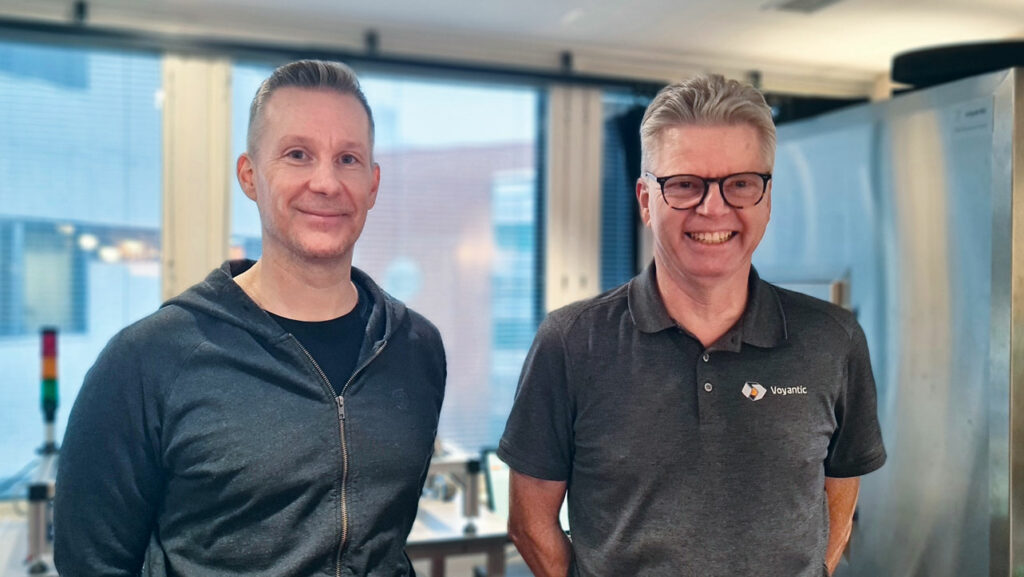
Work in RFID technology at Voyantic is grounded in long-term product development, strong technical expertise, and close collaboration across teams. These principles are reflected in the day-to-day work of professionals like Lauri Telama, a Lead Full Stack Developer whose role highlights how reliable, high-quality RFID solutions are developed in practice.
Long-Term Problem Solving as a Starting Point
When Lauri Telama joined Voyantic in December 2024, the transition was a natural continuation of earlier collaboration rather than a completely new start. Having worked with Voyantic previously as a freelance consultant, he was already familiar with the company’s products, people, and ways of working.
What had already become clear to him was Voyantic’s emphasis on long-term thinking and problem understanding in software development.
“Even before joining, it was clear that Voyantic puts a lot of emphasis on understanding the problem space and building solutions with a long-term perspective,” Lauri says.
This way of working also leaves room for learning and deeper technical exploration. Alongside his role at Voyantic, Lauri has completed a master’s degree at Aalto University in big data and large-scale computing, focusing on computer vision – work that aligns with Voyantic’s practice of allocating time for research, experimentation, and the development of new technical capabilities.

Engineering Reliable Systems
A defining characteristic of Voyantic’s development work is the requirement for high reliability under strict technical constraints. Many of the company’s solutions are delivered as fully enclosed, on-premise systems, where latency, throughput, and stability are critical. This differs significantly from cloud-based software environments with elastic resources and requires a deliberate approach to architecture and performance.
“These constraints really shape how software is designed,” Lauri explains.
“You have to think carefully about architecture, performance, and validation from the start.”
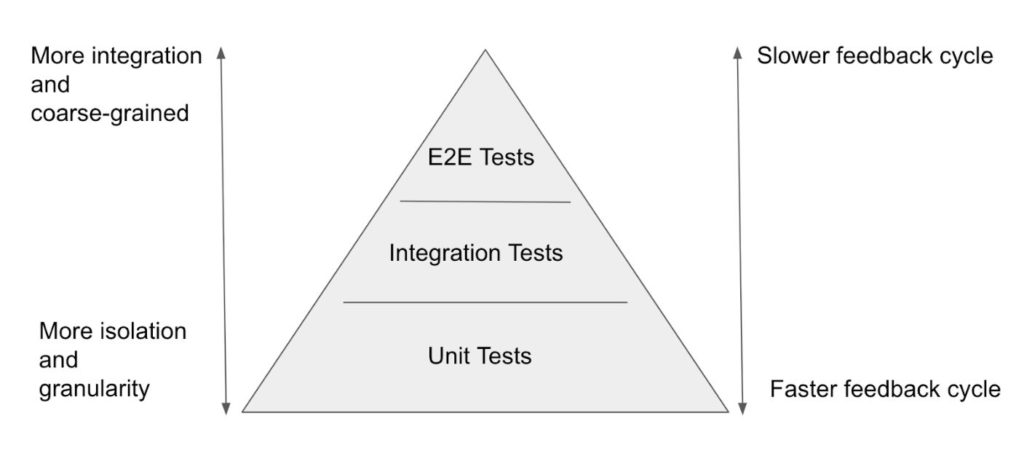
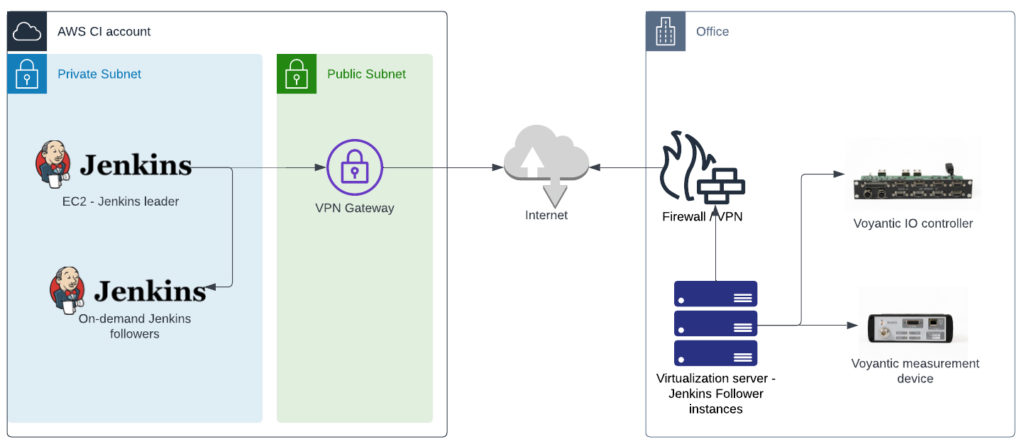
To meet these requirements, Voyantic relies on disciplined engineering practices. Automated testing is embedded throughout the development lifecycle, covering unit, integration, and end-to-end testing. Quality requirements are continuously validated rather than checked only at release time, helping ensure that changes do not compromise reliability.

“Quality isn’t something that’s added at the end. It’s built into the process, and the expectations are clear across teams.”, Lauri notes.
This approach reflects Voyantic’s role as a provider of quality assurance solutions: the products themselves must meet the same standards of reliability that customers expect from their own operations.
Collaboration, Learning, and Shared Ownership
Close collaboration between teams plays a central role in how work is done at Voyantic. Development teams work closely with product management to ensure customer needs are understood and translated into product decisions. When customer issues require deeper technical investigation, cooperation with support teams becomes especially important.
“There’s a lot of openness in how information moves between teams,” Lauri says. “People are very willing to help each other, even across team boundaries.”
Continuous learning is also an integral part of Voyantic’s development culture. Developers are encouraged to deepen their understanding of the technologies they use and are given time to explore new tools, methods, and approaches. Knowledge-sharing sessions within R&D help spread insights across teams and strengthen overall technical competence.
“Even if we haven’t done something before, there’s no hesitation about exploring new areas,” Lauri explains.
“Learning is treated as part of the work, not something separate from it.”
Some of the most meaningful moments in Voyantic’s development work come from major product milestones, such as system releases and new feature launches. These achievements are the result of coordinated effort across teams rather than individual contributions.
“Major releases are always cross-team efforts. They require close cooperation between development, product management, and other functions.”
Through this combination of structured engineering practices, collaboration, and continuous learning, Voyantic builds products designed to meet demanding customer requirements today while remaining adaptable for the future of the RFID industry.









 Content Warning! This post includes some serious engineering terminology. Reader discretion is advised! 😉