Voyantic will attend IOTE EXPO CHINA together with our partner, Hwa-Tech.
Meet us at the event to learn how Voyantic helps you meet RFID quality standards, prepare for future RFID production needs, design high-quality RFID products, and implement reliable RFID systems. Visit us to see live demonstrations and discuss your specific use cases with our team.
Whether you are just starting your RFID journey or are a seasoned professional, our team is happy to share insights, best practices, and practical solutions to help you succeed.
📍 Location: Shenzhen World Exhibition & Convention Center (Bao’an District) 🗓 Date: August 26–28, 2026 🎪 Booth: Hall 9, Booth 9C36-2
Contact us to schedule a meeting or demo in advance:
Voyantic Sales APAC Mr. Bobby Lin bobby.lin@voyantic.com +886 9354 361 60
Hwa-Tech Information System Mr. Li Zhe +86 13917341398 www.hwa-tech.com
NRF 2025 Recap - Easiness and Increasing Integration
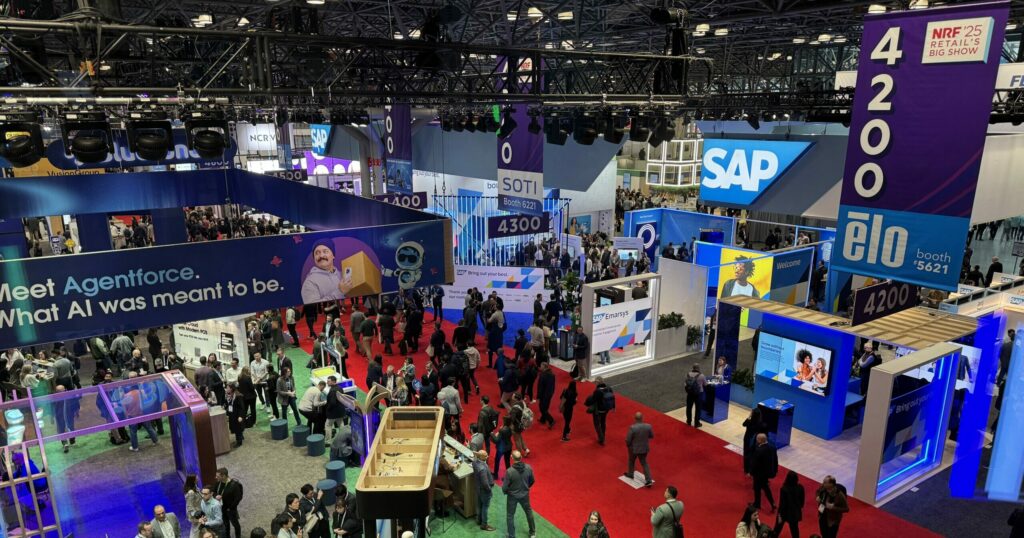
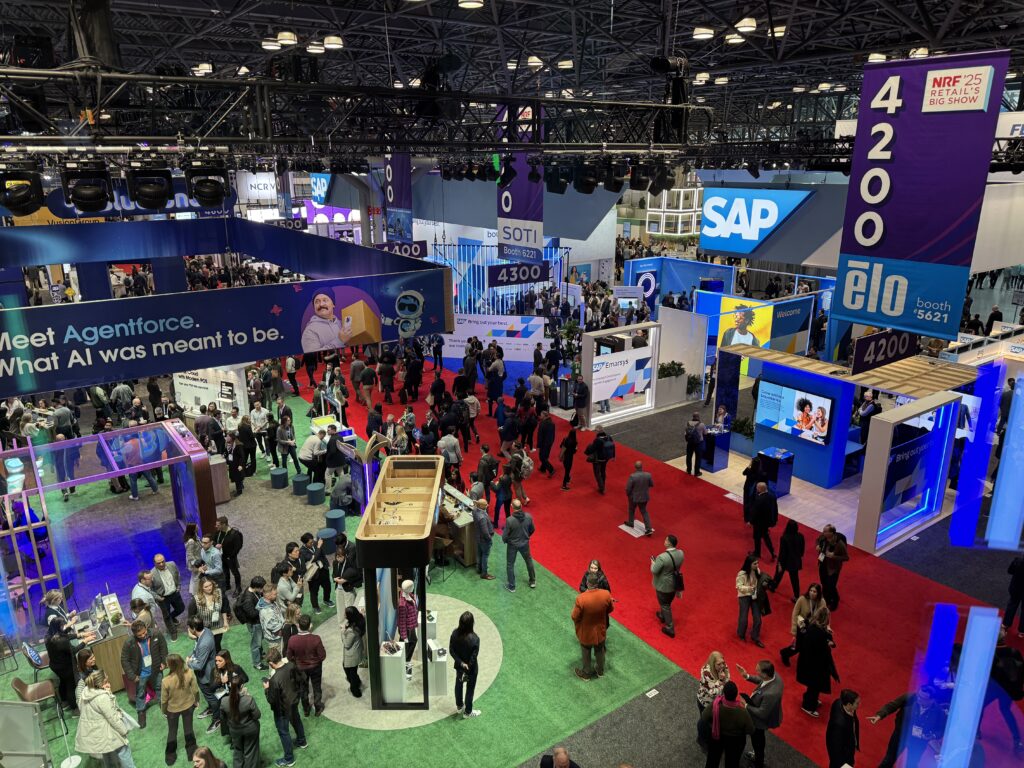
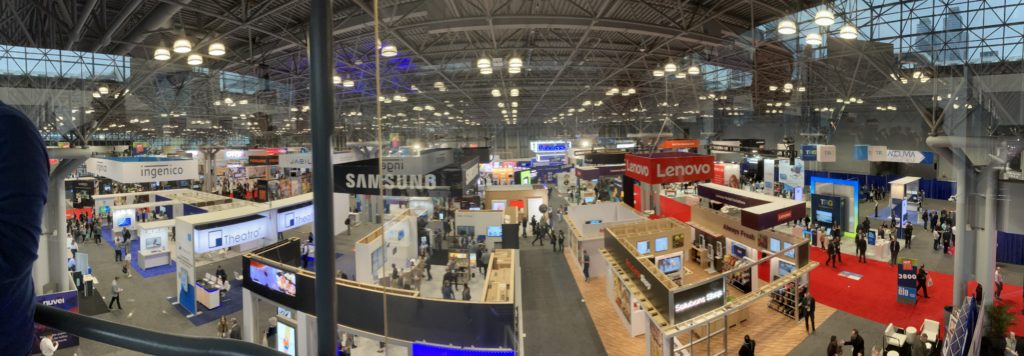
NRF is a great way to start a year and sniff the winds of the market. Some 2,600 brands with feet on the aisles manifest how the National Retail Federation’s Big Show is the most comprehensive and exhaustive retail technology show on the planet. Read more to find out what I picked up at the show.
Grand themes of RAIN RFID
In a couple of previous years, the buzzwords at the show were AI, omni-channel sales, and loss prevention. AI and loss prevention were still present this year among myriad platforms and analytics. Looking at the demos and displays through the lens of RAIN RFID, I will point out two themes:
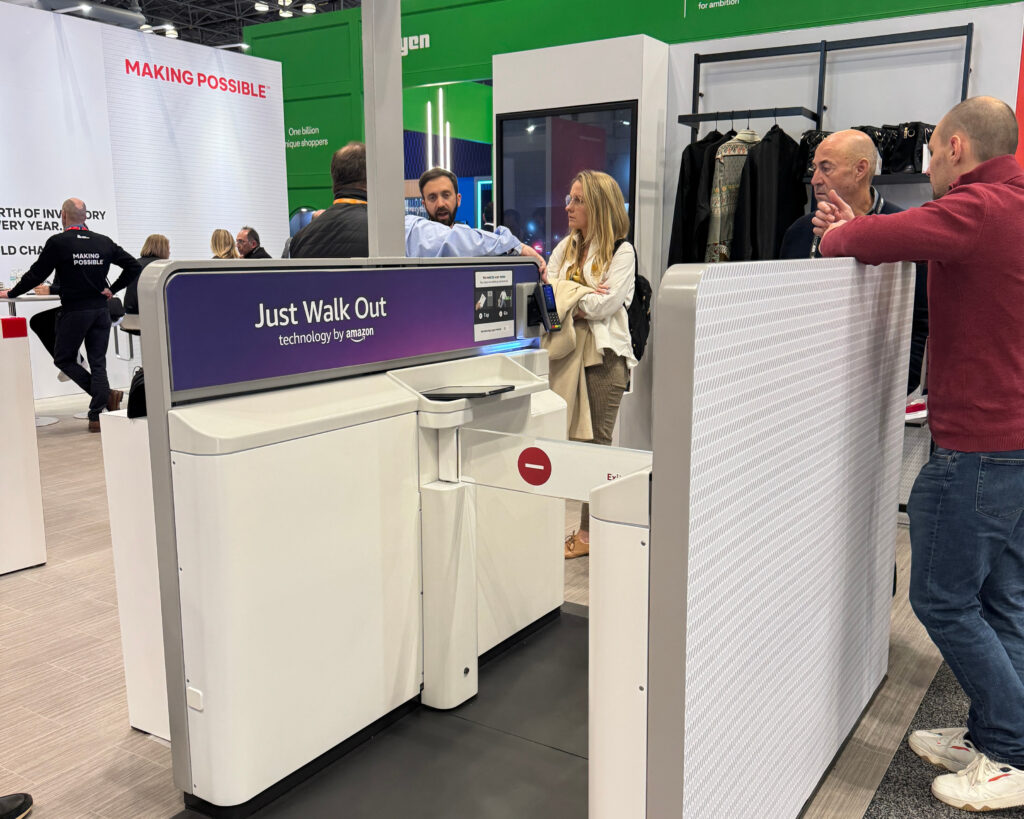
Easiness: For a store owner, setting up this unmanned retail solution is super easy. The construction has wheels underneath, so simply push it to its place and take up the wheels. Then plug in the wall socket, and basically, you’re done. No lifts, no wiring, no cameras, nothing. As a customer, tap your credit card as you approach the turnstile, wait for a green color to flash, and through you go – no bins, touch screens, nothing. Just walk out.
Increasing integration: RAIN is embedded in garments, packaging, smart devices, store shelves, and various business platforms. RAIN is the invisible backbone of supply chain management in various industries.
RAIN adoption in various industries
RAIN RFID has matured to a state where the functionality of the technology including the nuts and bolts are non-issues. Even better, high inventory accuracy is a core requirement for any modern retail operation – or is it?
General merchandise leads the way, but the food sector is only taking the first steps along its RAIN journey. Much education and research are still needed to understand whether traceability is needed at the item level and how RAIN labeling will be practically deployed in production processes. Also, the label products are likely to need design modifications—both in terms of materials and application processes and driving down the cost.
Chickens and Eggs coming up
Embedded tagging was present in some way or form practically at all the RAIN RFID tag provider booths on the show. This means that households will soon be filling up with tagged products.
The other side is the sleek RAIN-enabled smartphones that were on display at several booths. Yes, the first wave of products is targeted at enterprise customers, and yes, there were no RAIN-enabled iPhones yet, but the flight trajectory is correct.
Putting these two factors together, RAIN readers and tags will soon be everywhere. This underlines how the chicken-and-egg problem that our industry has long fought is finally solved.
Retailer’s pain
The variety of suggestions is huge—reimagine, transform, re-invent, revolutionize—as is the variety of data sources. Numerous platforms can pull that data in, aggregate it, and deliver analytics, metrics, etc., in real-time. All this is an integral part of modern retail, and, in theory, making decisions and driving profits up has never been easier.
However, where should we focus, and what decisions should we make next? To me, the exhibition didn’t actually give that direction unless it was to invest in AI and hope for the best.
Circularity is not so much
Efficient supply chains and seamless purchase experiences encourage Americans to buy more and more. It is no wonder that circularity was not a discussion point, at least on the show floor level.
It is likely that the local legislation in the USA will not drive the retail sector to seek circularity in the short term, but perhaps the emerging new business models will. I restate my forecast that sustainability will hit NRF soon—it makes such an excellent buzzword for the next generation of consumers.
NRF 2023 Recap - Inventory Management is a Priority and Self-Service Increases
After two years of idle time I attended the NRF Big Show in New York from 14th to 17th Jan 2023. Three full days of walking was definitely worth the effort. My takeaways from the event are as follows:
Liz Ann Sonders: GEL and demographics
The clarity and reasoning by which Liz Ann Sonders, the Chief Investment Strategist of Charles Schwab & Co., Inc., presented her views on the state of US markets and economy were unprecedented. I made two pages of notes and became her fan.
Her message in a nutshell as understood by me: the world has exited the era of cheap Goods, cheap Energy and cheap Labour (GEL). That change will also affect the balance of power between capital and labour. For the last 20 years, capital has had the advantage. Going forward, much of the power will transfer to labour.
Factors are numerous, and demographic development is an even stronger force than inflation or the rampart war in Europe. The outcome is that digitalization continues and supply chains will be more carefully managed than ever before.
Outlook of the retail market (Sonders cont.)
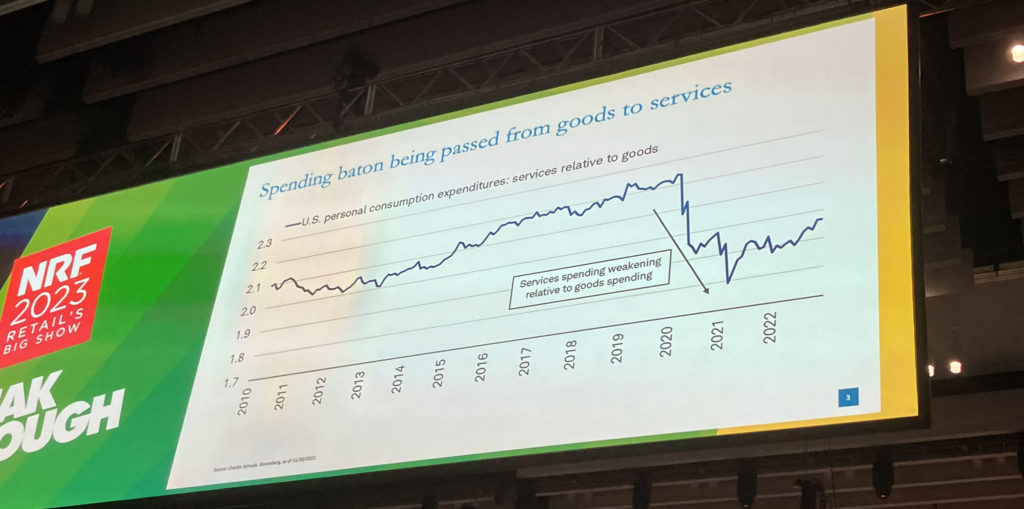
While consumer confidence has gone down, the savings rate has been high because of the fiscal stimulus during the pandemic. Due to the accrued excess savings, consumer spending still continues at a high level, but the notable change is the spending baton that is being passed from goods to services.
As a result, many retailers currently carry excessive inventory levels. The industry will work through that, but by now many have learned to be cautious against excess inventory.
Remember this driver (Sonders cont.)
The change in demographics has already shaped many industries in Asia and Europe. Automation and digitalization will increase, due to the increasing struggle to hire and retain the hands that do the manual work. The long-term driver to learn and remember therefore is labour shortage.
Observations from the exhibition floor
I saw more self-service check-out counters being promoted than in prior years. Additionally, the count of robot demonstrations impressed me. Robot applications range from warehouses to shop-floor replenishment, and from inventory scanning to customer service.
The increasing usage of automation obviously makes companies more resilient against labour shortage. It also helps in talent retention, as more time is spent on creative and complex tasks.
Outlook of the RAIN RFID market
(For simplicity, I will discard demand forecasting as it has little to do with RFID.)
Inventory control requires supply chain management, and today’s supply chain management leans on item-level traceability. For technology vendors, the welcome result is that the demand for RAIN RFID technology remains at a high level. What I also heard several label suppliers state is that after a few agonising years, the supply of RAIN RFID tag ICs is getting better. Lastly, I heard the adoption of this technology is finally taking off big time in the logistics industry.
Folks, we are in the right business.
Label-based tagging keeps on increasing
On a high level, several tagging approaches are available: sticker-type labels, hang tags, rugged tags and embedded tags. Labels and hang tags fulfil the scanning requirements of supply chains, and the scalable supplier ecosystem efficiently supports the approach.
I came to estimate that the yearly RFID labels production quantity is already enough to wrap the whole Javitz congress center with RFID labels for its outer surfaces.
At the NRF what I didn’t hear American retailers talk about was product life cycle traceability, digital product passport, and digital twin. They seem to be concepts of the future, which marks a major difference compared to European retailers. I am curious to see if EuroShop presents a different tone.
RFID applications closing in on the US consumers
Millions of American consumers that work in the supply chains already use RAIN RFID every day. At work, they have learned to appreciate the efficiency and convenience that RAIN brings. My question goes: when will they start requesting the same efficiency and convenience in managing their personal inventories and households?
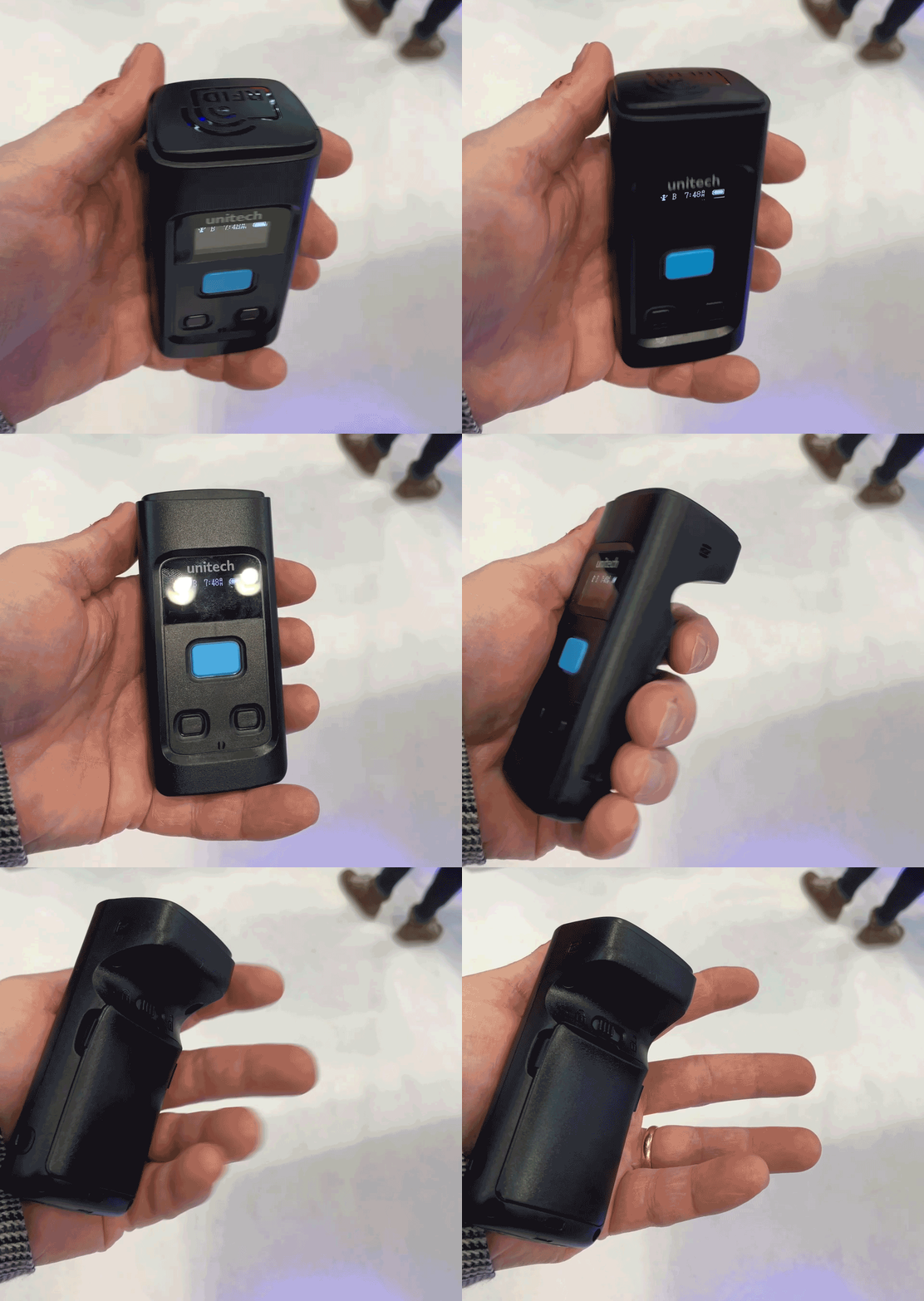
I gather that the world is becoming ready for such a leap as more consumer-friendly RAIN RFID reader products are finally emerging. Sledge-type of readers, that attaches to your smartphone, have been in the market for years already. Recently more slick and pocket-sized alternatives have been launched, just have a look at the BlueBird VX500 and Unitech RP902. The former is a RAIN-enabled smartphone, and the latter device connects to Android and Apple phones wirelessly.
I believe these products are game-changing as they expand the usage of RAIN RFID well beyond the supply chains and point-of-sale. As the embedded and durable tagging of products increases in the coming years, I am sure consumers find delight and convenience in RFID also outside of their working hours.
Passive Bluetooth
Wiliot was already a familiar name from several prior industry events. Wiliot is an IOT platform that connects BLE-based sensors, “IoT Pixels” as Wiliot calls them. The sensors carry an ID and sensing capabilities. The sensors don’t require a battery, instead, they harvest energy from nearby transmitters, which makes them relatively cheap and small, practically stickers. Additional gateways pass the encrypted sensor data to the cloud.
The difference to RAIN in Wiliot is that the IoT Pixel data can only be accessed via cloud. Wiliot runs a SaaS business. The Bluetooth infrastructure and consumables are relatively cheap, and a Wiliot system is easy to set up.
Three additional findings from the exhibition floor are worth mentioning:
Another company Nexite also utilizes BLE technology and follows a similar SaaS business model
There is an emerging paper-thin ecosystem of suppliers that produce Wiliot labels.
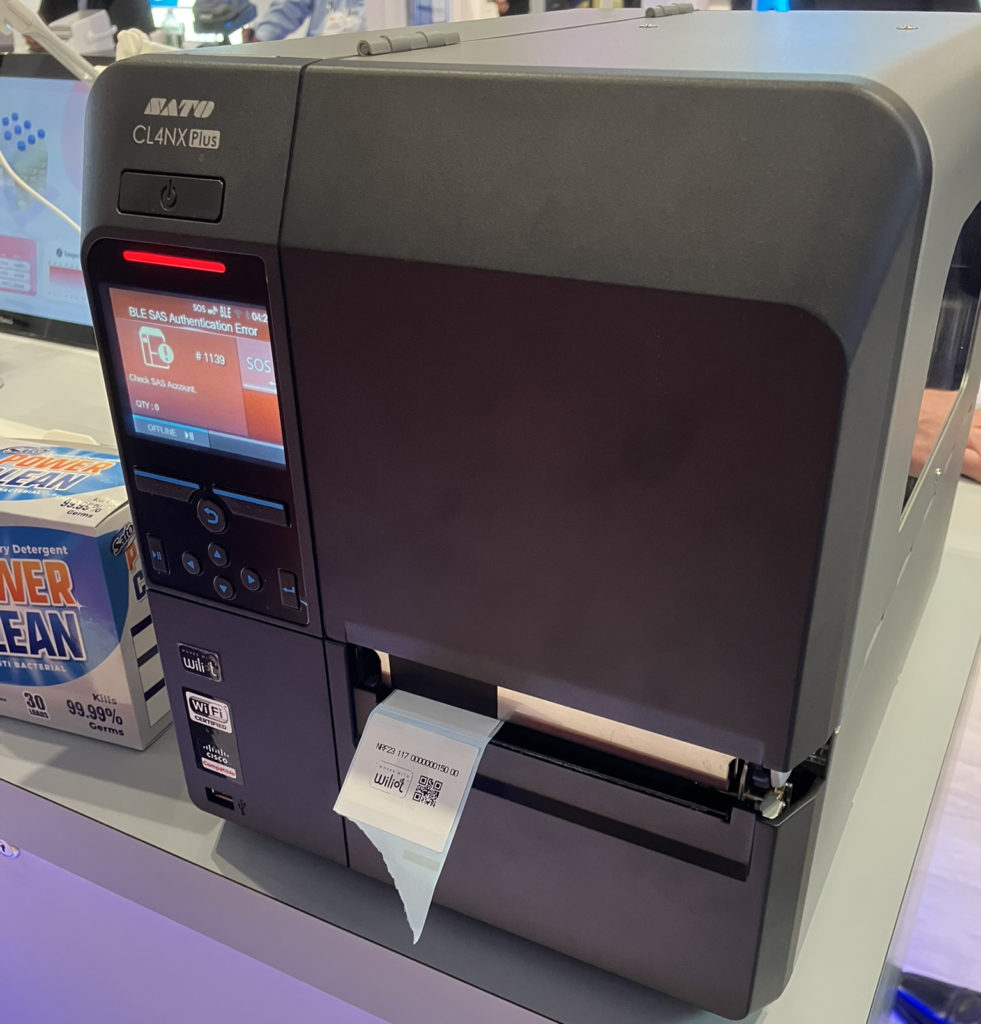
I came across a Wiliot-enabled prototype printer.
In my assessment, passive Bluetooth is in its infancy the same way as RAIN RFID was 20 years ago. Technology itself is demonstrated to work, although practically the sensors cannot yet be read with smartphones. All in all, I remain curious to see how passive Bluetooth takes off.
Final thoughts
The NRF Big Show is overwhelming in its size and range of content. After three days at the exhibition and conference, I was left with a warm comforting view that the growth of the RAIN RFID market is set to accelerate. It is a very exciting business to be in.