
Vehicle RFID Tags – Big Benefits with Some Challenges

Nov 30, 2016

中文版 Chinese version

Electronic Vehicle Identification (EVI) is a perfect match for RAIN RFID (UHF RFID) technology. Once a vehicle is tagged, the possibility to identify the vehicle remotely enables a lot of applications and services. While vehicle tagging is of high interest, it is not the easiest task. In the past few months I have worked with some vehicle tagging projects and learned that the application requires some special attention from technology providers.

EVI Tag Types

The EVI tags come in different forms. Most common EVI tag types are

  • windshield tags attached to the windshield inside the car; and
  • license plate tags mounted on license plates outside the vehicle.

There are some specific design issues related to both of these tag types.

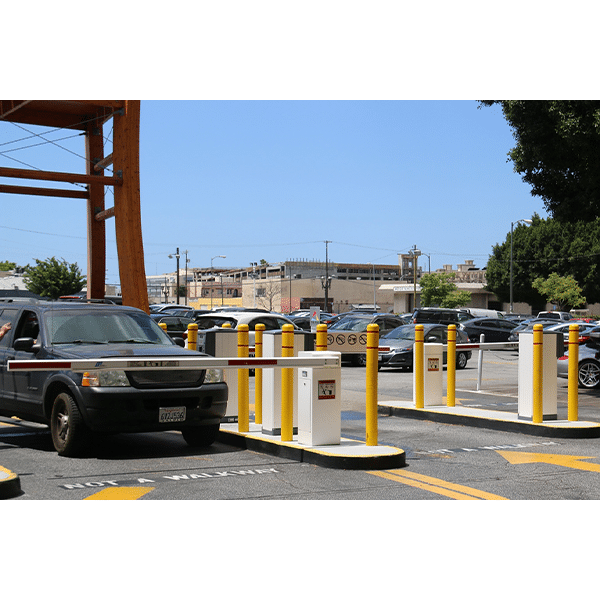
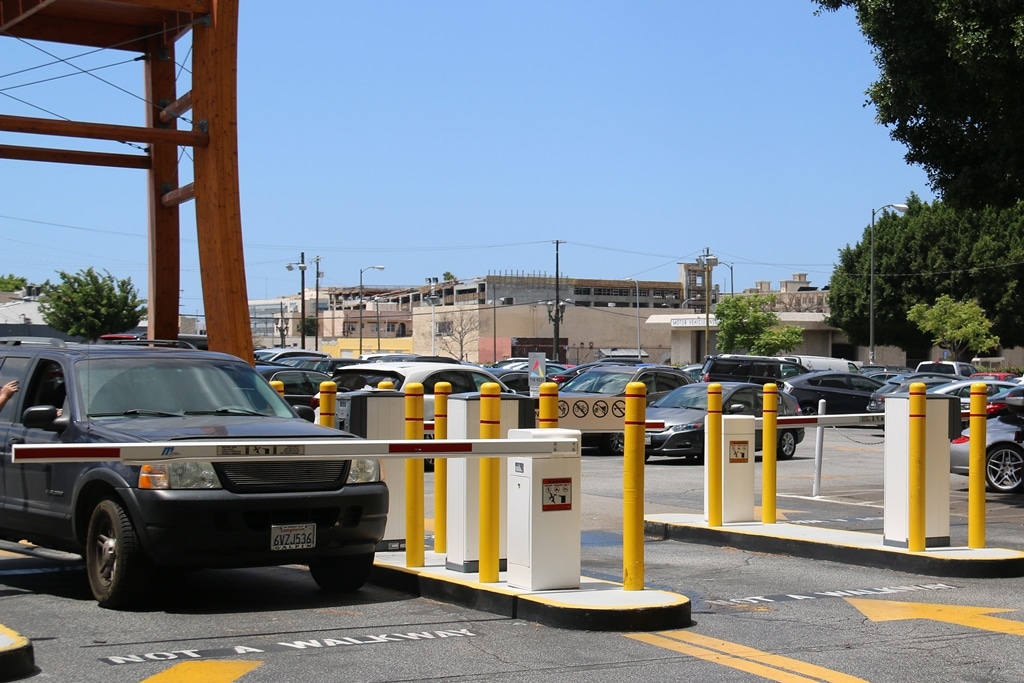
License plate tags must be on-metal tags, and very durable. They must survive weather conditions and car washing. Also, the position and the mounting angle are rarely ideal for readers. The natural best reading direction is straight backward (or forward), and at low height. In many applications the goal is to identify a vehicle approaching an identification point, for example an access gate or a road toll collection point. Reading would preferably be done from above or from side with an angle.

Windshield tags provide better reading angle. The challenge is to design a tag that works well with all possible windshields, regardless of the windshield’s angle, thickness, material, embedded technologies and type and proximity of the windshield frame to the tag position.

Both passive and semi-passive tags are commonly used. The semi-passive tags are battery powered; more of those can be read in earlier Voyantic Blog post.

EVI Tag Applications

Once the tagging is successful, it is easy to find use for the tags. Applications include road toll collection, tracking vehicle registrations and inspections, tracking tax payments, and parking control. Many of the applications are initially set for government purposes. Once the tags are in place, they can also be used in various value added applications of the private sector. Even if the tag is initially placed for registration, it can be used as a parking permit and gate access permit of a housing community.
Performance Testing of EVI Tags

A car is a special case of a tagged item. There are components that reflect RFID signals, absorb or block the signals, and may even resonate with RFID frequencies. These effects are different to different reading angles, they vary when a tag is attached to different position in a vehicle, and may even change when a tag’s mounting orientation changes. At Voyantic we have assisted several companies in defining test methods and processes for optimizing the EVI tag performance.
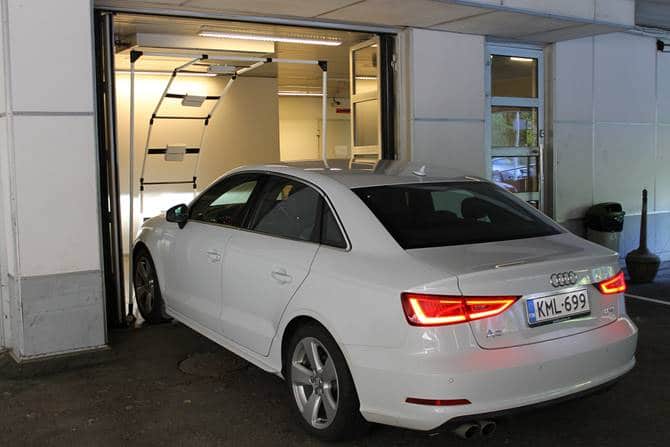
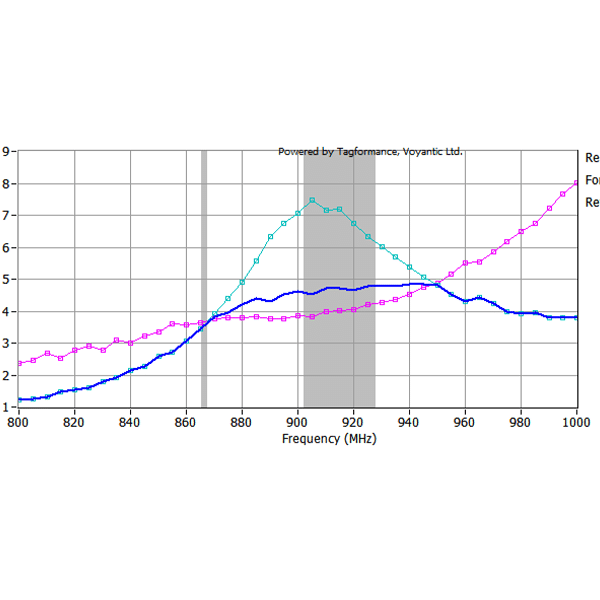
With the Voyantic Tagformance Pro system it is possible to test the sensitivity, tuning and backscatter signal strength of the car tag. The Tagformance system is an essential tool for evaluating effects of reading angles and mounting positions. The system can also be used for optimizing the EVI tag performance, finding optimal tag positions in the cars, and for finding optimal reader antenna positions for the applications.
Learn How to Test EVI Tags with Tagformance Pro

Download our application note to learn how to avoid the pitfalls of EVI tag testing!
RAIN RFID Tag Read Range: Opinion or Fact?

Oct 31, 2016

中文版 Chinese version

Creating a tagging solution for passive RAIN RFID tags to a particular application starts with understanding the application specific requirements. That involves plenty of process engineering, but also typically discussions around the expected read range between tagged items and reader antennas. The read range is impacted by several factors and many start the cooking process by looking at the properties of RAIN RFID tags.

Tag datasheets carry plenty of information: protocol, operating frequency, chip type, memory utilization, physical size and much more. Amongst all information on datasheet, I reckon tag dimensions and read range are typically the first ones checked. Both are relatively easy values to understand, although the first one is a fact, and the second more an opinion. In the following I explain how to interpret the tag read range right.

Classic Approach: Take a Tag and Walk Away

The simplest way to get an idea of the read range is to place a reader to the end of a hall, take a tag and walk away from the reader antenna to see how far the tag can still be successfully read. In this kind of empirical test the result is not a fixed distance under which the reading would always be successful, but instead the result typically varies as below:

Result of a “walk away” read range measurement using a lower end RFID reader. What would you choose for a read range value?

Obviously such a result leaves a problem: how to interpret the results? What in fact is the read range in this case? A bigger problem is that the result is actually a synthesis of so many factors, such as reader properties, tag alignment, other objects in the environment, illumination in the hall, settings in the reader… So, what was it again you wanted to see?

Very few halls, office spaces or basements are stable enough to reproduce the test from day to another with the same test result. Therefore, key delivered value of this approach is merely the physical exercise, and most vendors don’t use these results in their tag datasheets.

Laboratory vs. Real Life Performance

RFID measurement systems characterize tags at high precision after which read range is calculated based on a few assumptions. Laboratory measurements themselves are often performed in shielded and anechoic chambers to remove other variables from the test results, which greatly improves the value of the data and the repeatability of the test process.

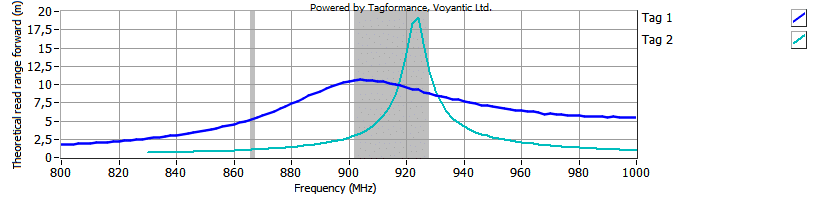
Theoretical read range of two RAIN RFID tags designed for different applications. Tag 2 shows better max read range at the FCC band, but is too highly tuned to efficiently cover the whole band. Despite of its shorter read range, Tag 1 as a broadband design seems like a more reliable choice.

This kind of measurement does not emulate effects of environment where tags are used. Experts talk of multipath propagation and path loss, and some others may talk of reflections, shadowing and interior design. No matter which definition is used, the environment is the grand source of differences between laboratory and real life performance.

Practical Difference of ERP and EIRP

Theoretical read range values plotted by the Tagformance system are based on the Tag Performance Parameters and Test Methods Version 1.1.2, 2008, EPCGlobal Inc. For the read range standard specifies 35dBm EIRP transmit power to be used in the calculation. 35dBm EIRP transmit power equals 33dBm ERP power. 33dBm ERP equals 2W and 35dBm EIRP equals 3.28W. If maximum power 4W EIRP is allowed, as in the FCC band, theoretical read range results can be obtained by adding 11% on the figures shown in the Tagformance software.

Forward Limited Read Range Is Not a Safe Assumption Anymore

As tag dimensions shrink and tag ICs become more sensitive, readers often become the limiting factor of read range. A reader with more sensitive receiver is able to pick up a tag’s reply from greater distance. When read range is analyzed it is typical to separate read range to forward (up) and reverse (down) links.

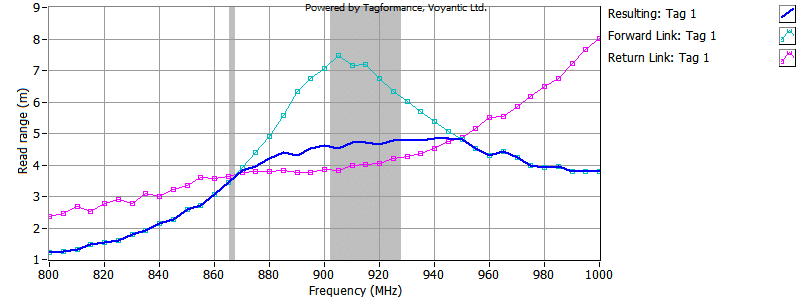
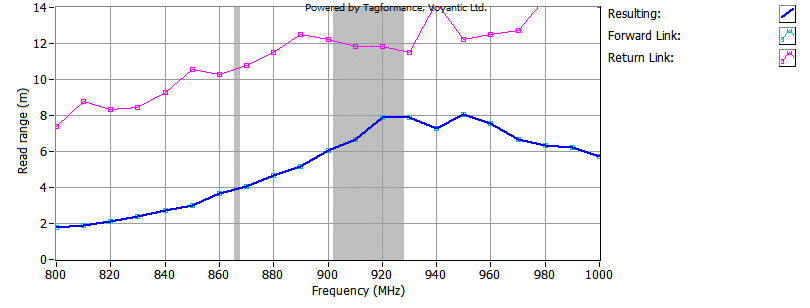
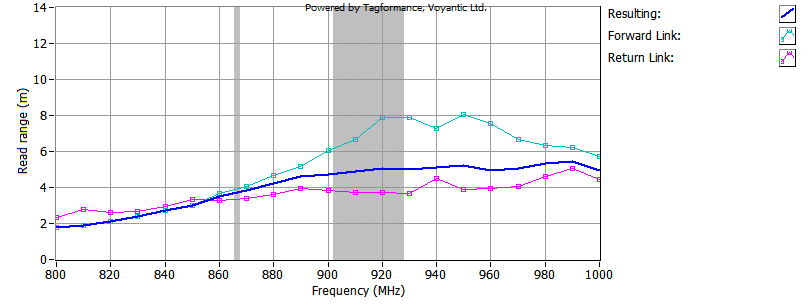
Picture below shows forward and reverse read range curves, which are calculated using 1W ERP transmit power, 2dBi antenna gain and -65dBm receiver sensitivity.

Separated forward, reverse and resulting read range curves. For ETSI range forward and reverse curves are equal, but for FCC range read range is reverse link limited – a reader with more sensitive receiver would improve read range on FCC band.

Tag Close Coupling Issues to Be Addressed by TIPP

As tagging spreads to new product categories in the retail industry, small tagged items are often brought into close proximity to each other. Just think about items boxed for transport. Especially when the distance between tags is less than 3 cm, the tags start to couple with each other.

The close coupling effects will be considered in the upcoming GS1 TIPP global standard. 

From Opinions Back to the Facts

As you saw from the above, the read range is a factor of many issues. As you work yourself through the tag and reader datasheets with the aid of expert tools and good standards, you can connect the dots with relative ease. This process transforms opinions into facts.

I’d appreciate your comments and suggestions around these topics. New perspectives are always welcome.

Learn How to Test the Read Range with Tagformance

Download our application note “Read Range Test with Voyantic Tagformance” to learn how easy it is to test the read range!

RAIN RFID, UHF RFID, EPC RFID, … – Confused by the Different Names?

Aug 11, 2016

中文版 Chinese version

I am frequently lecturing to RFID users and technology providers about quality and performance in RFID. Every now and then a question about the terminology comes up. RFID technology has developed through several paths and as a result there are a lot of names and definitions for RFID. A beloved child has many names, says a Finnish proverb. Understanding the different points of view in naming and the origins of the terminology help to understand the many names.

RFID and Frequency

RFID – Radio Frequency IDentification – is the umbrella term covering a wide variety of technologies: frequencies, communication protocols, and device types. One common way to refer to the different technologies is with the names of the frequency bands:

  • LF RFID (Low Frequency RFID)
    125 kHz – 134.2 kHz, 125 kHz RFID, 134 kHz RFID
  • HF RFID (High Frequency RFID)
    13.553 MHz – 13.567 MHz, 13.56 MHz RFID
  • UHF RFID (Ultra High Frequency RFID)
    433 MHz: 433 MHz RFID
    858 MHz – 960 MHz: UHF RFID *)
  • Microwave RFID
    2.4 GHz – 2.454 GHz: 2.4 GHz RFID
    5.725 GHz – 5.875 GHz: 5.8 GHz RFID

*) Includes local bands ETSI RFID (865 MHz – 868 MHz) and FCC RFID or 915 MHz RFID (902 MHz -928 MHz)

Passive and Active RFID

Different RFID technologies feature different ways to power up the tags and to communicate between the reader and the tag. The base technology is used as one way to classify RFID:

  • Passive RFID: technology where the tag powers up from the radio frequency energy sent by the reader, and communicates back by modulating the reader signal
  • Battery assisted passive RFID, BAP RFID, Semi-passive RFID: technology where the tag gets its operating power from a battery but communicates back by modulating the reader signal
  • Active RFID: technology where the RFID tag is powered from a battery and communicates by active transmission
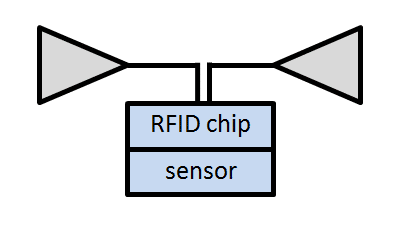
  • RFID sensor, sensor tag: a sensor (temperature, pressure, humidity – or anything else) is integrated into the RFID tag – can be passive, active or BAP
  • Chipless RFID: tags without a silicon microchip based on time-domain reflectometry or frequency signature techniques are called chipless RFID tags.

RFID Names from Standards

Another approach for RFID naming comes from the radio transmission protocols. They are described in radio protocol standards, and are often referred to by the standard names: ISO 15693, ISO 14443-A, ISO 14443-B, ISO 18000-62, ISO 18000-63, GB T/29768

The alphanumeric standard names are not that good for marketing use, so many of the standards are more widely known by commercial brand names, such as

  • Mifare: NXP’s trademark for 13.56 MHz, ISO 14443-A
  • FeliCa: Sony’s trademark for 13.56 MHz, JIS X 6319-4
  • EPC RFID: Electronic Product Code, GS1’s standard family for data content in RFID, standard family includes also protocol standards and frequency standards – also standardized as ISO 18000-63 (formerly ISO 18000-6C)
  • SINIAV: (Sistema de Identificação Automática de Veículos) Brasilian department of transportation’s system for identifying cars. The system includes also RFID protocol standard at UHF RFID frequency

Many of the standards have also been published by various organizations with no or with small adjustments. For example, it is common that a standard is published as a national standard (JIS, DIN,…) , or industry specific standard (IEC for example) and afterwards as a global ISO standard.

Marketing Names and Industry Organizations Aiming for Clarification

In order to fully describe a specific technology, several of the above names can (and sometimes must) be used together. For example: Passive 13.56MHz sensor tag with ISO 15693 protocol. Also several names are interrelated – for example ISO14443-A is in practice always also 13.56 MHz (HF RFID), and passive.

Using these technology derived names and standard names for describing the technology can be complicated, confusing, and in many cases drives the focus to the wrong direction. Industry organizations have recognized this problem and they have launched marketing names for most common technology combinations. Their focus is on the use cases instead of technical details and their goal is that these names would become the everyday names for RFID technologies – just like e.g. Bluetooth has become a common name for radio communication between electronics devices using 2.4 GHz frequency and ISO 802.15 standard protocol.

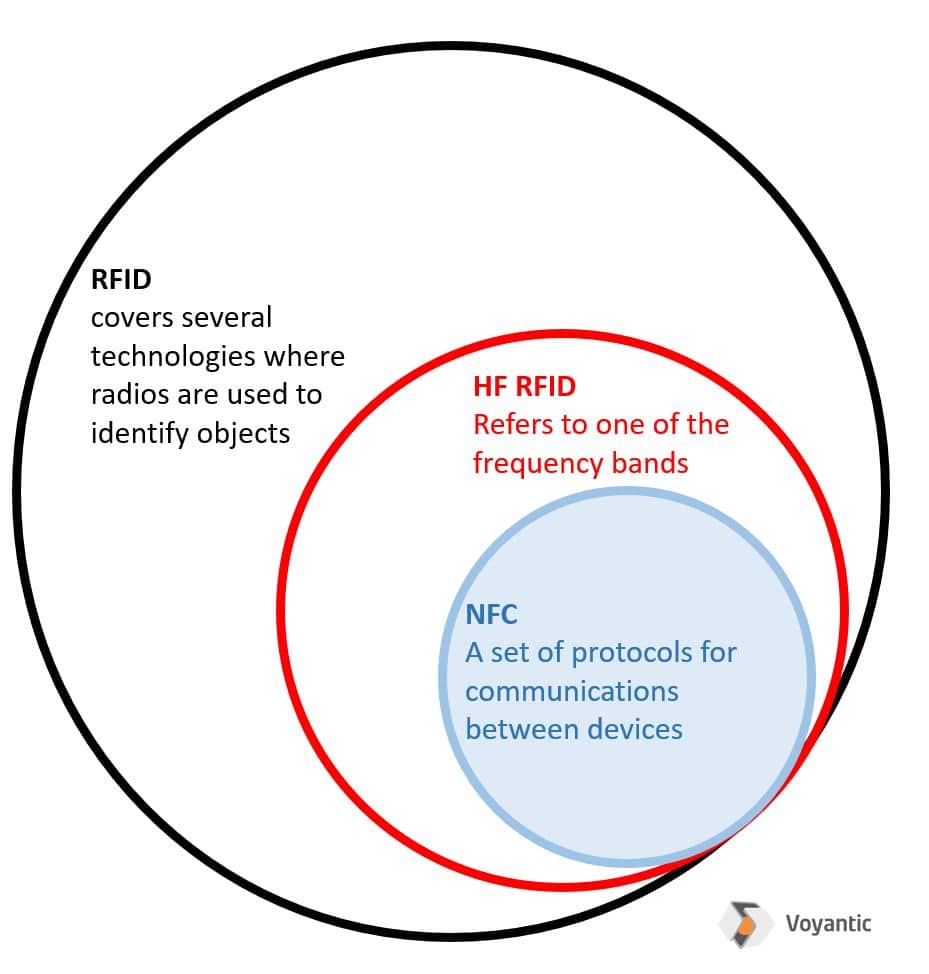
  • NFC: Near Field Communication is a term/brand by an industry organization (link: http://nfc-forum.org/ text: NFC Forum popup:yes). The term describes a main stream combination of HF RFID technologies, and is used extensively in e.g. smart phones. The technology uses 13.56 MHz frequency and several protocols, such as ISO14443A, ISO14443B, and FeliCa (Japan Standard JIS X 6319-4).

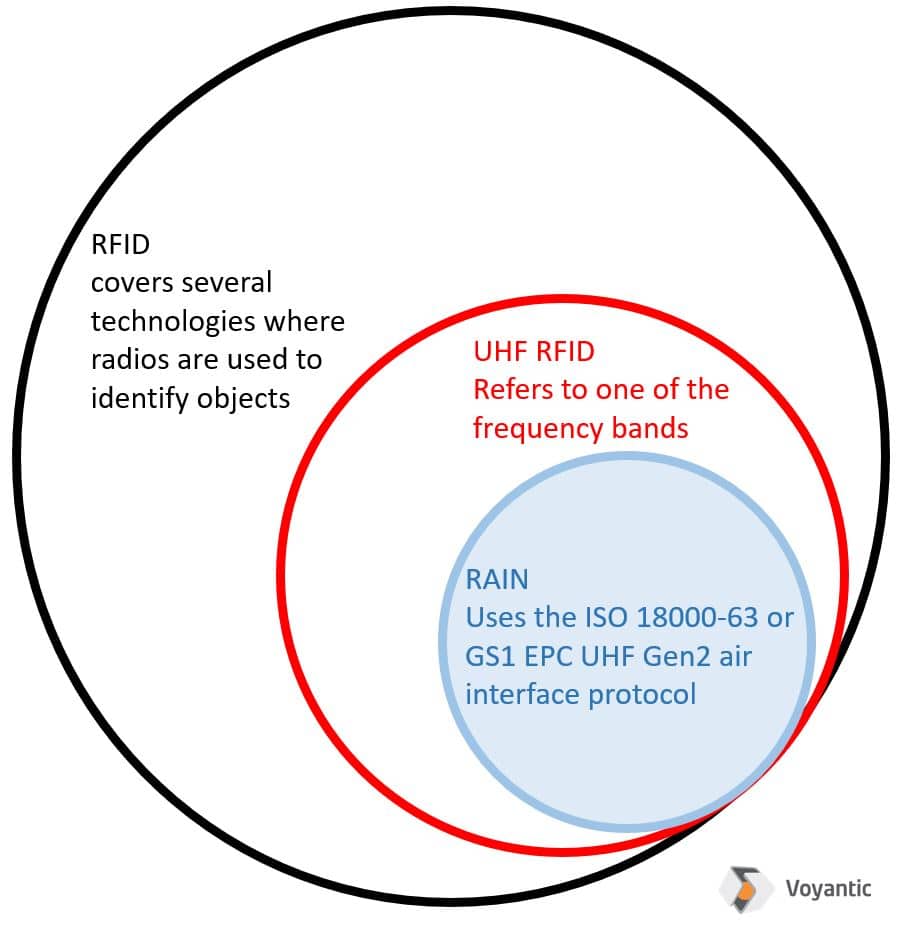
  • RAIN RFID: RAIN RFID is a name coined by the RAIN RFID Alliance – a global cooperation organization of companies offering or utilizing passive UHF RFID. The RAIN RFID covers RFID technologies using frequencies from 860 MHz to 960 MHz and the EPC RFID Gen2 protocol, also known as ISO 18000-63 air interface, regardless of the used numbering system.

Which Names Should Be Used?

I am not ready to trash any of the current terminology. However, I have my own preferences.
I prefer the NFC and RAIN RFID terms in case studies and similar documents aimed for a wider audience when not focusing on nitty-gritty technical details but describing benefits of the technology.

When the focus is on certain technical viewpoints: protocol, frequency, technology type etc., I prefer the narrow technical terms. “Computer accessory for reading battery assisted UHF RFID EPC temperature sensor tags” sounds horrible, but actually describes quite well the technology solutions used. For a consumer the monster-term is not as easy as having a RAIN RFID enabled laptop.

Voyantic is a quality and performance test system provider for the RFID industry. The test systems can be used for testing tags and readers at UHF and HF RFID frequencies – or if you prefer – within RAIN RFID and NFC.

Downgrading Your Spec Does Not Make a Quality Tag – Thoughts About RFID Quality

Jul 08, 2016

中文版 Chinese version

I work as the CEO of Voyantic, a company that specializes in RFID test and measurement equipment. Since our systems are used by hundreds of companies around the world, we often come across cases where a customer needs our help to verify that their tags work as they should. This is a story about a case where things went wrong.

Tagging Athletes in Cross-country Skiing

We got involved with a very interesting case a couple of years ago. A small RFID integrator that we have known for some time wanted to tag athletes in a cross-country skiing competition. The idea was to use RFID for timing the race. And you can guess that if someone spends several hours on the ski track, being left without a race time is definitely not an option.

Cross-country skiing is a healthy hobby and also a good application for RFID timing – Photo by Sorbis / Shutterstock.com

There are many different ways to tag athletes in timing solutions. Common approaches in running competitions include integrating the RFID tags to the race bibs or attaching them to the shoes of the runners. However, in this case, the chosen approach was to buy wrist-band tags and to attach them to the ankles of the skiers. The tags were read by fixed readers that were set up on the side of the tracks.

The integrator went through the specifications of several different wrist-band tags and finally contacted a fairly well known maker of specialty tags for some samples. The samples arrived the following week, and the integrator ran some field tests. Everything worked well. He was able to detect every skier that passed the reader antenna.

So the integrator decided to order the tags that he needed for his application. Once again, there was a timely delivery of correct amount of tags. However, when he started to build the application, he noticed that not all of the tags were working. A typical discussion between an unsatisfied customer and a worried supplier followed.

The conclusion was that all the supplied tags worked according to the specification.

The tag manufacturer tested both working and non-working tags attached to the wrist of whoever they considered to be their standard-human. All tags were readable from a distance of 2 m which was the specification. But they didn’t all work in the end application. How is this possible?

Analysis

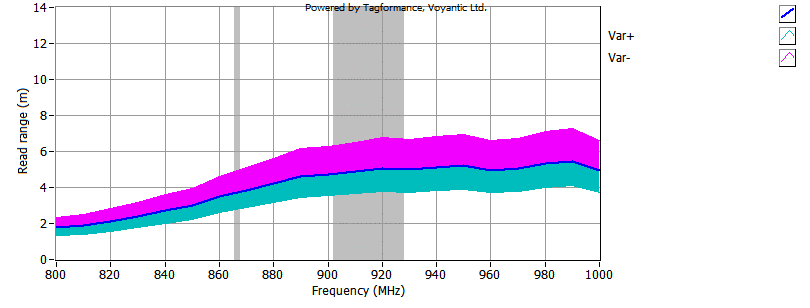
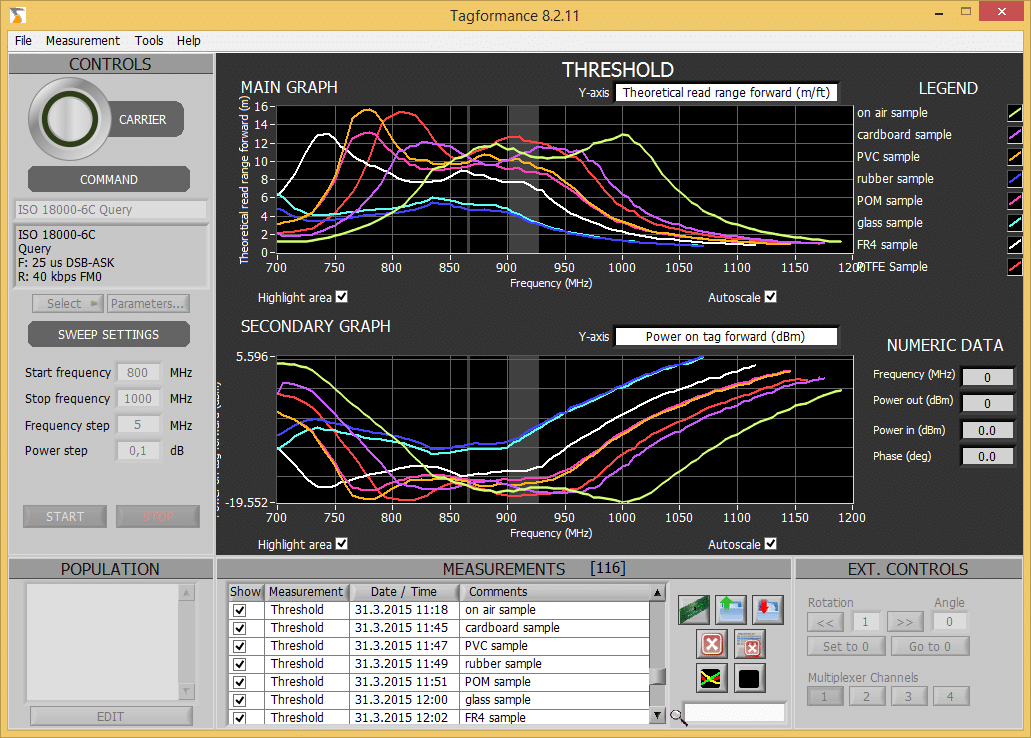
We got involved with the case at this point. We were asked to take a look at the tag samples to try to understand what was going on. So we ran a performance test for the tags using the Tagformance measurement system. The results from the Threshold Sweep measurement are shown below.

Performance variations of wrist-band UHF RFID tags measured with the Tagformance system

We tested the tags in free air, so they were not attached to a wrist or an ankle. But even in this setup it is clearly visible that there are significant variations in the tuning and performance of the tags. So this is what we think happened:

  1. The integrator decided to use the tags differently from what the manufacturer had specified
  2. The first samples sent by the tag manufacturer performed clearly above the spec
  3. The integrator concluded that this tag will work in the application
  4. The next tag batch – even though still within the original spec – performed differently
  5. A part of the tags didn’t work.

So, it is very hard to point fingers in this case. But there is something that the RFID industry needs to improve in. The industry is already doing a decent job in reporting the performance of their tags, e.g. in expected read range. But I think there is a lot to improve in how performance variations are reported, because that is a key factor in building reliable RFID systems.

And what happened with the skiing competition? Did the integrator get the system to work? He did. But he had to manually test through the tags and hand-pick the ones that worked well enough. Hardly a perfect outcome but every skier got their time.

My company Voyantic specializes in test and measurement solutions for the RFID industry. Are you interested to learn more about RFID quality control? Download our sample quality test report and contact us.

White Paper: How to Minimize Quality Variation in RAIN RFID and NFC Smart Label Manufacturing

Learn the practical effects of quality variation and how to minimize it.

Designing a RAIN RFID Sensor. Simple, or Is It?

Mar 23, 2016

中文版 Chinese version

Combine identification, sensors, low cost and years of life time together and you certainly end up with a disruptive mixture that is set to boil over in the near future. RAIN RFID sensors may not be a huge market just yet, but we can see many companies putting a lot of development effort on them. Read on to see an introduction to the six topologies that I’ve seen utilized so far.

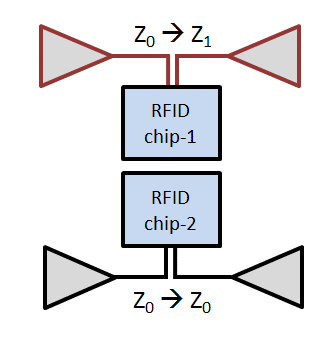
1) Affecting Antenna to Chip Matching

Right from the beginning of the UHF RFID, engineers have been aware of the inlay antenna’s sensitive nature to change its parameters whenever just about anything changes in its proximity. So, it didn’t take long for scientists to call it a sensor. No added energy was wasted on sensing electronics, therefore potentially long sensing ranges were expected. In practice, however, these type of sensors never got too much of a foothold on the market, as the tags were still sensitive to many measurable parameters, and not just one.

The impedance of the antenna is affected, making a detectable change in frequency tuning, activation power, or RSSI.

2) The Dual Tag Relative Approach

To address the real world problems of the previous approach, a simple improvement was soon used. This time, two similar inlays were encapsulated into one physical tag casing, but one of the antennas is made more sensitive to one particular property. For example, if salt impregnated foam is placed over one of the inlay antennas, it doesn’t affect the antenna when dry. However, when humidity rises, it will deteriorate the performance of this antenna at a much faster rate. The reader would poll both of these tags, typically of a sequential EPC code, and monitor the difference between the two RSSI levels.

The impedance of one of the antennas is made much more sensitive to the parameter to be measured.

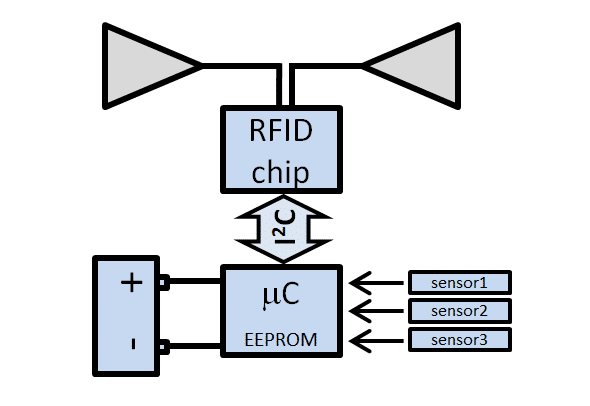
3) The Embedded Tag

A few years ago the most common type of sensor tag was the embedded type of tag. In this form one or several sensors and inputs can be monitored, logged into memory and read from there when needed. Practically any type of sensoring can be performed in this way, but the solution requires a battery. Although the battery does not sound like a too bad thing to have inside, however the advantage to other technologies, like Bluetooth LE, is rapidly lost. There are also several RFID chips that work with the same principle, but alone without a separate microcontroller.

The RAIN tag uses an I2C interface to interact with a separate sensing circuitry. All this requires more power that the tag can harvest from the RF field, thus a battery is added.

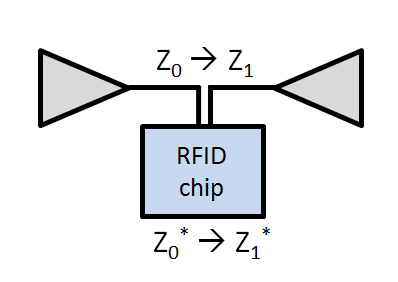
4) Using Automatic Chip Impedance Tuning

Adaptive chip impedance tuning was long awaited, and finally RF Micron was among the first to arrive to the market with a chip with that capability built-in. It didn’t take long till it was used to detect changes in the antennas proximity just like in the case 1. The biggest difference is that now the sensing result can simply be read from the tag memory and not from the RF properties of the tag.

An RAIN RFID IC with automatic chip impedance tuning capability stores the data in the tag memory where it can simply be read with a reader.

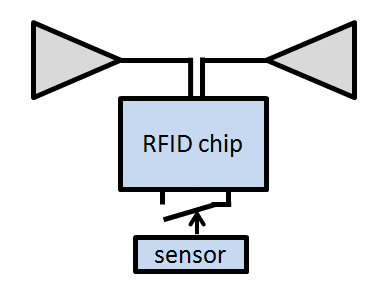
5) Binary Sensing

Several ICs have a special pin called the tamper detection pin. Whether this pin is in contact with ground or not can be polled by the reader. It is thus not so difficult to turn this tamper function into a sensor with a bimetallic strip, mercury switch, level float, magnetic switch, NTC resistor, etc. The fact remains that this topology of sensor remains binary.

ICs with tamper detection can be turned into a binary sensor with relative ease.

6) Inbuilt Sensing Capability

To bring potential cost down and optimize the energy consumption of the tag, the sensor is best integrated into the RFID IC itself. As no busses, microcontrollers, sensors, etc. need to be powered externally, the reading range can be potentially close to that of industry standard tags. The range of measured properties are more limited with this approach, temperature being the simplest candidate.

Built-in sensors can be powered from the RF field without a battery.

All this is to say that RFID sensoring can, in fact, be really simple. However, to get the solution working right also on-site with a known level of sensing accuracy requires advanced methods and a correct set of tools.

Getting It Right With Proper Tools

A number of RFID sensor developers are already using diverse functionalities in the Voyantic Tagformance systemto accelerate tag development cycles, optimize designs and to characterize their products. The more data there is in the sensor tag datasheet, the easier it is for anyone to take it into use!

If there is a particular type of testing you need to get done, but cannot find that particular function in our software GUI, please do not hesitate to contact us! Check out also our earlier blog post of passive RFID sensing!

Learn How to Design Passive Sensor Tags

Download our application note “Utilizing Voyantic Tagformance to Speed Up Development of UHF RAIN RFID Sensor Tags” to learn how to design passive sensor tags!

What Gen2v2 Security Offers for RAIN RFID Applications

Feb 12, 2016

中文版 Chinese version

In October 2013, the management board of GS1 ratified text: EPC Gen2v2. These new features ease the adoption of RFID especially in application areas where the tag carries more information than only its identification. Let’s have a more detailed look at one new key feature of Gen2v2: authentication.

What Does Authentication Mean?

So first of all, what is authentication? A quick Google search resulted with the following definition:

Authentication is the process of determining whether someone or something is, in fact, who or what it is declared to be.

In the RAIN RFID (UHF RFID) context, that something can be either a tag or a reader. In tag authentication, a reader asks a tag to encrypt a message using its stored secret key. If the reader is able to decrypt the tag response, the tag is genuine. This approach can be used to detect counterfeit tags, and as a result counterfeit items. Similarly, in reader authentication, access to a tag is limited to authentic readers. This approach can be used for example in electronic payment solutions. Ken Traub of Ken Traub Consulting wrote a very down-to-earth post about this topic.

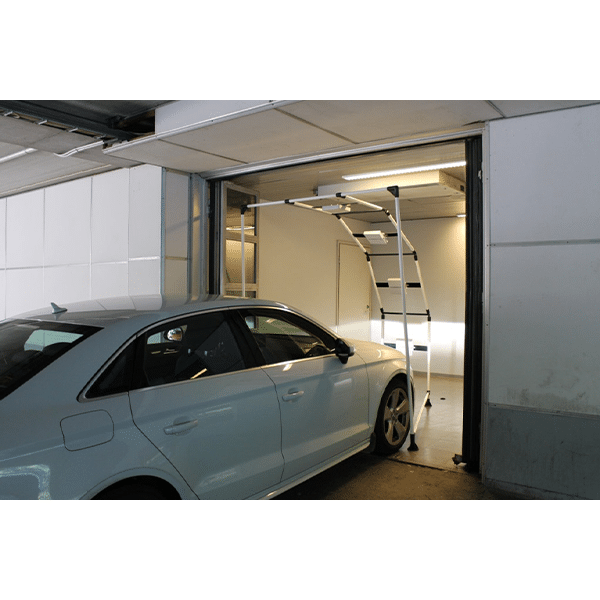
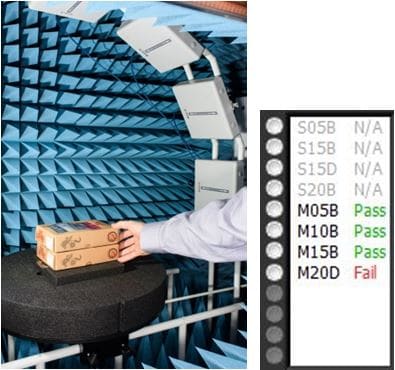
Test setup for automatic vehicle identification

RAIN RFID tags that implement cryptographic security are expected to be more expensive than the simplest retail labels. As a result, they will only be used in application areas where authentication gives a significant advantage. Such fields include at least

  • Electronic road tolling
  • Vehicle registration
  • Access control
  • Asset tracking and brand protection
  • Parking and vehicle authentication

The First Secure Tags and Readers Already Available

In Spring 2015, NXP released the first Gen2v2 tag IC that provides cryptographic authentication, the UCODE DNA. Several tag manufacturers are already providing tags with this IC. On the reader side, upgrading to Gen2v2 requires a firmware update, and at least Nordic ID already has added Gen2v2 support to their readers. So, the technology is available and there seem to be several ongoing pilots that use Gen2v2.

Different Crypto Suites

Gen2v2 is not concerned with which authentication method is used. Instead, the different crypto suites are defined under the ISO/IEC 29167 standard family. For example, NXP UCODE DNA uses the AES (Advanced Encryption Standard, ISO/IEC 29167-10) crypto suite. Some crypto suites may be optimized for low power consumption and quick authentication, whereas others may provide more secure authentication. As new Gen2v2 tags appear to the market, we will most likely also see different approaches to authentication.

What Does Security Mean for RFID Testing?

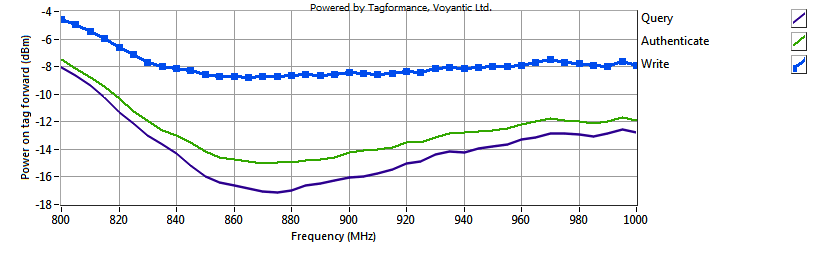
Since Gen2v2 is backwards compatible with Gen2, all Gen2 test methods apply just as well to tags supporting the new standard. The most widely used performance test method for characterizing a tag is measuring its sensitivity as a function of frequency. This reveals both the tuning of the tag as well as the operating range that can be acquired. Typically, the same amount of power is required to identify a tag and to read its memory contents. However, writing to the tag usually takes more power, thus yielding to a shorter write range.

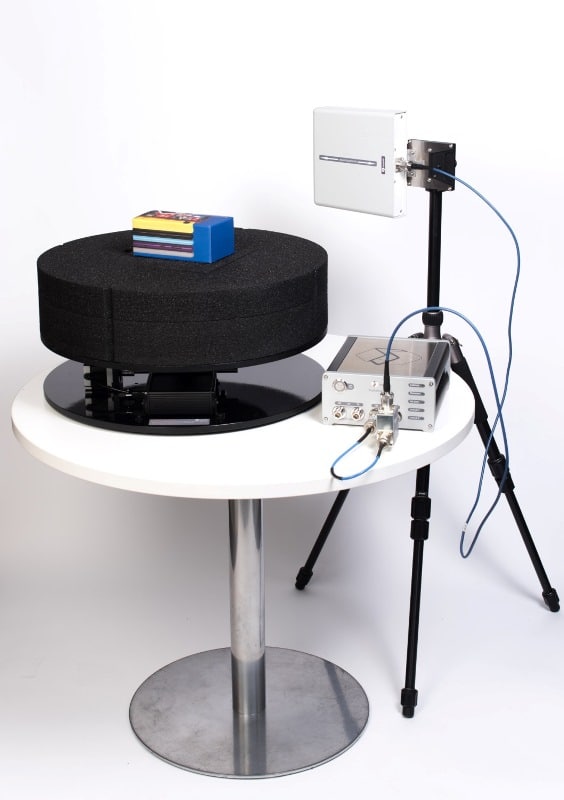
Voyantic Tagformance Pro RFID measurement system

The Gen2v2 security functions introduce a new sensitivity level. The tag’s crypto engine that is required for the authentication may need more power than simply identifying the tag. The figure below shows the sensitivity of a Smartrac Dogbone with the NXP UCODE DNA IC. As the figure shows, authentication needs more power than just identifying a tag, however the difference is only 1 to 2 dB whereas writing the tag memory requires significantly more power.

Sensitivity of a Smatrac Dogbone with NXP UCODE DNA IC

My company Voyantic delivers test and measurement systems for companies that either develop or use Gen2v2 tags. The Voyantic systems enable companies to reach excellence in tag design and to find the most suitable tag for each application.

If you are interested to learn more, please contact us and let’s talk more!

How to Win Sales with Good RAIN RFID Test Data

Dec 29, 2015

When selling RAIN RFID tags: wouldn’t it be great to prove that the proposed tag is the best possible one for the customer’s application instead of just sending out loads of free samples hoping that the customer tests them properly? And when purchasing: wouldn’t it be great to have comparable data of how each tag works in your application instead of “our tags are the best ones, you can trust us” statements?

Guess what: it is possible, and in most cases, the salesperson or the buyer just needs to know what to ask. Tag developers have a lot of characterization data ready. Read on to see how to leverage that data following the 3-step approach!

Step 1: Extract Tag Characterization Data from the Production Quality Log

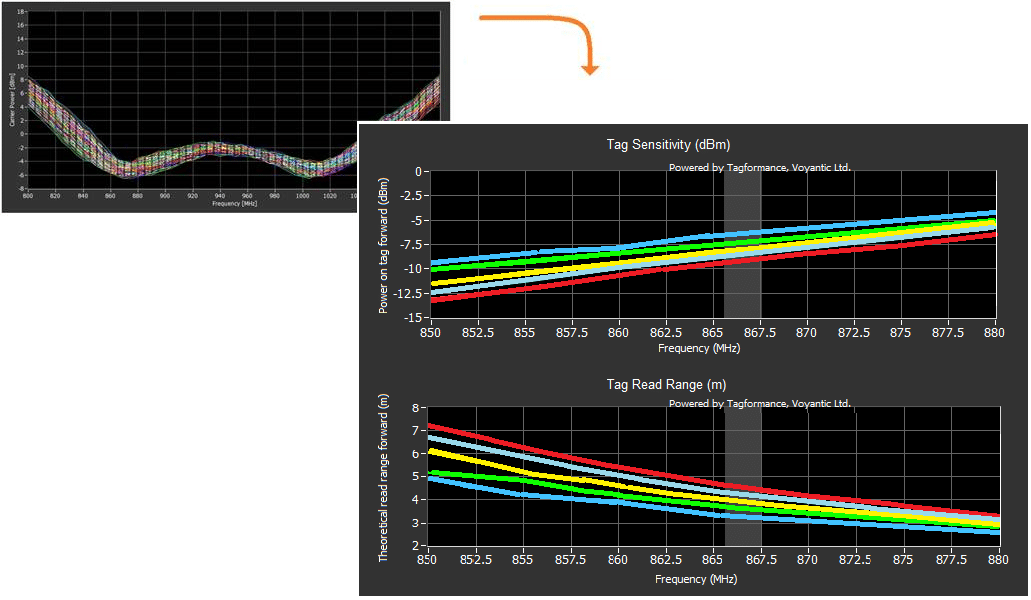
Useful RAIN RFID tag data combines production quality information with detailed laboratory test results. Production quality data is a good starting point since it shows the overall quality variation. With Voyantic’s Sweep Data Analyzer, it is easy to identify the typical and the worst acceptable tag and to quantify variation. Variation can be described, for example, as each tag having a sensitivity of -8 dBm +/-2.5 dB. With the Tagformance viewer software, the sensitivity values can also be translated into read ranges.

RAIN RFID tag quality – variance in RFID production quality

Step 2: Connect RAIN RFID Tag Performance Data to the Use Case

Detailed information about the performance of a RAIN RFID tag can be generated by testing the selected sample tag (typical tag or weakest tag) in a laboratory environment. The goal of the laboratory tests is to show how the tag would perform in different applications. Simply place the tag or tags on Voyantic Reference Materials in different arrangements and run the tests on Tagformance.

When proper test data is available, there is no need for extensive field tests with various tag and reader combinations. Shortening the field tests saves time and money significantly – both for the seller and the buyer.

Typical test results include RAIN RFID read ranges and orientation patterns on various materials and within diverse tag populations. When the tags are attached to different materials, their tuning, and performance level change, with the test results, it is possible to evaluate what the read range would be with varying models of readers. The results predict how the real-life RAIN RFID system will work. With proper tag data, even RAIN RFID readers can be easily compared, and the bottleneck of the system performance can be identified.

Step 3: Let the Customer Play with the Data

Utilizing RAIN RFID tag test data is really simple. As a result, you are able to assist your customer efficiently, and most likely, also to shorten tag sales cycles. If you want to learn the specifics related to RAIN RFID tag data crunching utilizing the Tagformance software, please read on.

Tagformance Read Range test results are an excellent way to compare tags. Choose test data with the tag population and material corresponding to the RAIN system use, and enter reader the information.

The graphs show the read range of one RAIN RFID tag with two different readers.

RAIN RFID tag read range

When the tag is tested with the RAIN RFID reader parameters entered into the system, the test results show the overall system performance.

In the first case, the system level read range bottleneck is tag sensitivity, and the resulting read range is 8 meters (26 feet) in the FCC frequency range.

RAIN RFID tag read range and reader sensitivity

In the second scenario, the reader has lower sensitivity, read range decreases to 5 meters (16 feet), and the system level bottleneck is reader sensitivity.

It is also easy to tie production variation to the test results. With production, variation included the read range variation is 3.5 meters to 7 meters (12 feet to 23 feet).

RAIN RFID tag read range and production variation

Producing the same information with tag samples and a reader is difficult and uncertain. Depending on the selected sample tag, the expected read range may be anything between 12 feet and 23 feet, and there is no information about the variation. Surprises await in implementation, and counting accuracy is likely to be well below 100%.

Other test results show, for example, the orientation pattern – how the read range changes when the tag and the reader are not facing each other directly, and how the tag performance changes when there are multiple tags in front of the reader.

Good RAIN RFID Tag Performance Data is a Powerful Sales Tool

There is a lot of tag test data available, and the Tagformance viewer software is an excellent tool for presenting the data to the customers.

Tagformance viewer software

Tagformance Viewer is Available and Can Be Used by Anyone

With the viewer software, it is easy to choose results from RAIN RFID tag tests corresponding with the customer’s intended use scenario, input reader information, and see the actual system-level performance.

Download a Sample Datasheet Showing RAIN RFID Tag Performance and Quality Information

Download here an excerpt from a sample datasheet showing how to tag data could be presented in a datasheet. The sample shows how the tag performance and quality information is presented in a format that is useful for the customer in tag selection.

Download Sample Test Data and Tagformance Viewer Software

The Tagformance viewer software can be used to view test data. By inputting different reader parameters, such as reader power, to the software, the application shows how the read range changes. By inputting tag variation information, read range variation can be seen. The viewer software can be used for viewing and analyzing data from the tag developers and manufacturers. Would you like to try? Contact us and I will be happy to send you the software installer with demo results!

Why RFID TIPP Grading is Great News for the Retailers Worldwide

Nov 23, 2015

What does EU tax harmonization, the war in Ukraine, and TIPP adoption have in common? All three appear to be stagnant battlefronts with plenty of hard work done behind the scenes but minor visible progress to outsiders. Is there something wrong with the world order, how to move forward? Relax, take a sip of Dr. Pepper and read on to see why and how TIPP will prevail.

What Do TIPP, Tire Sidewall Codes, and Automotive Oil Grades Have in Common?

TIPP is an acronym for Tagged Item Performance Protocol. The TIPP methodology was initially created in the USA to simplify and standardize the communication and accountability around RFID tagging. RFID tagging of retail items dramatically improves inventory accuracy. Without RFID, it is impossible to sustain accurate inventory, especially on the shop floor level, and without accurate inventory a retailer cannot effectively execute their omnichannel sales strategies.

With this said, TIPP is a significant leap forward for any RFID adopting industry that looks to cut tagging costs, simplify communications, and clarify accountability. This approach would equally well serve the RFID adopters in the healthcare, automotive, and aerospace industries. It comes gift-wrapped by the GS1 US, too!

Little something for our friends!

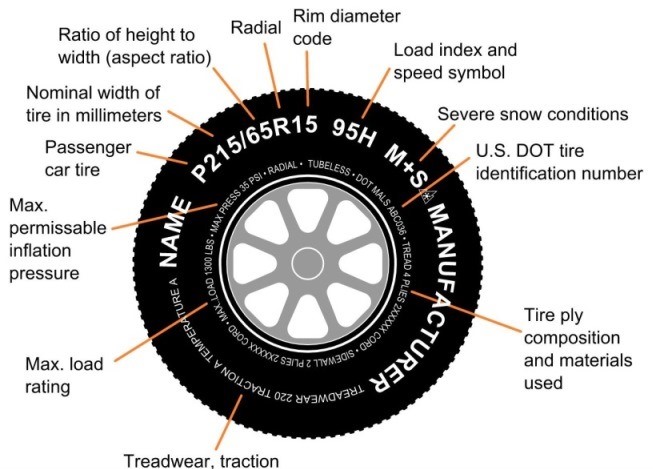
The TIPP approach bears an analogy to car tire codes. The standardized information on the tire sidewalls describes the fundamental characteristics of the tire and is mandated by US Federal Law and EU Directives. Adapting to this system, the car manufacturer carefully masters the product (car) design, sets the tire requirements with a few alternative sizes that the car owners then follow. Periodically there is the unbiased 3rd party to check that a particular car has tires that meet the specs, are not damaged nor too worn out. In all these technical affairs, the tire manufacturer’s responsibility is to come up with the numbers and put them on the product. The tire brand is devoted to the sales and marketing side of things.

Tire sidewall markings include plenty of information for the consumer. “Tire code – en” by F l a n k e r – Own work. Licensed under CC BY 3.0 via Commons.

I will take a second example also from the automotive industry: SAE oil grades. Most car makers don’t endorse Total, Shell, nor Valvoline above others, but simply specify multigrade SAE 5W-30 in the owner’s manual, perhaps with little twists as BMW-LL-04. These grades have temperature-viscosity built-in, which makes a real difference up here in the North Pole. This valuable classification work was done by the Society of Automotive Engineers – SAE, which also has set standards on the quality side. SAE oil grades lay the grounds for easy purchasing, healthy competition, and results in fewer engine problems for us all. In this setup, the oil brands play an important role that is simply fenced off from the underlying oil grading system.

These two examples illustrate how grading systems have made two major industries more transparent, efficient, and streamlined. Sure it took years to develop and enforce these common practices, but the outcome benefits everyone.

Maintaining Approved Inlay Lists Becomes Too Complicated as RFID Tagging Expands to New Product Categories

Before the TIPP was established, the early adopters of RFID came up with their ways of getting tagging done in a controlled manner. Often this meant countless hours of the trial-and-error type of testing, and the outcome in many cases was lists of approved inlays that are suited for a particular product category. Suppliers were then instructed to use inlays from those lists, and just for a while, the process seemed to be alright.

Gradually the pain started to manifest itself. Because an inlay product is in constant evolution, maintaining of inlay lists often turned out to be quite a burden. To make the situation even more uncomfortable, the amount of testing is dramatically increasing as RFID tagging expands to new product categories. Even suppliers were unhappy due to extra effort and expense because conflicting lists from different retailers lead to exception tagging.

Adopting TIPP Is Evident, But There Are a Few Speedbumps Left on The Road

GS1 US did a fantastic job in pulling retailers, suppliers, and RFID industry experts together, and as an outcome, the TIPP grading system with eight initial performance grades was introduced in January 2015. The test methodology was documented on the protocol, physical and practical levels. A logical and well-documented alternative to the approved inlay list processes had been introduced.

The TIPP Guideline also includes grades for stacked retail items.

So why is it that the US retail’s giants did not instantly adopt TIPP? I would list four factors:

  1. The TIPP grades are not intuitive – which one to pick, and what to do if none of the eight alternative grades meet the read scenario requirements;
  2. How to verify for the TIPP grades – RFID technology vendors have not yet introduced routine validation methods for TIPP graded retail items;
  3. Many retailers are managing global supply chains, and they would rather adopt a global standard around RFID tagging;
  4. From the perspective of a multi-billion dollar retail company, slowness is an integral part of “instant”.

All these issues can and will be resolved; it just takes time. The road ahead is, therefore, paved with education, training, convincing, waiting, and politics. This rough terrain is nothing new since most RFID vendors are ideally used to it already for a decade.

Even slow progress is progress. Image courtesy of Hold the Mustard Postcards ©1980.

The Industry Is Multitasking And Making Further Progress

The vital steps that technology vendors and GS1 should take include making the TIPP grades more understandable, adding new grades in the portfolio, and introducing validation methods. All these issues are being addressed as we speak. In fact, for validation, there are already the first out-of-the-box solutions available, as you can see from the videos below.

On top of this great news, the GS1 Global Office is making a strong effort to develop a TIPP global standard. Retailers in the US, Europe, and Asia should all contribute and support GS1 in getting the global standard out promptly.

All this takes time. Many stakeholders are working on it, and it’s going to turn out great. Please contact me (juho.partanen@voyantic.com) for further insight!

The Pioneers of UHF RFID: The Aerospace Industry

Nov 06, 2015

中文版 Chinese version

Retail RFID seems to get the most limelight in the RFID industry at the moment. And that is not surprising because of its huge tag volumes and growth rates. But many other sectors are benefiting from RFID use as well. One of my personal favorites is the aerospace industry.

The aerospace industry has been one of the pioneers in UHF RFID use

The most visible aerospace company in the RFID space has been Airbus. Their announcement, at the beginning of this year, to ask their supply base to tag all traceable items with passive RFID shows that they are serious. But also Boeing and Embraer come across regularly in RFID related news. To serve this industry, an ecosystem of RFID technology providers has emerged. Companies such as Fujitsu, Maintag, Tego, OAT Systems, and Brady, to name a few, have a special focus in aerospace RFID. Besides, the ecosystem has generated business opportunities for the supporting industry, see, for example, the Stanley Black & Decker success story.

What is Required from RFID in Aerospace?

So why are some RFID companies specializing in the aerospace industry? Can’t we just buy a roll of RFID labels and start tagging airplane parts? Well, it is not quite as simple as that. Several aspects set aerospace RFID, apart from many other application areas:

  1. Large memory required: The aerospace industry requires that a lot of information (birth records, maintenance records, etc.) is stored directly into the tag. They don’t want to rely on a connection to an external database which is usually used in retail RFID.
  2. Valuable items: The tagged items are of high value and are often used for ten years and more. As a result, tag durability is more important a driver than tag cost.
  3. Harsh conditions: Tags in and out of an airplane need to endure vibration, significant variations in temperature, humidity, and pressure, and many other conditions unfamiliar to retail applications.
  4. Global functionality: As airplanes frequently cross country borders and oceans, the RFID tags need to be readable around the world. As a result, the tags must be designed to be wideband.
  5. Less sensitive tag ICs: Due to their larger memory content and possible special functionalities, the tag ICs used in aerospace typically need more power. As a result, many applications are limited to read ranges of 15 cm to 3 meters.

A Need for Standards

The aerospace industry realized that they need standardization for flyable tags as early as 2006. That is when a group of experts in the field decided to develop a standard under SAE International. SAE AS5678, “Passive RFID Tags Intended for Aircraft Use” was born. The standard includes a broad set of different environmental tests to make sure that a tag would endure the harsh conditions of a flying airplane. Sun APT Test Center was the first lab to start certifying tags according to the standard.

In addition to environmental testing, the standard also describes RF performance tests for the tags. The standard described a very professional and well repeatable measurement methodology. But even more interestingly, the standard divided tag performance into performance grades, somewhat similar to what the GS1 TIPP standard would do for the retail industry in 2015.

AS5678 was truly ahead of its time.

As a result, an airplane manufacturer could simply require a grade B tag to be used by its suppliers without having to specify the tag model or detailed performance parameters.

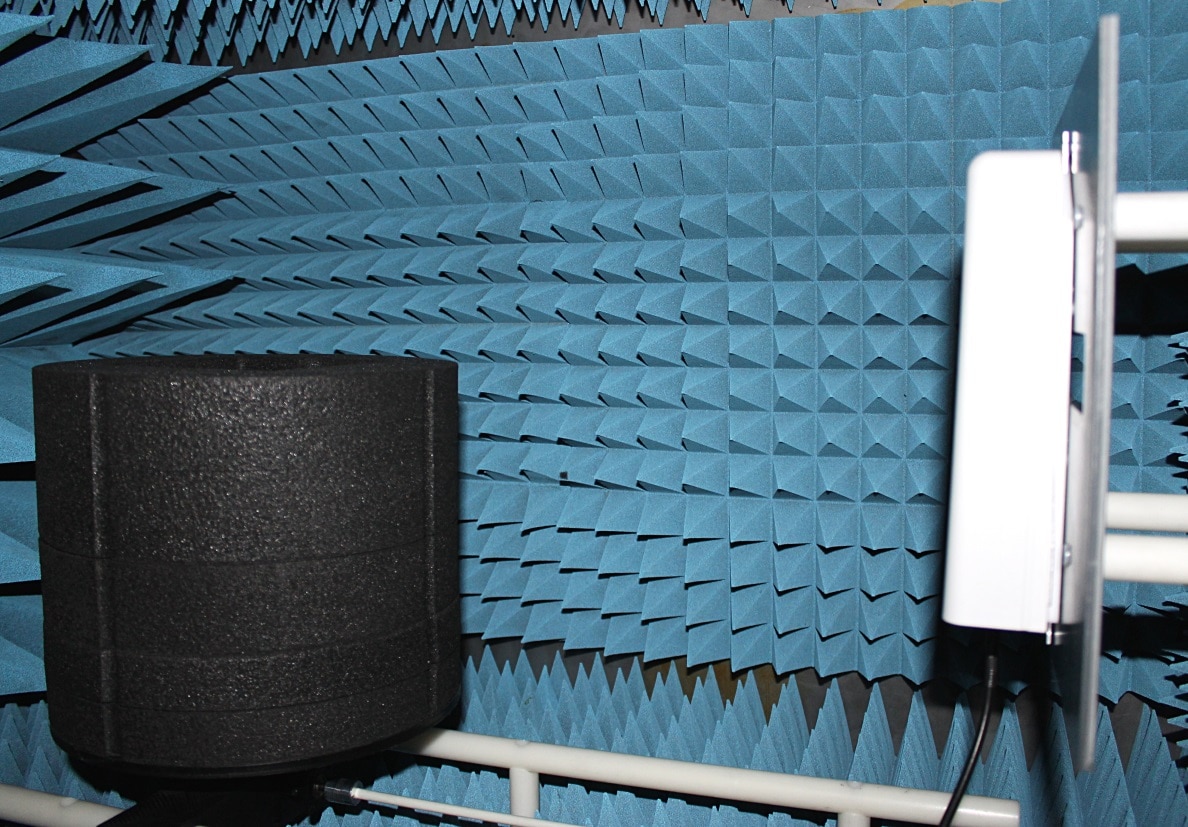
AS5678 performance tests are typically performed in a small anechoic chamber

Now, in 2015, SAE is revising the AS5678 standard to reflect the new information gained during the years. I have been a member of the team, revising the standard as well. The changes, however, are not very large, which well reflects the quality of the first standard version.

Specific RFID Testing Needs of the Aerospace Industry

The special requirements of the aerospace industry for RFID lead to some specific testing needs:

  1. Measuring tag performance: Because of the large memory contents, wide bandwidth, and rugged design, aerospace tags may have limited read ranges. The AS5678 test methodology can be used to determine the acquired read range and the matching performance grade.
  2. Verifying tag bandwidth: Since a wide bandwidth is required, the performance of the tag needs to be tested typically throughout the 860-960 MHz frequency range.
  3. Environmental tests: AS55678 describes a large set of environmental conditions that the tag needs to endure. The performance of the tag should not degrade during the tests.
  4. Memory testing: The memory of an aerospace tag is organized differently compared to a typical label. As a result, there is a need to have good visibility to the tag memory contents.

My company Voyantic has delivered test and measurement systems for both end-users and technology providers in the aerospace RFID industry. The systems promote design and manufacturing excellence, as well as fluent technical dialogue between pioneering companies within the industry.

If you are interested to learn more, please download our application note below or contact us, and let’s talk more!

Learn How to Test UHF RFID Tags in the Aerospace Industry

Download The Essential Guide for UHF Tag Testing in Aerospace

How to Optimize the Cost of Quality for UHF Tags?

Sep 25, 2015

When talking about high-end RFID performance testing solutions, I sometimes face the situation, where my customer is struggling to find room for the investment in their budget. After some return on investment (ROI) calculation, the case typically looks much brighter.

If we look at the overall quality cost structure in UHF tag manufacturing, I will dare to claim that, in many cases, even a single batch of poor quality can justify the ROI for decent RFID test equipment. The challenge here is though that the costs of being able to provide excellent and consistent quality are directly addressed to the production. In contrast, the charges induced from poor quality are inconspicuously scattered all around the corporate structure.

Where do I base the claim? Let me show you!

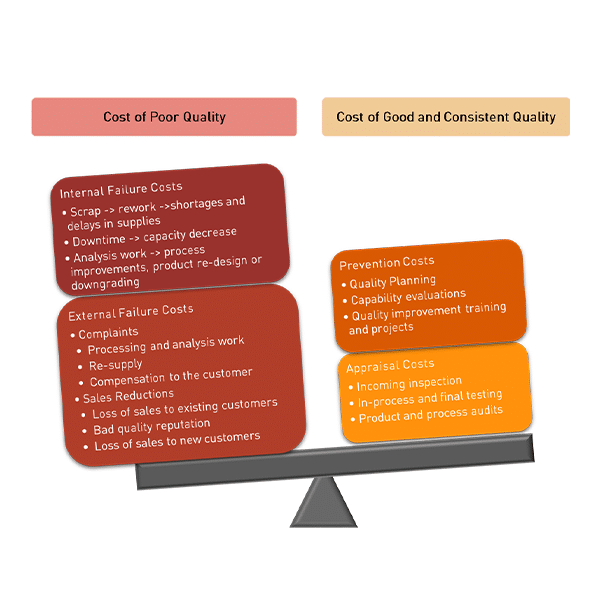
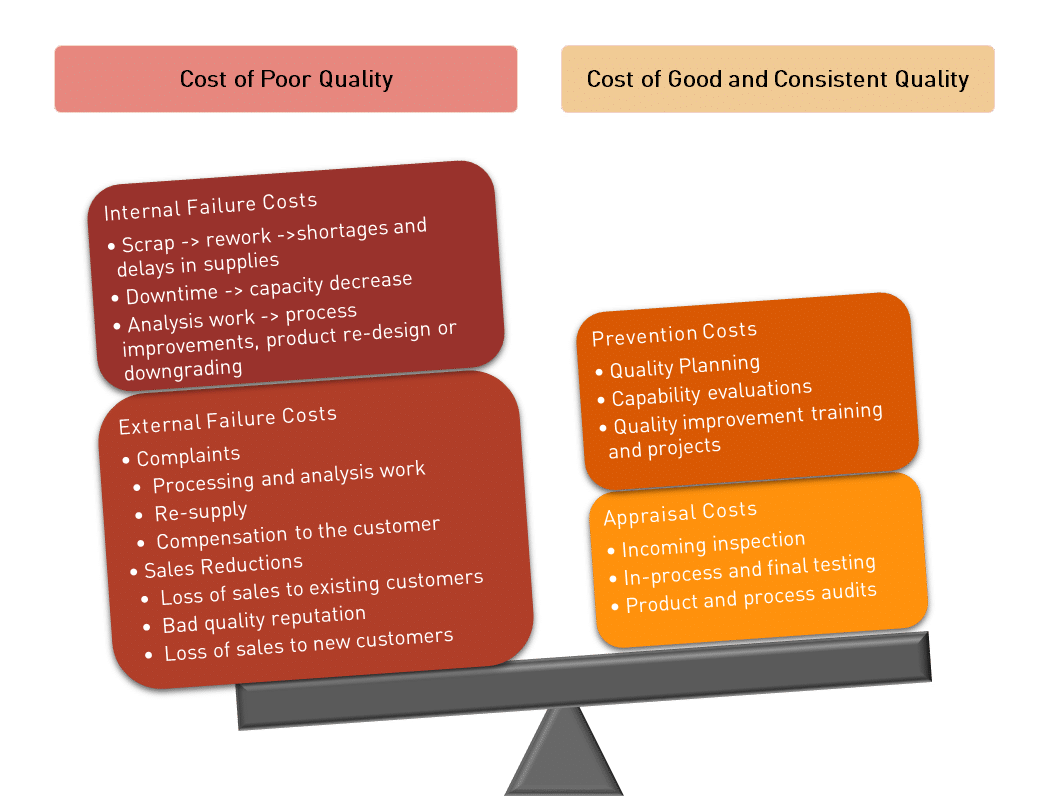
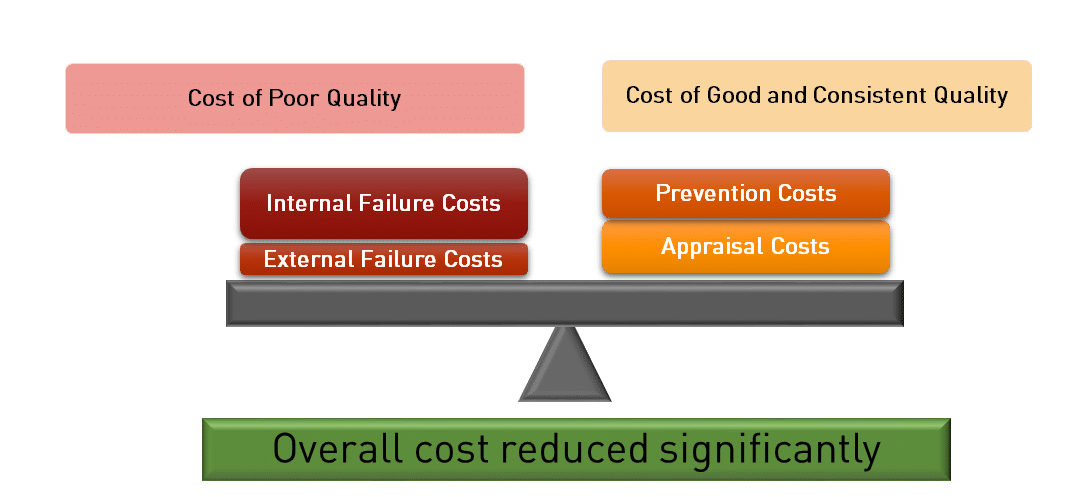
First of all, to lower the cost of poor quality, you need to invest in preventing failures and maintaining excellent quality. The great thing here is, though, that you get much more than your money back. If done right, each penny you invest is multiplied as savings in failure costs. This is how you balance the scale and minimize your total costs.

Let’s Do Some Math!

When a quality issue is found in the production, how much does it cost for an engineering team to troubleshoot, or a machine to stand by waiting for the next production batch to be started? I’m sure you know the figures better than I do, but what I do know is these problems take some hours to be solved, sometimes even days. I also know that the one-hour machine downtime in chip attachment makes at least 10 000 tags less manufactured. For a label converting process, it may be ten times more.

What if the problem was not detected when manufacturing the tags, but in an inspection process that was done on the batch afterward? How big is your typical batch? 100 000 tags? 5 000 000 inlays? In the worst case, you need to multiply that with the number of batches produced and with material costs per tag, and add on top of the engineering work and machine downtime.

Ok, now you just need to rework the whole batch, which means again capacity loss, as the machine time is used to reproduce what already was supposed to be delivered. The ball keeps rolling, and you’ll end up with shortages in your next deliveries, delays that cause inconvenience to the customers, and a headache to the management, sales, and customer support. So, just add up the machine time for rework, management, and support time, as well as customer dissatisfaction with the earlier equation.

Now, we are starting to talk about costs that are far more difficult to quantify. Customer satisfaction…

What if the defected batch didn’t remain as an internal issue? What if it reached the customer, who is struggling now with problems in his application? Now we’re starting to talk about external failure costs, which are not only harder to be measured, but also induce secondary effects and costs, like bad quality reputation. I know, impossible to be quantified. But if you just add the management cost due to the complaints and troubleshooting with the customer involved, and forget the fact that the customer may end up ordering his next tags from another supplier, we still have a significant pile of costs due to poor quality. Now would you believe me when I’m saying:

You Need to Balance the Scale to Minimize the Overall Cost of Quality

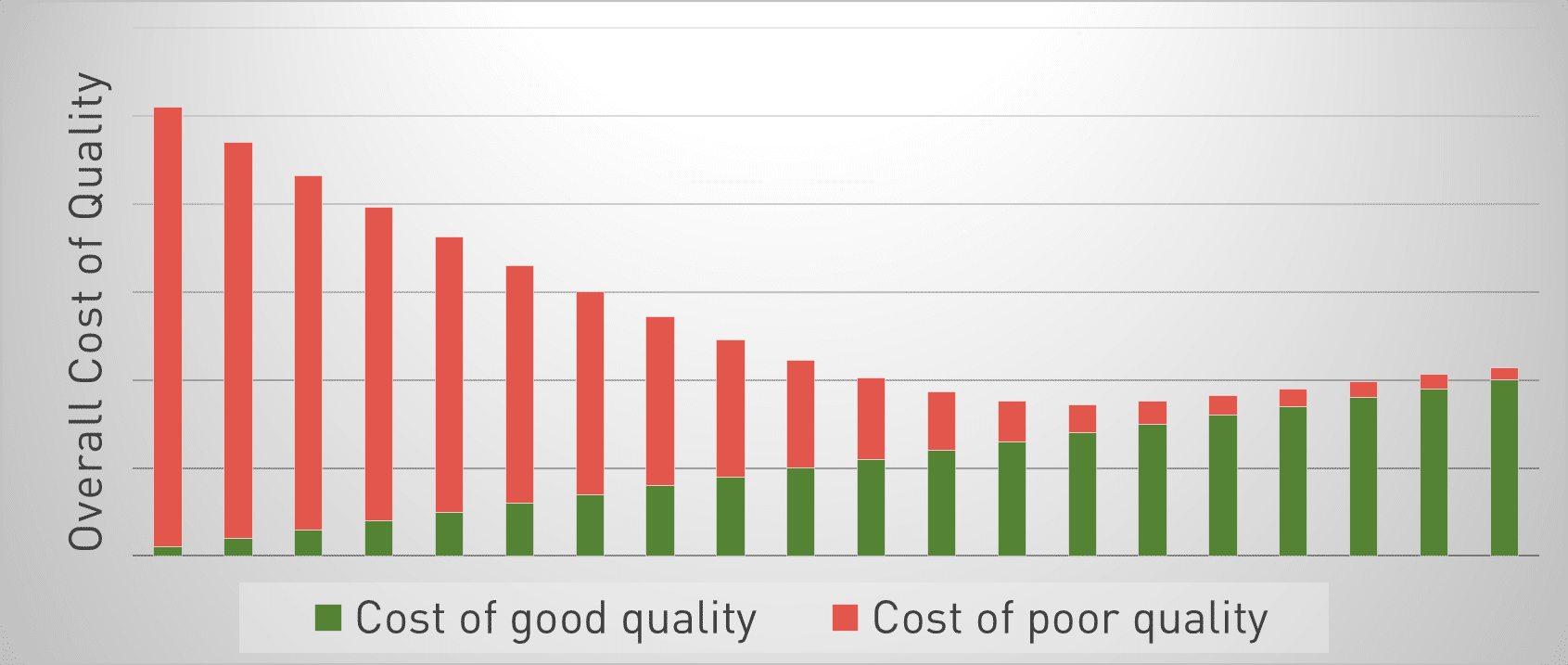
Unlike the above figure may suggest, the equilibrium point here would not necessarily be where the cost of poor quality equals the cost of good quality. The equilibrium point is reached when the efficient investments in the price of excellent and consistent don’t return more than their value in the costs of poor quality.

The graph below would represent an example situation, where the costs of good quality are linearly increased, resulting in considerable reductions in the price of poor quality at first. Eventually, the point is reached, where further improving the quality appraisal and failure prevention costs will not lower the failure costs as much.

If you calculate with your figures the overall cost for providing just a single batch of UHF tags with inferior quality to the customer, would you agree with me that these costs are just too high to accept frequently, or at all? This approach is only the tip of an iceberg. What eventually will happen, if the quality continuously keeps failing to meet the customer expectations, is you start losing business, surreptitiously, but deterministically.

Quality Reputation – Hard to Estimate, Easy to Forget

The quality reputation is easier to ruin than to be built. Building it from scratch takes time and effort. Trying to gain customer trust without hard evidence based on measured facts is challenging. Still, if you’re able to quantify the quality, as well as prove the quality is consistent, you’re in a wholly different position to win the customer.

We have various examples of customers who have taken the UHF tag quality seriously, all the way from design to production. There are customers like Michelin, who have decades of experience in manufacturing and quality control. They have the same approach in case of any new technologies. Why ruin the quality reputation you have successfully built for years? With Michelin, we worked on something a bit customized to be able to test tire tags that are very heavily over-tuned. Check out this interesting case study:

Michelin — Tire Tags with Consistent Quality

Customer Case Studies

What kind of figures did you come up with on your overall cost of quality? Would you like to talk more about balancing your scale as well? Please contact us, and let’s figure out how we could lower your quality costs and increase your profitability!

Solutions for RFID productions