
National UHF RFID Standards and RFID Performance

Sep 14, 2015

ISO 18000-63 (6C, EPC Class 1 Gen 2) has been by far the most used UHF RFID standard for several years. There have been some competing standards such as Tagidu, IP-X (tag-talks-only), and ISO18000-62 (6B), but they are nowadays rarely used in new applications. However, new RFID standards still emerge: for example, in Brazil, SINIAV has created a protocol aimed for vehicle tracking applications. In China, a new UHF standard, GB/T29768-2013, has been recently published.

Several tag manufacturers work with these new standards. Why do these national RFID standards exist? And what does it mean for performance testing?

Why Doesn’t Everyone Work with the Same Standard?

Since there is a well-working global standard, it would sound logical to use it for as many applications as possible. But there are some reasons for using something else as well. There may be national interests, or maybe there are special requirements that existing standards don’t cover well enough. For example, ISO 18000-63 was developed for quickly inventorying large quantities of items, and it may not be optimal for reading a single tag that is passing by at 180 km/h. Another challenge may be when the tag is in the windshield of a truck filled with other tagged items.

It should also be noted that the division to separate standards does not always have to be final. Commonly, new functionalities and exclusive features are absorbed into the global standard after they are validated.

What is the Difference Between the Different Standards?

When we talk about passive UHF RFID, we talk about readers that radiate between 860 to 960 MHz to power up remote tags, which in turn modulate their reflection to communicate back to the reader. That is common between all passive UHF RFID standards.

The difference is in how the readers and tags modulate the electromagnetic waves, and what kind of command and response sequences are used in the communication.

One standard might be optimized for quick inventorying while another might provide added security.

Besides, the complexity of the protocol affects the power consumption of the chip and, thus, the read range that can be acquired.

What do the National Standards Mean for Tag Manufacturers

So how should a tag manufacturer respond to a customer’s request to make a tag for a less widely used UHF RFID standard? Well, that depends on the opportunity. But there is nothing to be afraid of in the design process – it is no different from ISO 18000-63 tags. The Voyantic Tagformance system supports performance testing of the GB and SINIAV protocols (as well as older ISO 18000-62 and IP-X protocols).
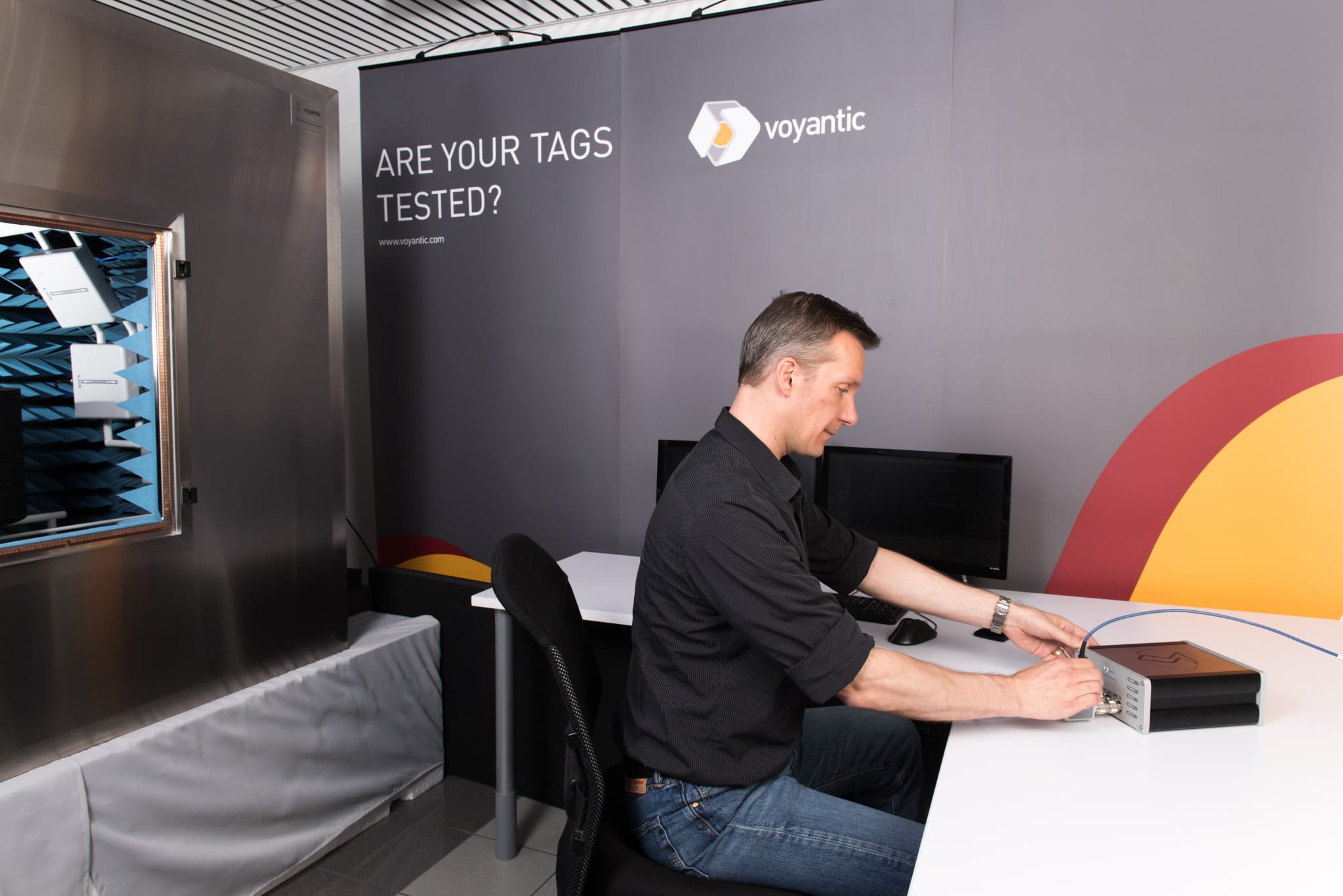
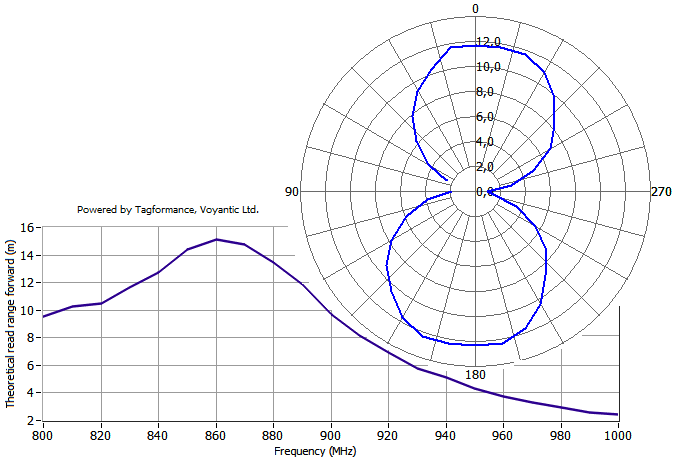
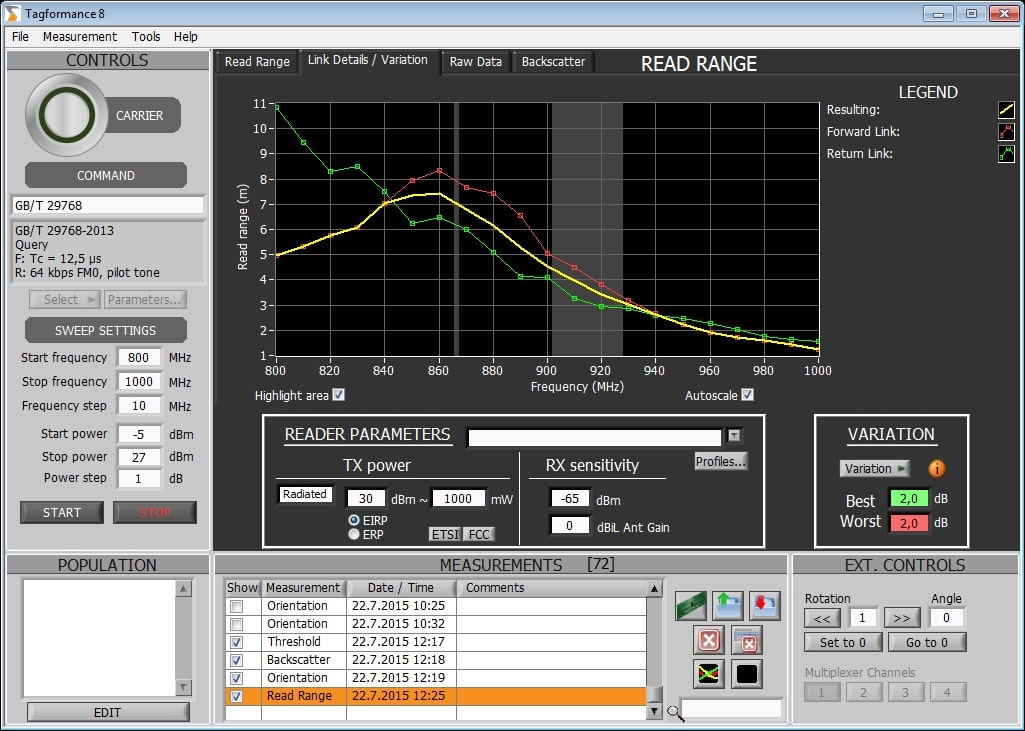
With the Tagformance system, it is quick to characterize a UHF RFID tag regardless of the protocol: just choose which protocol is to be used in testing and then start the selected test. Results include (but are not limited to) information about the tag sensitivity, read range, tuning, and radiation pattern.
Application Developers

New RFID standards are often used in new application areas. With the Voyantic’s Field Engineer’s Kit, RFID tags can be tested within the application – for example, when attached to a vehicle. Vehicles are an example of a quite challenging environment for RFID because of their large metal parts and a variety of different plastic and glass types where tags are mounted. Thus, field test results are crucial.

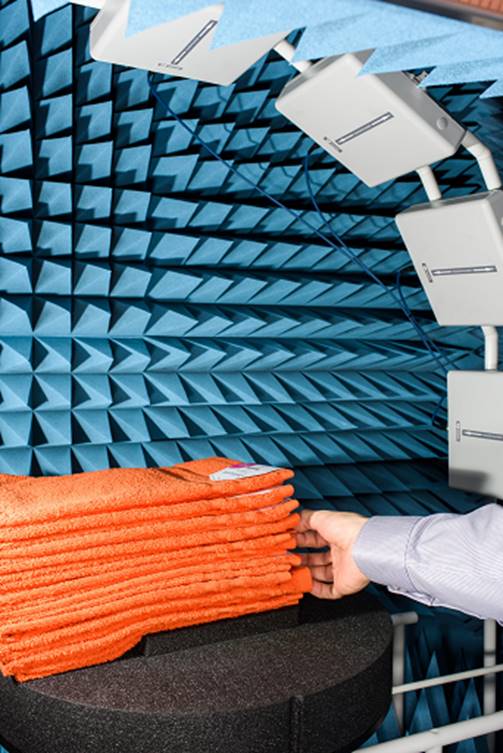
Typical field tests aim to verify the read range. The Tagformance system can be used in evaluating what kind of read range can be achieved with different readers – without actually using the readers. Based on the tag measurements and the reader information input by the reader, the system shows the achievable read range, but also which tag or reader parameter is the bottleneck for system performance.
Download the Tagformance Pro Catalogue

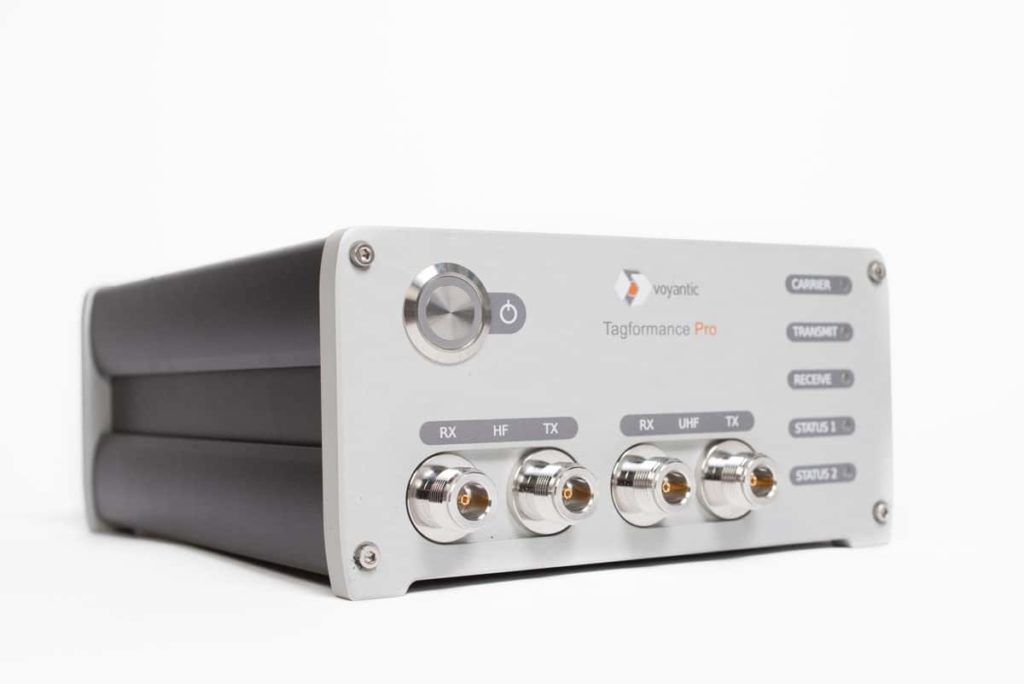
Learn more about the Voyantic Tagformance® Pro Test Device! By combining RAIN RFID and NFC testing into one compact test device, our all-new Tagformance Pro is a true all-in-one tool for anyone either developing or using RFID technology.
The Convergence of UHF RFID and NFC

Aug 27, 2015

I saw my first combined UHF RFID-NFC apparel label at a trade show several years ago. I remember wondering what the reason for this combination was. After all, UHF RFID is primarily used in the business-to-business world of retail: supply chains, inventories, point-of-sale, etc. NFC, on the other hand, is used in the business-to-consumer interface: in retail, primarily brand enhancement. Could there be a reason to combine these two technologies?

The label sales guy politely explained to me that the reason for the combined label was precisely that, addressing both the B2B and B2C needs at once. Since the apparel supplier is already required to tag all his products with UHF RFID to accommodate the retailer’s inventorying needs, why not put in NFC as well?

The Cost

Of course, there is an added cost of adding NFC functionality to a label. But the supplier is already purchasing labels. There is a process in place for attaching the labels to the garments, and, hopefully, there is already some kind of quality assurance process. Ideally, adding NFC functionality costs little more than the additional cost of the NFC inlays.

The Benefit

But what do the apparel suppliers, or better the brand owners, get out of this? They get a chance to use the store as their marketing media. As a consumer taps a product label with an NFC enabled smartphone, they are taken to a dedicated web page where the brand owner can interact with them. The consumer may receive detailed information about the product, or they may be offered promotions for that specific product or other ones. The possibilities are endless. Besides, the brand owners gain information about who is interacting with the products and when each can be used for planning future marketing activities.

Latest Developments

The combined UHF RFID-NFC label that I saw years ago was based on separate UHF RFID and NFC inlays. But at the beginning of this year, EM Microelectronic launched a new product that could change this approach. The EM4423 is, according to their own words, “the world’s first RFID circuit featuring a UHF EPC Gen2V2 RF and an NFC Type 2 interface”. Several tag manufacturers are working with the chip, and we should expect to see new exciting products by the end of the year.

What Does the Convergence Mean for RFID Testing

Combining two antennas into a single tag adds a new layer of complexity. The UHF part should work with all RFID readers: handhelds, gates, POS, and so on. And NFC should be conveniently usable for consumers with their various smart devices. Optimizing tag design for both needs is more demanding than designing a single frequency tag. Also tagging the items must be reconsidered: tag placement must serve reliable inventory counting and allow convenient consumer access.

My company Voyantic’s focus has always been in performance and quality testing of RFID components, both UHF and HF/NFC. Lately, we have seen more and more companies developing and using UHF RFID and NFC technology side by side. To better serve our customers, we have been working the last couple of years to build a test system that would allow testing both of these technologies. Our goal has been to enable the rapid development of new, cost-efficient tag designs and to deploy them into a reliable system.

Tagformance Pro combines UHF RFID and NFC testing in one device

Tagformance Pro combines UHF and NFC tag testing into one device. The Tagformance Pro supports tag design, tag selection, and planning of tag placement – both UHF RFID for inventory and supply chain and NFC for the consumer interface. Tagformance Pro is a real all-in-one tool for anyone either developing or using RFID technology.

Download the Tagformance Pro Catalogue

Learn more about the Voyantic Tagformance® Pro Test Device! By combining RAIN RFID and NFC testing into one compact test device, our all-new Tagformance Pro is a true all-in-one tool for anyone either developing or using RFID technology.
Tagged-Item Grading Helps Retail UHF RFID Projects

Aug 14, 2015

Retail and the retail supply chain are among the most significant users of UHF RFID technology. However, retail RFID projects are not the most simple ones. Items in retail come in all shapes, sizes, and materials. They are shipped in different boxes and stored and displayed on all kinds of racks, shelves, and tables. Also, different readers are used in various applications: logistics tracking, inventory count, RFID EAS, POS, and so on. I was involved in several retail RFID projects, and I have seen how complicated the performance optimization can be.

GS1 Tagged-Item Performance Protocol (TIPP) was developed to help retail RFID by making buying and selling tags easier. But what do the TIPP guidelines mean, and what kind of testing is required?

Goal: Accuracy in Inventory Counting

The purchase of RFID tags for retail items used to be complicated. The goal is simple: to have good counting accuracy (read rate) and a long and controlled read range. But I have seen how simple read range and counting accuracy requirements turn into a complicated mess of lengthy and costly field testing and piloting. Tags and readers are often selected separately, and system-level optimization is left to a trial-and-error process, if not entirely forgotten.

One approach used to be describing various use cases in detail and relying on the suppliers and technology providers to deliver tags that would work in all of the applications. The supplier was accountable for performance but had in practice minimal possibilities to achieve the goal.

Another strategy was to test extensively and to list accepted tags for different product categories. That way, the supplier was no longer accountable but was forced to buy specified tags without a possibility for price competition.

Finally, when using TIPP, the supplier is accountable for performance, and also has all the tools needed for delivering and verifying it.

Tagged- Item Grading Makes Retail RFID Projects Easier

The Tagged Item Performance Protocol makes buying and selling tags easier. The idea is familiar with many goods, from engine oils to clothes. It is a lot easier for a buyer to purchase shoes of size 41 than to provide a list of different measures of the foot. And it is a lot easier for the supplier to produce, stock, and sell shoes with a few different sizes than to verify that the unique requirements of each customer are met.

Similarly: it is easier to buy and sell tagged items performing according to a grade S05B than to list and verify all relevant performance requirements individually. As a result, a retailer’s list of requirements could be, for example:

  • items to be tagged with UHF RFID tags with C1G2 protocol
  • tagged items following GS1 Format & Symbol Placement for the Electronic Product Code guideline with C1G2 protocol
  • performance according to GS1 TIPP S05B grade
  • coded with SGTIN-96.

Now there is no longer a need to describe in detail which RFID tags to use and how to place them. Also, the suppliers and tag providers don’t need to guess what the use case description means from an RF performance point of view. TIPP translates complex system-level requirements into simplified component level pass/fail verification that any vendor can handle themselves.

The Voyantic Tagged-Item Grading System is 100% aligned with the GS1 Tagged-Item Performance Protocol (TIPP). The system automates TIPP grade validation and testing and provides results quickly and easily. It also enables TIPP grade audits to be performed by anyone. The Voyantic Tagged-Item Grading System is available as a complete turn-key setup.

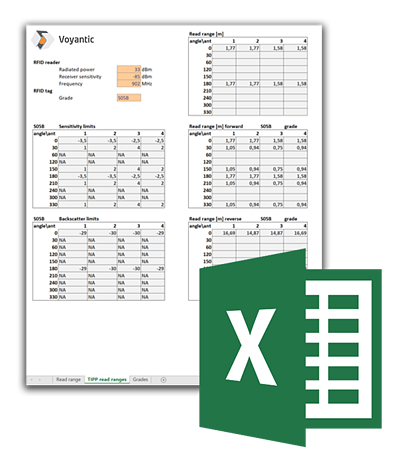
Want to learn more? Read more about the Voyantic Tagged-Item Grading System! Don’t forget to download our handy tool for evaluating read ranges with different RFID readers and tags with various TIPP grades below!

Download a Tool for Evaluating Read Ranges

Download a handy tool for evaluating read ranges with different RFID readers and tags with various TIPP grades. In the tool you can select a TIPP grade, input reader parameters, and see what kind of read range is expected from the system.

Why UHF RFID Tag Developers Should Use Wide Band Performance Testing

Jul 10, 2015

中文版 Chinese version

RFID reader frequencies are controlled by governments and limited to narrow frequency bands that vary around the world. When the performance of a UHF tag is evaluated, focusing only on the narrow reader frequency bands is misleading. I have seen in several RFID projects, how the tag performance in field conditions is different from what is expected, leading to delayed projects and expensive re-planning. Testing in a wide frequency band is needed to get the correct information about and good visibility into UHF RFID tag performance.

Detuning as a Challenge

Typical UHF RFID tags operate with a wide frequency band. However, performance still depends on frequency. In UHF RFID tag development, the tags are usually designed to have maximal read range at the reader frequency. This is achieved by tuning the tag to be most efficient at these frequencies.

Succeed in RFID projects with wideband testing

Detuning creates challenges:

When the tags are attached to different materials, their performance at the reader frequency changes.

The entire performance curve shifts on the frequency scale and a change in read range is observed at the UHF RFID reader frequency. This detuning effect is one of the fundamental physical phenomena affecting real-life RFID system performance. If the detuning is not taken into account, the UHF RFID tag’s read range may be only a fraction of what is intended.

In good design, the detuning is anticipated and taken into account. If the tag is intended to be used on a material that causes 50 MHz of detuning, it can be tuned to have optimal free air performance at a frequency 50 MHz higher than the reader frequency. When the tag is on the material, the tuning and performance become optimal.

If the tag is only tested at the reader frequency, it is almost impossible to design the tuning correctly. A wideband view is needed.

Comparing Tag Designs

An example: An RFID user manufactures items made of rubber. The items are delivered on a cardboard package. The user wants to tag the cardboard boxes and wants to have a maximal read range. The items are shipped, and the RFID tags are read globally. What kind of tag would be the best?

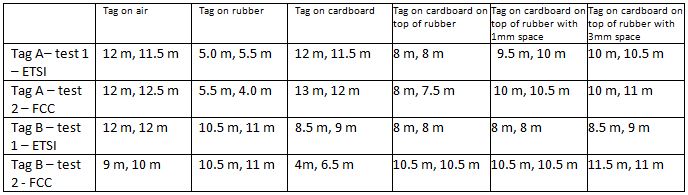
Two tag designs were tested using UHF RFID readers with ETSI (865 MHz -868 MHz) and FCC (902 MHz – 928 MHz) frequency bands. In the test, the reader was moved closer to the tag, and the distance was measured when the tag was read the first time. Each test was made twice.

The results show a big difference in read ranges. Tag design A has a 12 m read range on cardboard, but only 5.5 m on rubber. Tag design B has an opposite performance change: 11 meters on rubber and 6.5 to 8.5 meters on cardboard. There is also a difference between repeated measurements, which is significant, especially on the FCC frequencies.

What Really Happens with the UHF RFID Tags?

Because the reader frequency is limited, it is difficult to get a good overview of what is happening when the tag is attached to different materials. The read range is different in various test scenarios, but it is not clear why. Some explaining phenomena immediately pop into the minds of RFID professionals: multipath propagation and detuning. But the results from reader frequencies do not tell how the detuning works.

Which tag would you recommend? Click below to view the wideband test results of the Tags A and B from the Tagformance system or send me an email and let’s talk more! Voyantic offers RFID measurement systems to help tag designers. With precise test results, it is easier to give recommendations with confidence!

Download the test results

High Performance UHF Tags with Shorter Time to Market

Jun 29, 2015

The majority of the UHF inlay designers have already come to realize that the right measurement solutions are the critical factor for seeing all you need on the UHF inlay performance. There’s not much of those guys anymore, who run around with the tags, checking with a reader how far you can go until the tag can’t be read anymore. Not only is this kind of measurement inaccurate, but it also doesn’t give any indication of what kind of changes are necessary for the next iteration in the design.

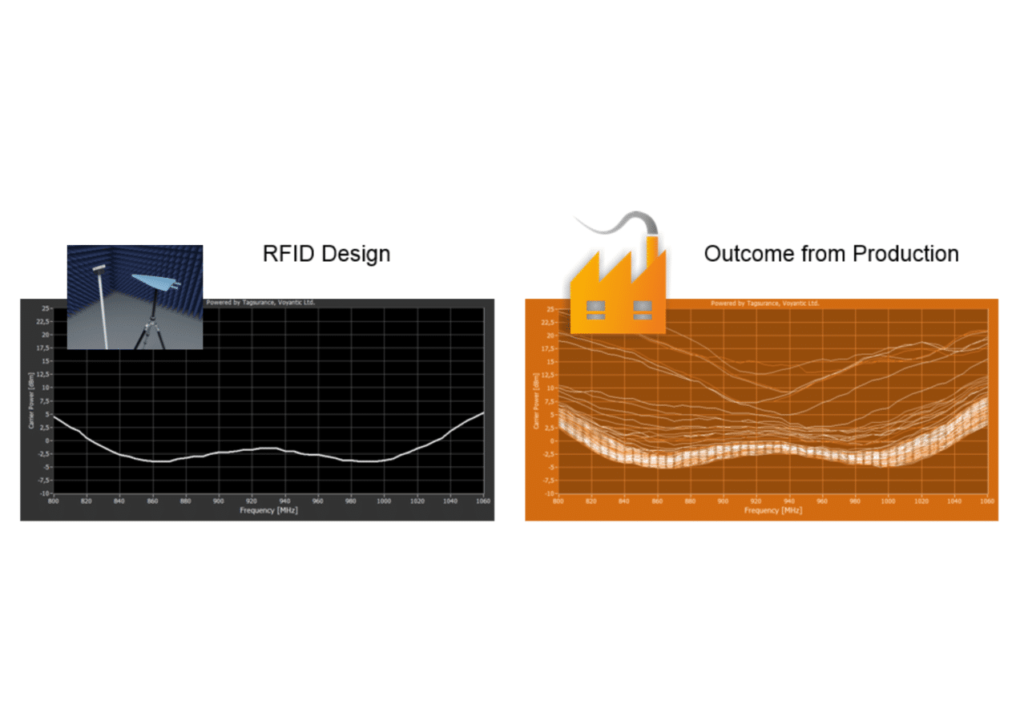
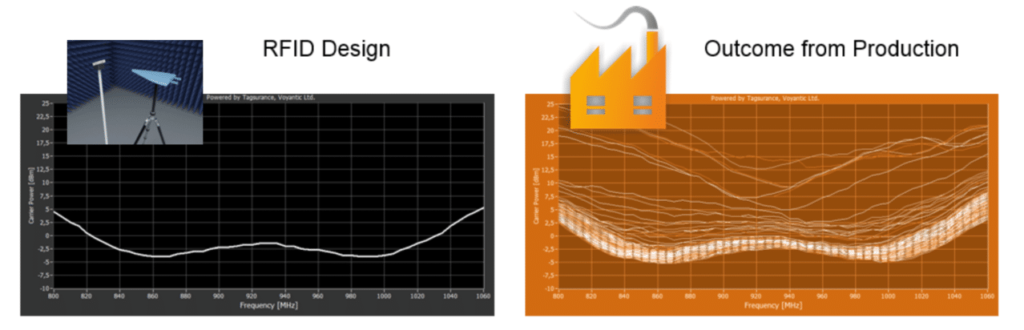
In my work as a Product Manager at Voyantic, I have seen the accurate, communication based, wide frequency band measurements for the UHF tags become more or less the de-facto standard of the industry in tag design. Now I’m happy to see the tag manufacturers widely adopting the performance testing also in production quality assurance.

So from design to production – why should you measure tag performance?

Quality from Design to Production

The measurement solution giving visibility to the UHF tag performance throughout its wide operation frequency range helps the designer to see exactly how the tag performs and understand what modifications are required to improve it. This enables faster development cycle times by providing high-performance UHF tag designs with shorter time to market.

This same yields to the production quality as well. Let’s take an example of a new product introduction, where an inlay design is brought to the production floor for the first time. If the RFID test equipment in the manufacturing machines can only tell whether the tag is functional or not, the batch will typically be taken to a very comprehensive and time-consuming first article inspection in the lab.

Imagine the reduced downtime!

If the samples are analyzed in the lab, not only does it take much time, but also the corrective actions can be implemented after this detailed analysis step. Imagine making a similar analysis on the production floor during the first batch manufacturing. Making the fine-tuning of the process on the go and reducing the time to market and machine downtime. In addition to the high-speed process compatible performance testing, the Tagsurance UHF testing equipment can also handle this more detailed analysis job.

Performance testing reduces the overall cost of quality without creating a bottleneck to the process.

Regardless of the process, there are always benefits in the performance testing of the tags. In the chip assembly, it is clear, the performance of the tag is created in this process when the chip is attached to the dipole antenna structure. In label converting, the main thing is to verify that this performance is maintained, but a reader can only check the tag still functions. The functional testing does not allow visibility in what is going wrong when the failures start occurring, and it can’t detect all the abnormalities and poorly performing tags, which then end up in the application use.

With the right tools, I’ve seen young startups reaching the same quality level with their UHF tag products as the big players of the market in no time. Without having to go through years of learning, in the worst-case learning from the failures noticed not until in the end customer application. This is the critical thing when balancing your overall cost of quality; investing in quality appraisal and failure prevention will spare your investment many times in the failure costs.

Let’s Take the RFID Industry to the Right Direction

Together! I have had the pleasure of working with so many quality-conscious RFID experts in the past years and have enjoyed seeing how much improvement you can make with the right tools in a short time. The increase of interest in production quality and implementations of Tagsurance UHF RFID testing solutions during the past year has made me gain confidence in the UHF RFID. It will no doubt be the technology to enable reliable, repeatedly functioning applications, without component level surprises in the application piloting stage.

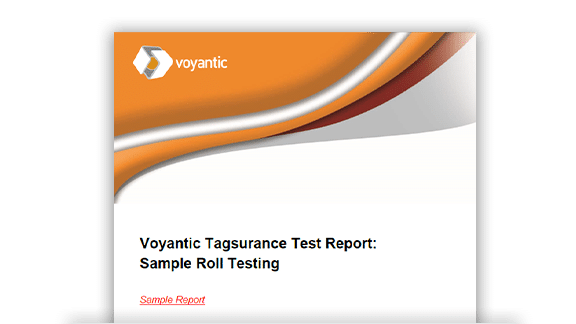
Thank you for your interest! If you have any questions or want to start a discussion on how you could improve your RFID quality, let’s talk more! If you want to learn more detailed on what type of test data you could achieve in production, download the full sample roll test report below.

Learn Exactly What We Can Find Out on a Roll of UHF Tags!

Download a full Voyantic sample roll test report with full visibility to the performance of each and every tag on the roll, far field measurement results on selected tags and optimized production test scenarios for different process throughputs.

Helping The Boss to Arrive at the Correct Decisions; In-house Selling of RAIN RFID Test Equipment

Jun 12, 2015

中文版 Chinese version

Selling is a noble form of art, which takes slightly different forms when selling to a customer (out-house) or a colleague (in-house). Luckily both the directions go by the same principles. The twist in general is whether that special someone is already looking for a solution and is therefore on the buying mode, or not looking and even in the I-have-other-priorities-such-as-protecting-the-cash mode.

As my company Voyantic operates in the relatively young technological field of RAIN RFID measurement and testing solutions, the latter mode is usually assumed, since the prospect companies are typically start-ups. Of course, we are not working on the sales case only from outside the prospect company, but together with an in-house sponsor that faces the same communications challenge: How to get the management to say yes to the investment proposal?

The Boss Takes the Most Heat in the Valley of Death

Our prospect start-ups are in the pre-launch phase, and cash flow vice is located firmly in the valley of death. I’ve been in that valley myself – it’s a horrid place, and only the brave go there.

Sales is all about getting to Yes. Let’s, therefore, focus on The Boss, because ultimately she/he says “Yes” or “No” to the investment proposal.

The Boss is a creature with three primary functions: stay as a boss, carry the grave responsibility, and make decisions when needed. One way to initiate a decision-making process is to spread a certain amount of fear powder over the responsibilities part. Some others prefer to play this card right the opposite direction: paint a fresco of stunning business performance and thus suggest the marvel of getting out of that valley sooner than later, and this way become a happier boss.

One Boss in the Valley of Death, under wildlife attack, not enjoying the moment very much, and thus motivated to make decisions

Facing RFID Sensor Tag Development Hurdles

To make a case of the latter, let me walk you through a hypothetical example of in-house sales: Assume you are an RF antenna engineer in Company Z that is developing a novel RAIN RFID tag with disruptive never-before-seen sensor features.

Cutting edge stuff, and riding high on the hype curves, too! So it gradually reveals to you that the antenna design is heavily restricted by the selected production process, which further seems to limit the tags reading performance. Unfortunately, you don’t quite have all the facts on the table to back decision making, because there is only a DIY RFID reader based test setup in the basement lab, right next to the janitor’s room. Additional discomfort arises from the fact that the latest tag sensor circuitry samples seem to have a set of “undocumented” properties that don’t go so well either with the reader in the lab.

The sensor tag launch date is set only ten months away to a RAIN RFID show taking place in Orlando (sometimes in San Diego), and the marketing lady with the scarf is making preparations already. Even the product brand name is already registered.

It Doesn’t Hurt to Find Out How Others Have Managed to Get the Antenna Design Right

Let’s face it – those are hugely expensive ten months for several reasons.

First of Company Z has only the slideware to sell, which means there is practically no revenue.

Secondly, there are you and both your buddies in the lab ordering materials, scissoring inlays, 3D printing prototype enclosures, cursing the air conditioning, and wishing all is going to be ok.

Thirdly, some other companies in the market are already launching their first sensor tag products, which is irritating because you know they are bluntly eating off the yours-to-be market share.

So, being a bright and open-minded engineer, you take a few hours on Tuesday to browse through a pile of academic publications on UHF RFID tag design. While your coffee mug gradually sinks below the refill level, you suddenly realize all those papers refer to this one RFID performance test system.

Switching over to Dr. Pepper and taking a few additional hours to complete the desk study, you find out that this stunning equipment shows how a UHF tag is tuned in about 30 seconds and also how the IC responds to different commands. On top of that, it dawns on you the system is available with two weeks lead time, and the supplier even has a tag production quality test solution, too! Tuesday well spent!

How to Present the Gathered Information with Maximal Impact

So what is it that you do? Well, first, you go home and sleep off the first wave of excitement. On Wednesday morning, you make a few calculations together with a fresh blueberry muffin, then rush to the corner office at 9:15 AM, take a deep breath, and…?

At this point it is important to remind yourself that The Boss is in heat and busy looking for a way out of the valley of death.* You are almost there, next reel it in with a correctly tuned message*:

  • JUNIOR MISTAKE: just ask The Boss to buy this one great tester worth 50k
  • MILD, BUT MIGHT WORK: explain how you found a way to raise RnD efficiency by up to 22%
  • MUCH BETTER: tell you found a way to get the tag design finished in time, AND troubleshoot the damned sensor circuitry while at it
  • A NO-BRAINER DEAL: report to The Boss that you found a way to cut time-to-market by 50%.

The lower on this list you are able to go, the smoother response there will be on your closing line about the investment.

In a Competitive Environment Time-to-Market Makes a Grand Difference

Essentially you should show that you can make this massive difference on the top line if this enabling 50k investment is carried out now, and sales would start sooner than later. Bring in a few of those academic publications with you as evidence, and ask the measurement system vendor for payback estimates and additional collateral, such as a few reliable customer references.

The Boss knows the painful cost and agony of those ten months, and if you claim you can save 5 out of those, he figures out it’s going to be three months saving with a reference customer as a cherry on top, and he is going to sign you those 50k pretty darned fast. All top bosses know that you need to spend money to make money, and just kindly remind that waiting is the most expensive alternative of all.

Wrapping It Up: Investment on Test Equipment Often Turns Out to Be an Investment on Sales

The payback on measurement and testing equipment investments are exceptionally fast when the impact hits the frontlines of the sales battlefield. “The cutting costs” story may work reasonably well in large companies. Still, when it comes to shortening time to market, fixing diverse quality issues, and creating positive aura on the customer front, it all quickly translates into getting additional revenue for the company, sooner than later.

All top bosses love the additional revenue. Cards well played, and you just got your first Voyantic Tagformance.

That’s my story for you today. These principles have worked out well for me many times, and I would love to hear about it if they work out for you as well. Please drop me a line at juho.partanen@voyantic.com, and let’s talk more.