Tagsurance® 3 Online Connectivity Improves Usability and Maintenance
Voyantic recently launched a new version of the Tagsurance 3 system, an inline quality testing system for RFID tag production. With this update, we recommend that customers using the latest version (4.x) keep their systems always connected online. On the other hand, older versions (3.x) should still stay offline. But why the switch? And what benefits come with this new online connectivity?
Let’s dive in!
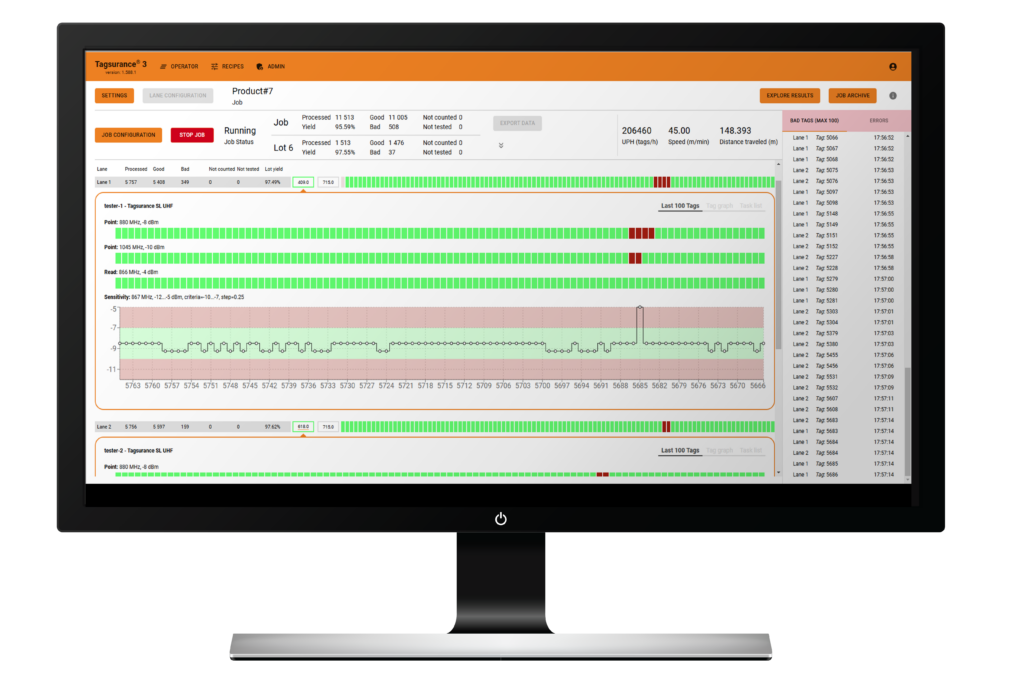
A screenshot of Tagsurance 3 Version 4.x software user interface.
With the new version, the Tagsurance 3 system’s architecture has been completely revamped under the hood. The Voyantic team has carefully designed this upgrade with the future and information security in mind. This release marks an important milestone, enabling safe network connectivity for the test system. Voyantic designs its systems using secure development best practices, and regular third-party audits ensure any identified issues are promptly addressed.
The Tagsurance 3 Version 4.x with online connectivity paves the way for future possibilities, including encoding operations through the same setup. Enabling encoding will only require purchasing a software license, with no need for additional hardware upgrades.
Simpler, faster, and more efficient—whether it’s for daily use or maintenance tasks
Connecting the system to the internet is safe and recommended for unlocking a range of new features. Today, the concrete updates are most noticeable in the new browser-based user interface, which administrators and operators can access from any computer. Let’s examine the latest features designed to ease the system’s use.
1. Update software directly in the user interface
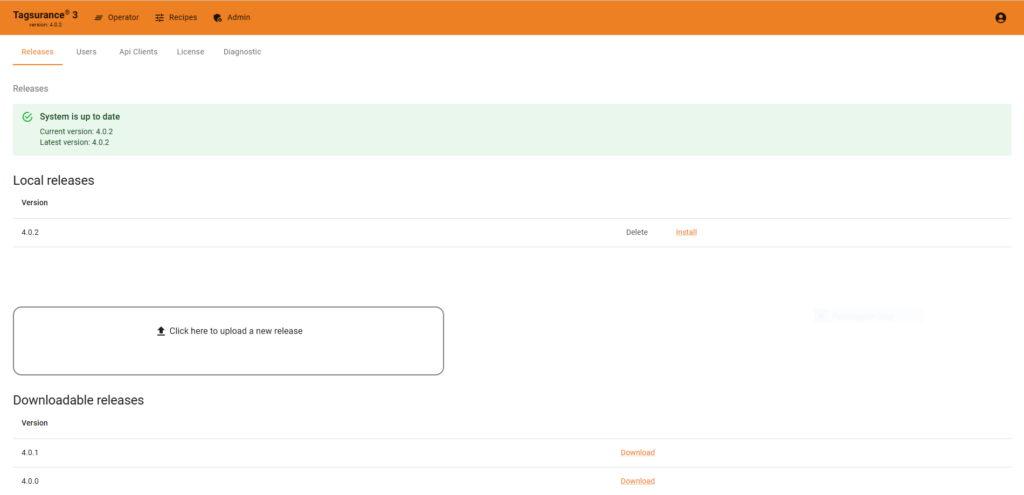
Gone are the days of downloading software update packages separately from voyantic.com and manually performing updates. With this new feature, admins can download and install the latest software versions directly from the user interface via the admin panel—as long as the system is connected to the internet. This ensures your system stays effortlessly updated with the latest features and improvements.
Updating your Tagsurance 3 Version 4.x software has been made easy.
2. Simplified licensing
When your Tagsurance 3 version 4.x system is connected to the internet, it automatically connects to Voyantic’s license server and fetches the license information. Admin users can see all the essential details in the browser-based admin panel, including how long the license is valid, the number of lanes, and Tagsurance stations. It’s all there in one place, making it easy to manage your licensing.
3. Enhanced support
While we hope you don’t need to use this feature, we’ve significantly improved support for the new version. Suppose the system is connected to the internet, and you run into an issue. In that case, it’s now possible to download and send diagnostic files directly to the Voyantic support team through the admin panel. This helps speed up troubleshooting and resolution by providing our team with more accurate data with which to work. Ultimately, this reduces system downtime and takes the headache out of maintenance.
In summary
In the future, online connectivity of the new Tagsurance 3 version will open new business opportunities with the comprehensive management of quality data. Today, online connectivity improves usability and maintenance. It simplifies tasks, adds more features to the user interface, and provides a more efficient way to share information directly with Voyantic.
That said, online connectivity is still optional. Version 4.x systems can also operate offline like the 3.x systems. If you prefer to stay offline, you can still upload software releases and license files from a local computer through the admin panel.
Watch the recording below, where our Senior Product Manager Anirudh Wali demonstrates how the updated user interface and new features work in practice.
Presenting the New Snoop Pro 2.0
We continuously seek to improve our products to answer your needs, like making your job easier with user-friendly test systems or improving testing quality. This time, we made some nice improvements to Snoop Pro, one of the components used in the Tagsurance 3 system. The Snoop Pro 2.0 has:
Improved unit-to-unit RF performance variance
Integrated strobe feature
Smaller size and better usability
The improvements were made with backward compatibility in mind to make Snoop Pro 2.0 almost a drop-in replacement for Snoop Pro 1.x, which means:
RF backward compatibility: when testing tags/inlays, the test results with Snoop Pro 2.0 are within the test results variance of Snoop Pro 1.x
Mechanical backward compatibility: Snoop Pro 2.0 has the machine integration attachment holes at the same positions as Snoop Pro 1.x, and also the same shielding plates can be used
Let’s check it out.
Improved RF performance variation with RF backward compatibility
I’m starting with the RF performance because I just love RF. A nice new feature for the Snoop Pro 2.0 is the improved variance, making the produced units more uniform in RF performance. This means that if you test one tag with multiple different Snoop Pro 2.0, the results are very similar.
Illustrated example of the RF backwards performance.
Why is this so nice? I’m so glad I asked. It’s nice because if you want to use identical recipes for different production lines or even factories, the Snoop variance does not prevent doing that. So, better testing quality for your products. However, keep in mind that Snoop is only one of the components in the system; other things, such as the environment near the Snoop or cabling, might still have too much effect.
One of the most important requirements was the RF backwards compatibility so one can replace a Snoop Pro 1.x with the Snoop Pro 2.0 and be done with it. Our definition of RF backwards compatibility is as follows:
With the Snoop Pro 2.0, measured results are within the variance of Snoop Pro 1.x results OR within ±1.0 dB from the center of the Snoop Pro 1.x result envelope average
The difficult part is that the Snoop is always used with a tag/inlay on top of it and together they form a complex structure where every part plays a role. Since all tags/inlays are different and are affecting the Snoop differently, an excessive amount of measurements was performed to make sure we have covered most of the imaginable situations. Especially large tag models couple with the Snoop strongly and have an effect on the performance. Bah, physics and its precious laws.
Voyantic offers different kind of extensions for Snoops and those are compatible with the Snoop Pro 2.0. However, for the extensions there is no backwards compatibility in RF performance even though the results are close.
Integrated strobe feature
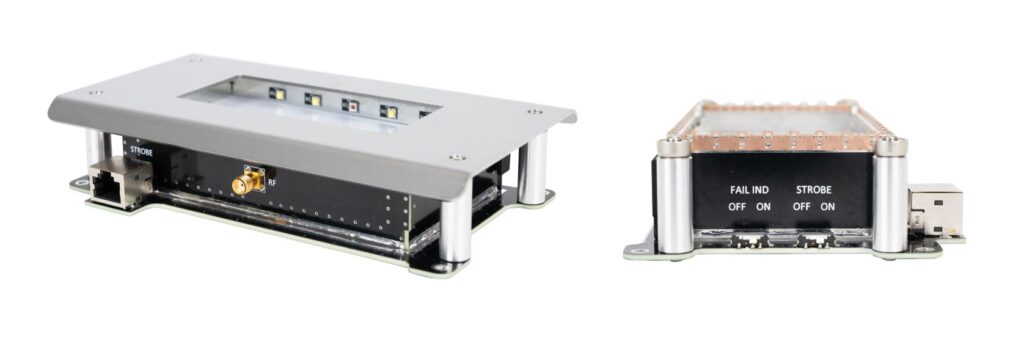
The Snoop Pro 2.0 has a built-in strobe functionality that can be turned on/off with a switch. White LEDs illuminate the trigger position (the moment when the testing/encoding starts), and red LEDs show tags/inlays that are failing the tests.
With the strobe light coming from below the material under test, the strobe is more effective than when the light comes from above. In a Tagsurance 3 system, the Snoop strobe shares a station connector with a TSU, so there’s no need to configure a new station to get it working. The Snoop Pro 2.0 can also be used without connecting the strobe cable; it does not affect the RF performance. The new RJ45 connector was added for the strobe functionality (don’t be fooled by the connector; no ethernet traffic there).
New size, looks, and usability
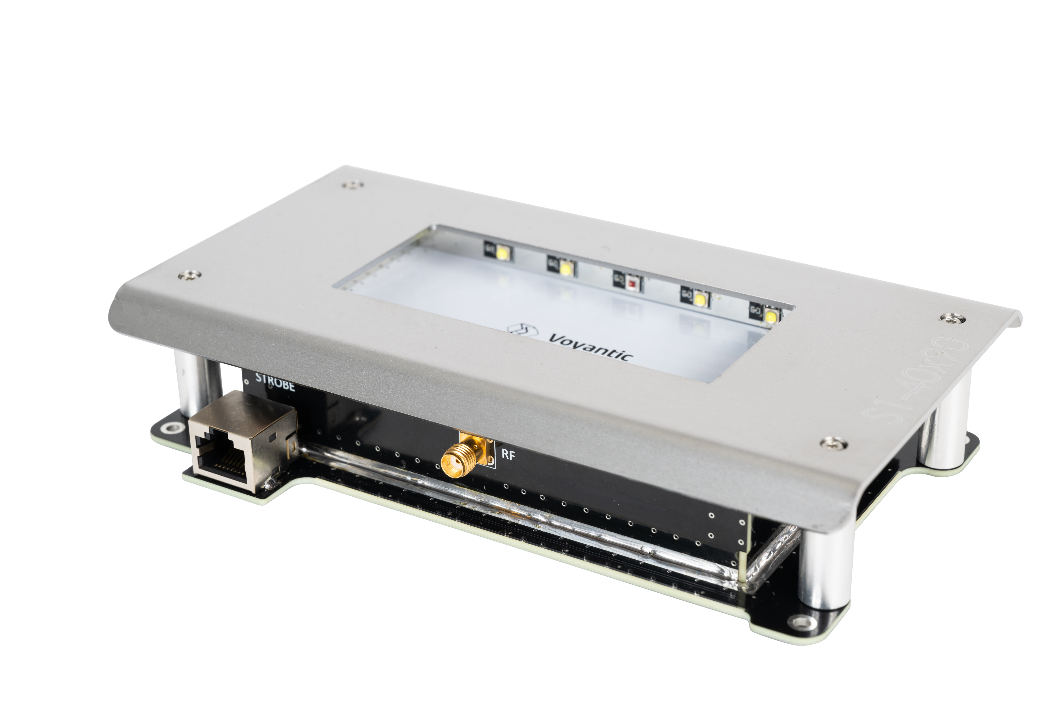
The Snoop Pro 2.0 no longer wears green; it now has a black-and-white appearance and a slightly reduced size. The new color was picked because of the integrated strobe functionality; white reflects the most light, which is essential for the strobe.
Snoop Pro 2.0 appearance.
With a careful redesign, we could replace the large external RF splitter and the two blue RF cables, making the size of the Snoop more compact. This helps a bit when trying to fit many Snoops in a multilane system where the space is limited.
The magnets were also renewed so less force is needed to change the shielding plate and you don’t not accidentally rip off the copper gaskets during the changing. Less hassle is always nice.
Conclusion
With the backwards compatibility, you can easily integrate the new Snoop Pro 2.0 to your testing systems. With the strobe integrated into the Snoop it is easy to use and doesn’t require additional configuration in the Tagsurance 3 recipe. The improved unit-to-unit variance allows you to more easily use identical recipes between lanes. All with the new Snoop Pro 2.0.
Voyantic Launches a New Version of Tagsurance® 3 System With Cloud-Based Features
Voyantic announces the launch of a new version of Tagsurance 3 system, an inline quality testing system for RFID tag production. The launch of Tagsurance 3 Version 4.x marks a significant upgrade to the previous version 3.x systems with exciting new capabilities and enhanced usability. This release introduces cloud-based features and lays the groundwork for future functionalities, including encoding operations using the same setup.
The new Tagsurance 3 Version 4.x architecture is designed with the future in mind, unlocking powerful cloud-enabled features. The online connectivity streamlines maintenance work by enabling effortless software updates, simplified license renewals, and enhanced support: diagnostic data can be shared directly with the Voyantic support team for faster troubleshooting and minimized downtime. With this version, Voyantic recommends keeping Tagsurance 3 systems always online to fully leverage the benefits and ensure maximum system efficiency.
Tagsurance 3 Version 4.x also introduces a new browser-based user interface, allowing operators to access the system conveniently from any computer. This eliminates the need for certain peripherals and allows users to connect to the system via a web browser for an intuitive and modernized user experience.
The update also provides a more compact hardware setup, reducing the footprint of controller racks. The new version uses the upgraded Lane Controller 2.0 and the new Server Panel.
Tagsurance 3 Version 4.0 offers backward-compatible APIs that ensure seamless integration with existing systems, safeguarding previous investments and reducing implementation time. Recipes created in previous Tagsurance 3 Version 3.x systems will also continue to work seamlessly, enabling a smooth transition without disrupting existing workflows.
Contact sales@voyantic.com for more information about upgrading your existing Tagsurance 3 system or starting your journey with Voyantic towards improved tag quality.
Voyantic Announces a New Version of the Snoop Pro™ For Enhanced Usability And Testing Accuracy
Voyantic introduces improved major version of its most commonly used coupling element Snoop Pro, which is a key component used in the Tagsurance 3® system.
The latest Snoop Pro 2.0 model features several improvements, including elevated testing accuracy with reduced unit variance, an integrated strobe light, new LED controls, a new space-saving design, and improved shielding plate attachment for smoother handling.
This new version has been carefully developed with compatibility in mind. The previous element version can be easily upgraded, as RF and mechanical compatibility have been fully ensured. This seamless transition ensures that customers can enjoy the latest advancements without needing major system overhauls.
Voyantic continues to focus on innovation and reliability, delivering solutions that enhance the performance and ease of use for its customers.
Contact sales@voyantic.com for a quote for Snoop Pro 2.0 or to start your journey with Voyantic towards improved tag quality.
Tagsurance 3 product highlights from 2023 to 2024
It’s been a full year since we last shared the latest in our continuous journey of innovation with Tagsurance 3. Over the past year, we’ve been hard at work, rolling out several significant updates and enhancements. Now, let’s dive into the most noteworthy advancements that have propelled Tagsurance 3 forward!
Since our last update, Tagsurance 3 has evolved from version 3.5.0 to 3.12.0. That’s more than 10 releases packed with a combination of major feature introductions, minor enhancements, and diligent defect fixes. Our commitment to excellence ensures that every update enhances the accuracy and reliability of quality control for RAIN RFID product lines, from chip attachment and label converting to offline reel-to-reel items.
Here’s a quick overview of some of the most impactful and requested upgrades we’ve made to Tagsurance 3 over the past year:
Tagsurance has now improved tag response detection
Tagsurance SL UHF can consider a tag bad if the tag response is significantly weaker than the responses used to be for good tags tested by the same Tagsurance SL UHF tester. This response level detection, also called backscatter strength detection, improves the test result quality, especially in multilane processes. In the multilane process, the tester’s sensitive receiver may hear a tag response from the simultaneously tested neighbor tags, but this feature prevents a weak response from being interpreted as a good tag response.
Lot management-related improvements
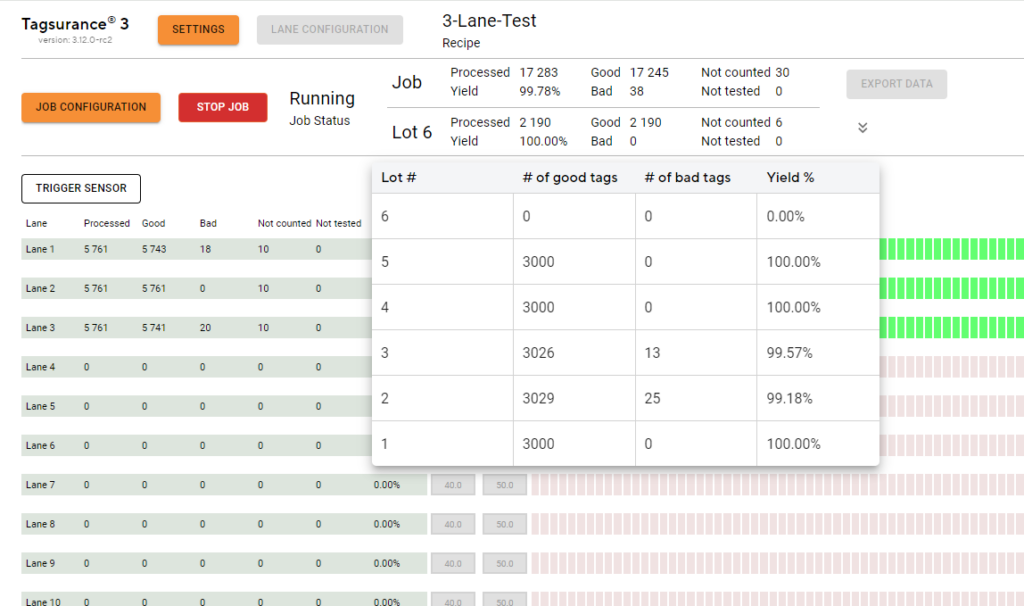
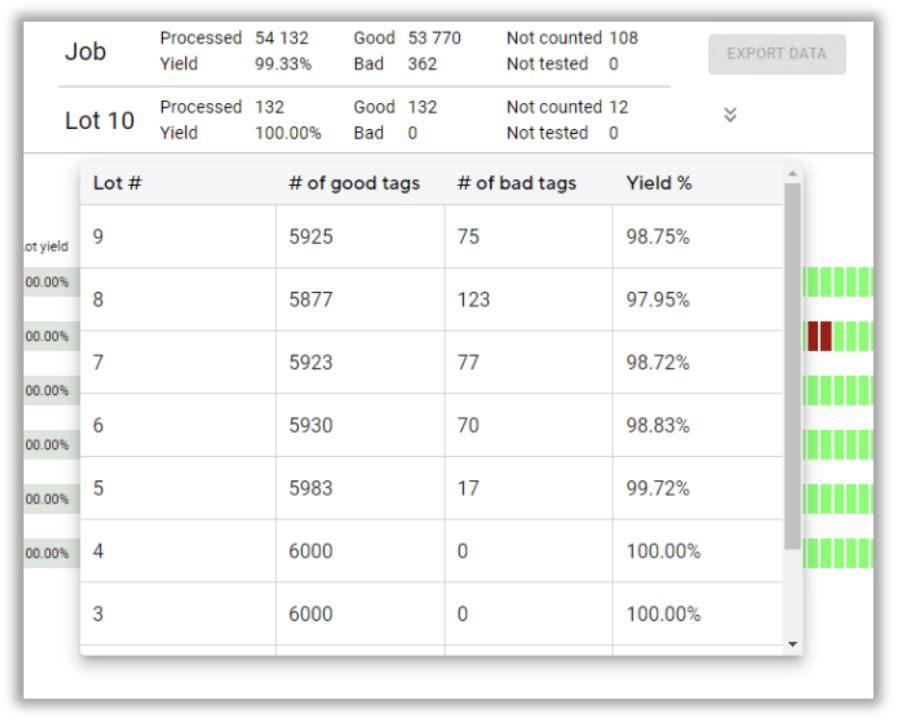
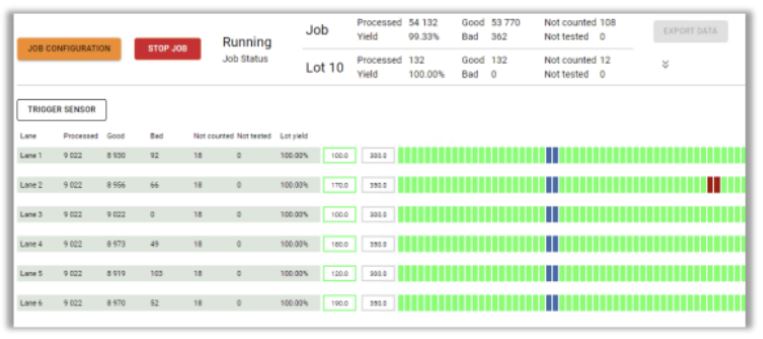
Lot statistics (yield and tag counts) are shown for the current lot. The lot yield is also displayed per lane:
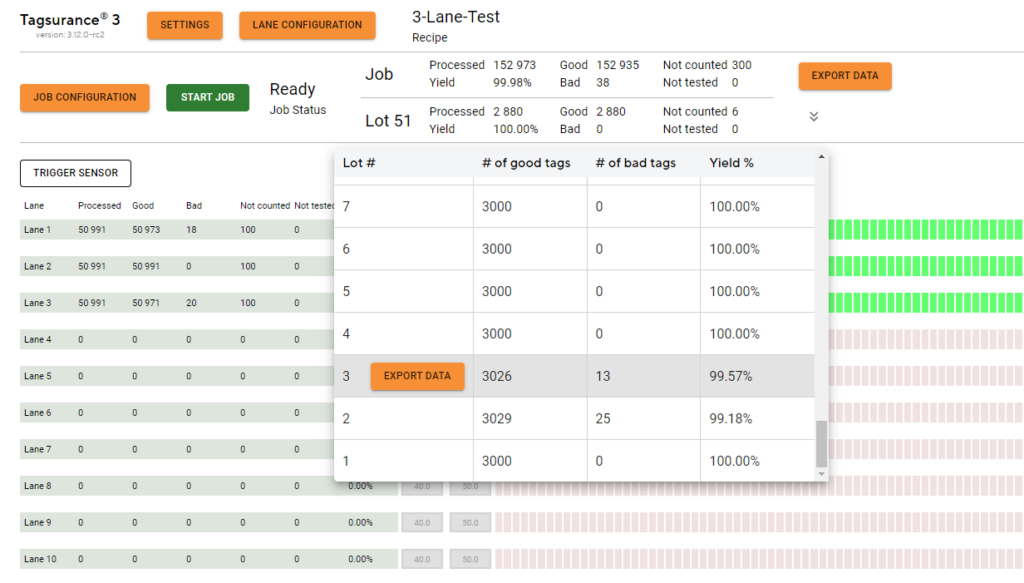
The completed lots are listed with counts and yields and the lot-specific results can be exported:
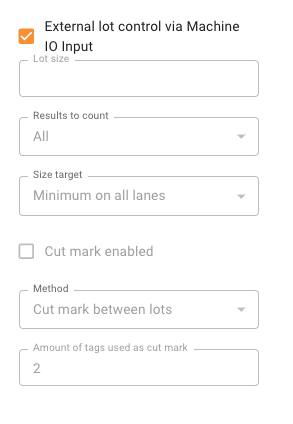
Support for external lot control via machine IO input: Tagsurance 3 supports an external signal for a lot change. It is possible for the production machine, e.g. turret rewinder, to give an IO signal when the liner is cut and the lot is changed. The lot change position is parametric in Tagsurance 3 and the position can be set according to the location where, for example, the liner is cut. The lot number is added to the tag results as before. When an external lot control is enabled, only a limited set of action triggers are available.
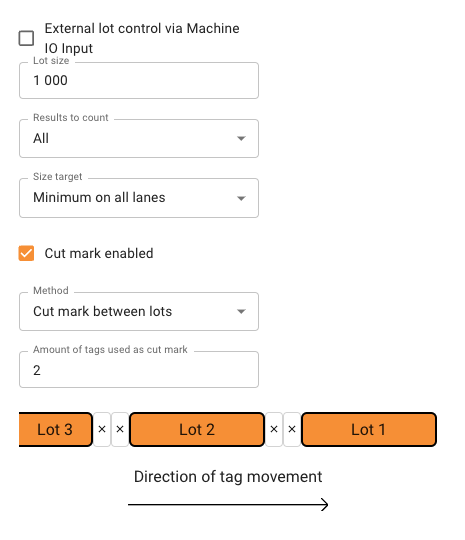
Tagsurance has cut mark feature
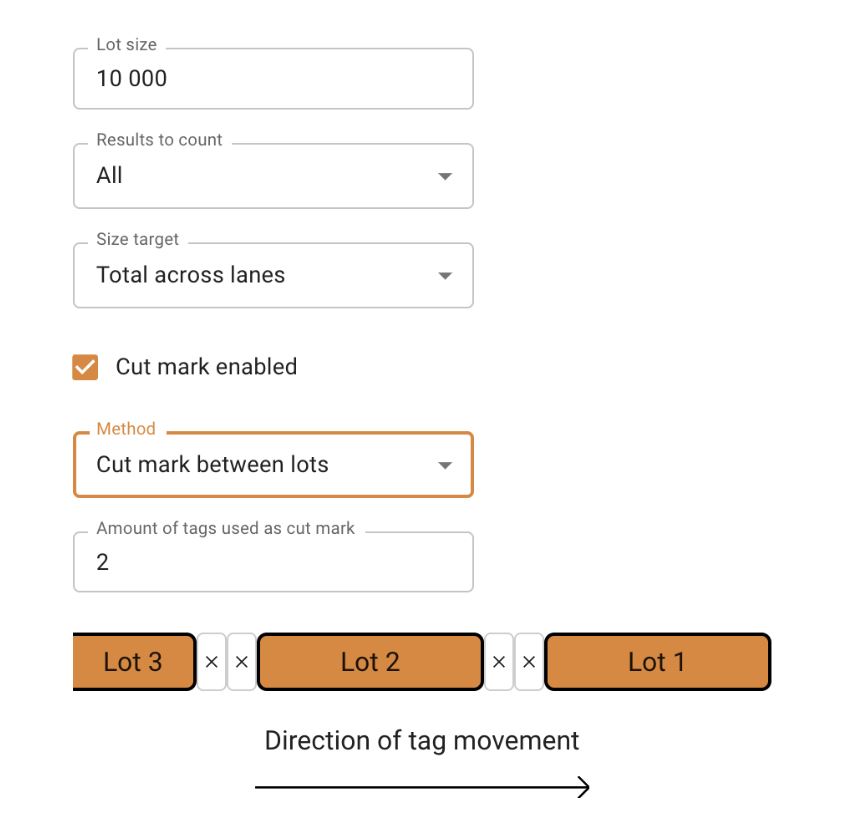
Cut mark is a feature that separates lots visually from each other by the markers. Tags marked as cut marks are not counted in any lot.
API trigger in Tagsurance
API trigger enables customers who integrate Tagsurance 3 via APIs to trigger any active device anytime. This feature is enabled only when a new type of job is running. When the API trigger is enabled, all other trigger sources are disabled and only a limited feature set is enabled.
Note: We also plan to bring this feature to operator UI shortly.
IO Only station enhancements
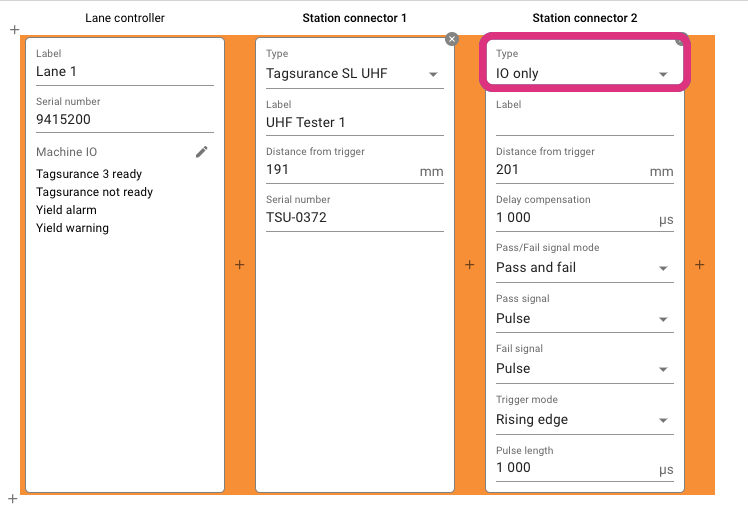
Support for TAL15k jobs: Now three device types: Tagsurance SL UHF, Tagsurance HF, and IO-only devices can be used in systems using TAL15k or DDA serial interface, although one device type at a time.
The delay compensation for IO-only devices added:
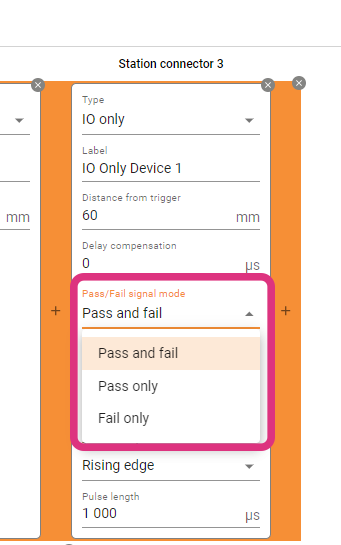
Tagsurance 3 can also support configuring if an IO-only station should return only a pass or fail signal. We have introduced a new configuration option for IO-only stations under lane configuration where an IO-only station can be configured to pulse on passing tags or pulse on failing tags. Users have the flexibility to set the deadline for waiting for a pulse. This can be either until the next trigger or a user-defined timeout value.
Puncher improvement
Tagsurance 3 can now configure a puncher-type station to adjust the puncher trigger pulse duration based on the distance in addition to time. Previously, the puncher station applied pressure against the tags based only on a fixed time duration.
Job archiving
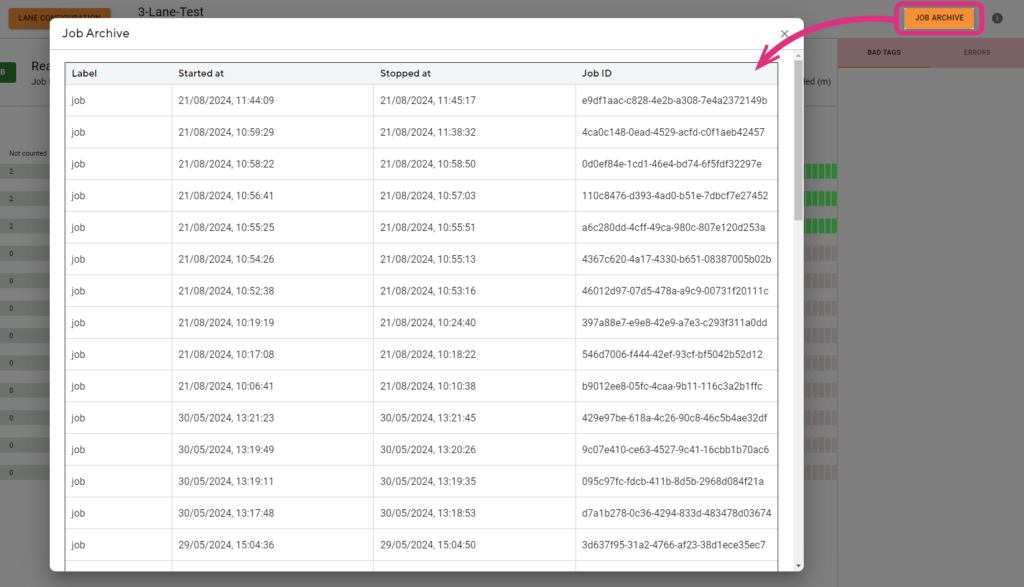
The last 50 jobs (as long as 200 M results in total are not exceeded) can be stored and listed in the Operator UI and their CSV exports can be downloaded; note that the system automatically cleans up jobs from the oldest when the total number of jobs exceeds 50 or total number of stored results exceeds 200 million.
UX improvements
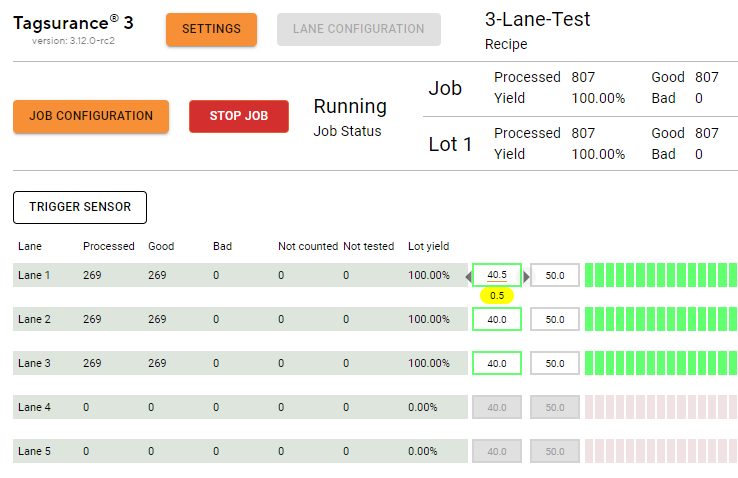
The speed value in the operator UI is shown in red when the machine runs backward and the speed is negative.
The Units Per Hour value is displayed in the operator UI. The UPH is calculated based on the past time window which can be configured in Tagsurance 3 settings.
In operator UI, users can increase the step size of fine-tuning offset by 0.5 mm (instead of the earlier 0.1 mm)
Stay tuned as we continue to innovate and enhance Tagsurance 3. Our dedication to providing unparalleled quality control tools for the RAIN RFID industry remains unwavering. Thank you for being a part of our journey!
Notes: The latest Tagsurance 3 version 3.12.0 can be seen here. If you’re interested in receiving product updates to your email, sign up here!
RAIN on Metal - How to Test the Performance of RAIN RFID Tag on Metal Plate
Although RFID and metal can be a challenging combination, tagging metal items with RAIN RFID will work as well as any other application, if you choose the right kind of tag designed for metal, and also plan the system and infrastructure carefully. On-metal tags are commonly used in industrial settings, where they need to endure harsh conditions and have reliable performance and readability. It’s great to see how the rapid development in specialty tags helps RAIN RFID usage expand in industries outside of retail.
We often get asked for advice on testing tags on metal and other materials. So I decided to make an application note on how you can use Tagformance Pro to measure an on-metal tag attached to a metal plate, both inside and outside an anechoic chamber. I will also discuss the impact of the measurement environment on this application. The interesting question is to see how the performance of the tag change when attached to a metal plate, and how much the form factor of the metal plate has an effect.
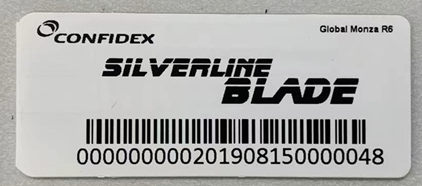
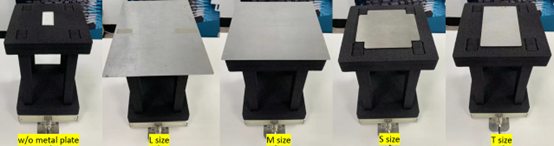
In the tests, I used the Voyantic Tagformance Pro system and tested Confidex Silverline Blade printable on-metal labels with four different size metal plates.
The confidex tag used for testing
Download the Application Note for the Results and Method
To see the full measurement results and learn how I conducted the measurements, download the application note:
To intrigue your interest in taking a closer look at the application note, let me share some findings:
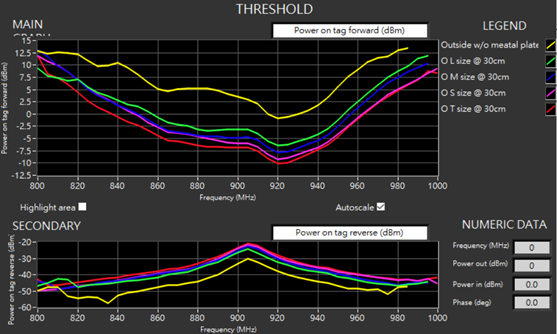
An on-metal tag on a metal plate is highly sensitive to the testing environment, especially outside of the chamber with external RF interference. Testing in an anechoic chamber is thus something I highly recommend for consistency in results.
What do you think? Are these results measured inside or outside of the C50 chamber?
Secondly, the size and shape of the metal has effects on the performance, thus making tagged-item testing a recommendable step for any metal item tagging project.
Setup for testing outside of the anechoic chamber.
Let us know if you have any questions about the application note or using Tagformance Pro for tag and tagged-item testing. We’re always happy to help.
Voyantic Announces the End-of-life Schedule for RFID Protocol Analyzer
Today Voyantic announces the end-of-life schedule for the RFID Protocol Analyzer product as follows:
End-of-Life Schedule
The last order date will be Sep 27th, 2024
Tech Support and spare part availability until the end of 2025
New software versions will not be released
For any questions, don’t hesitate to get in touch with your Voyantic Sales representative or send us a message ›
Voyantic Announces the End-of-life Schedule for RFID Immunity Interface
Today Voyantic announces the end-of-life schedule for the RFID Immunity Interface product as follows:
End-of-Life Schedule
The last order date will be Sep 27th, 2024
Tech Support and spare part availability until the end of 2025
New software versions will not be released
For any questions, don’t hesitate to get in touch with your Voyantic Sales representative or send us a message ›
Lot Management in RFID Tag Production - Essential Machine Requirements
Over the past few years, Voyantic has successfully implemented the Tagsurance 3 quality control system across multiple RFID tag production lines. These integrations not only enable the highest standards in tag manufacturing but also shed light on the positive advancements within the RFID industry. One notable development is the growing synergy between lot management and quality control. For an RFID production manager or quality manager, understanding the quantity of perfectly functioning tags in a delivery is far more meaningful than just having a count and yield percentage.
Incorporating lot management is more straightforward and cost-effective when done in conjunction with the purchase of new production machinery, rather than attempting to implement it post-machine deployment on the factory floor.
What is lot management?
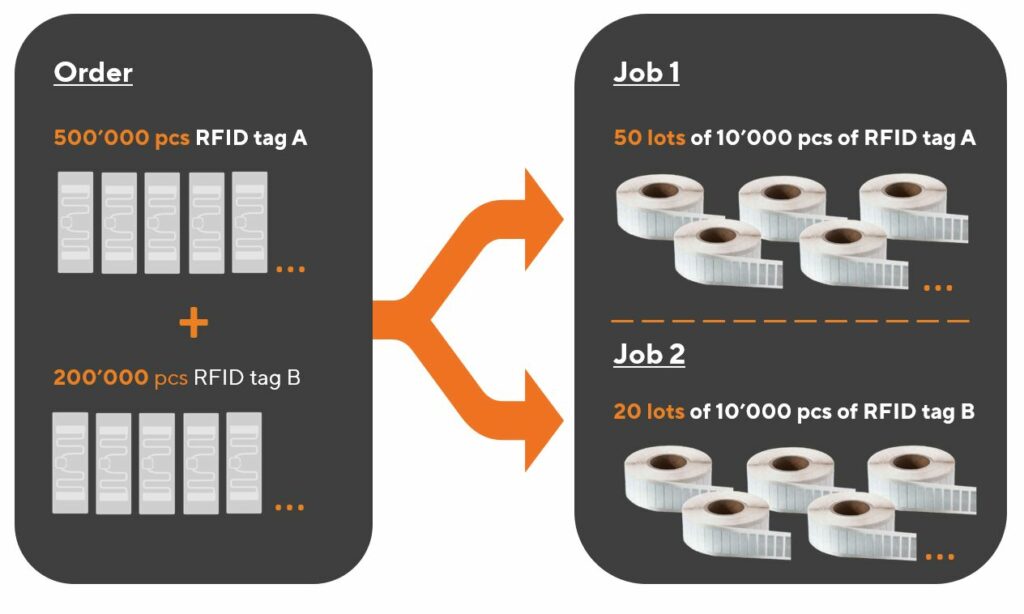
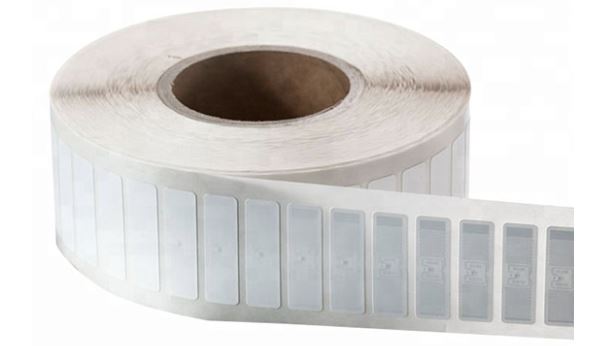
Lot management revolves around the concept of a known quantity of deliverables from a specific process step. In the realm of RFID label production, a lot typically corresponds to one roll of labels.
A closely related term is “job.” A job refers to an operation dedicated to producing a specific type of product for a customer or an internal order. Importantly, the process and output remain consistent throughout a job, which may encompass one or multiple lots.
The terminology is easiest to explain with some pictures.
Relation of a lot to an order from a customer, and a job in production.A lot is typically the same as a roll.
Before starting a job in the Tagsurance GUI, it is possible to define the lot. The lot definition includes details such as.
Are all tags counted, or just the good ones?
Is counting across lanes, or on a single lane?
Is the lot change marked with a cut mark?
What should the machine do when the lot is complete?
Lot management
In a typical production setup, where delivery and production are roll-based, lot management includes:
Producing rolls with the desired quantity of labels,
Understanding the quantity of tags within each roll, and
Generating and reporting relevant data for each lot (each roll)
Tagsurance 3 system role in lot management
Tagsurance 3 quality control system plays a pivotal role in the seamless lot management in RFID tag manufacturing. It employs a sophisticated approach to decide whether an individual tag should be counted in the production result set, leveraging comprehensive test data to ascertain the number of tags produced on each lane, differentiating between good and failed tags.
One of the distinctive features of the Tagsurance 3 quality control system is its granular understanding of the location of each tag on the production line. It precisely tracks the lane and the distance from a trigger sensor in millimeters, providing essential position information. This combination of counts and position data serves as the cornerstone for effective lot management.
Given that the Tagsurance 3 quality control system possesses a wealth of information, it becomes the logical and secure choice to entrust with lot management. An alternative approach could involve transmitting count and fail status information to other machine components, such as the machine PLC. However, this introduces unnecessary complexity and potential risks. In high-speed production lines, even a minimal delay in data transmission (from Tagsurance 3 to machine PLC) carries the risk of misaligning counts by a single tag.
The optimal and most efficient solution is allowing the Tagsurance 3 quality control system to take charge of lot management for the following reasons:
Precise Quantity Tracking:Tagsurance 3 is equipped to accurately determine the number of tags in a roll.
Comprehensive Reporting:Tagsurance 3 generates and reports relevant data for each lot, providing a comprehensive overview of passed or failed tags.
When the Tagsurance 3 system manages the production lot information, the risk of split-brain problems between different systems is eliminated. Additionally, Tagsurance 3 offers the flexibility to provide precisely timed signals before, on, or after lot completion, ensuring a smooth and synchronized production process. This level of integration not only enhances operational efficiency but also mitigates the potential risks associated with data transmission delays in a fast-paced manufacturing environment.
Cut mark
The cut mark serves as a practical tool in lot management, providing a visual demarcation between the end of one lot and the commencement of the next.
Cut marks indicated in Tagsurance 3.
Tagsurance 3 system seamlessly integrates with the manufacturing process, triggering the device responsible for creating cut marks. In many instances, the same device used for marking failed tags is employed for printing cut marks as well.
What does the machine need to handle?
While the Tagsurance 3 system handles various aspects of lot management, the tag manufacturing machine still plays a critical role, particularly in the precise execution of cutting tasks to create the desired rolls.
There are different ways to do this:
Automatic turret rewinders
Some machines incorporate automatic turret rewinders, presenting an efficient solution. In this setup, the production job operates continuously, and rolls are automatically cut to the correct size. This automation eliminates the need for manual roll changes by operators.
Cut mark and manual cutting
In certain scenarios, manual or semi-manual cutting methods prove to be a better alternative. Safety considerations often drive this choice, as automatic cutters need to be well-shielded for the safety ofrom human operators.
In a manual or semi-manual process, the machine halts when the liner reaches the cut position, such as at a splicing table. The operator then manually cuts the liner before seamlessly continuing the process with a new output roll.
This video shows an example of a Turret Rewinder by GM where, at the end of a lot, the machine first slows down and stops, and then an operator cuts the web and finally restarts the machine.
Selecting the appropriate cutting method depends on factors such as safety requirements and the layout of the roll handling area. Whether through automated turret rewinders or manual cutting processes, the tag manufacturing machine’s role in achieving precision and efficiency ensures the delivery of high-quality RFID tags.
Must-have machine features for seamless integration
One indispensable feature that facilitates the seamless integration of lot management with automated testing solutions is a digital IO (Input/Output) input, acting as a control mechanism for the manufacturing machine.
Stop signal input
For efficient lot management, there is a need for precise and controlled stopping mechanisms. Particularly in high-speed machines, abruptly halting operations may compromise accuracy, leading to challenges such as incorrect cutting positions on automatic turret rewinders or misalignment at the splicing table. The inclusion of a digital IO input allows for a controlled cessation of the machine, ensuring accuracy and reliability in the manufacturing process.
Slow down signal input
In practical terms, high-speed machines benefit from a gradual slowing down process before coming to a complete stop. This gradual deceleration is vital for intricate operations, such as ensuring precise cutting positions or accurate alignment at various stages of production. The machine’s ability to receive a digital IO input for initiating the slowdown process enhances the overall control and precision of the manufacturing workflow.
The machine slows down before stopping.
Serial port interface alternative for stop and slow down signals
While digital IO inputs serve as the standard for most machines, it’s worth noting exceptions, such as the utilization of a serial port interface in certain models like the Muhlbauer DDA machines. However, in general, the industry standard leans towards the effectiveness of digital IO inputs for optimal control and coordination between lot management and quality control systems.
Nice-to-have machine features for improved efficiency
Two features that significantly contribute to this efficiency are Cut Mark Capability and Operator Signal Integration.
Cut mark capability
Having a discernible cut mark on labels proves invaluable for human operators, especially when machine stopping accuracy is not within a few millimeters. This visual indicator aids operators in clearly identifying which labels belong to the previous lot and which are part of the next one. Even with automatic turret rewinders, the presence of a cut mark provides operators with peace of mind regarding the correctness of quantities.
The Tagsurance 3 system excels in this aspect, precisely triggering the cut mark at the right position. This feature not only enhances accuracy but also empowers operators with a clear demarcation between lots, ensuring seamless continuity in the production process.
Operator signal
Efficient lot management extends beyond just machine capabilities; it involves effective communication with operators. Even in the case of automatic turret rewinders or manual cutting scenarios, alerting operators when a lot is nearing completion proves invaluable. This proactive approach allows operators to prepare for tasks such as cutting the liner and changing the roll promptly, minimizing machine downtime.
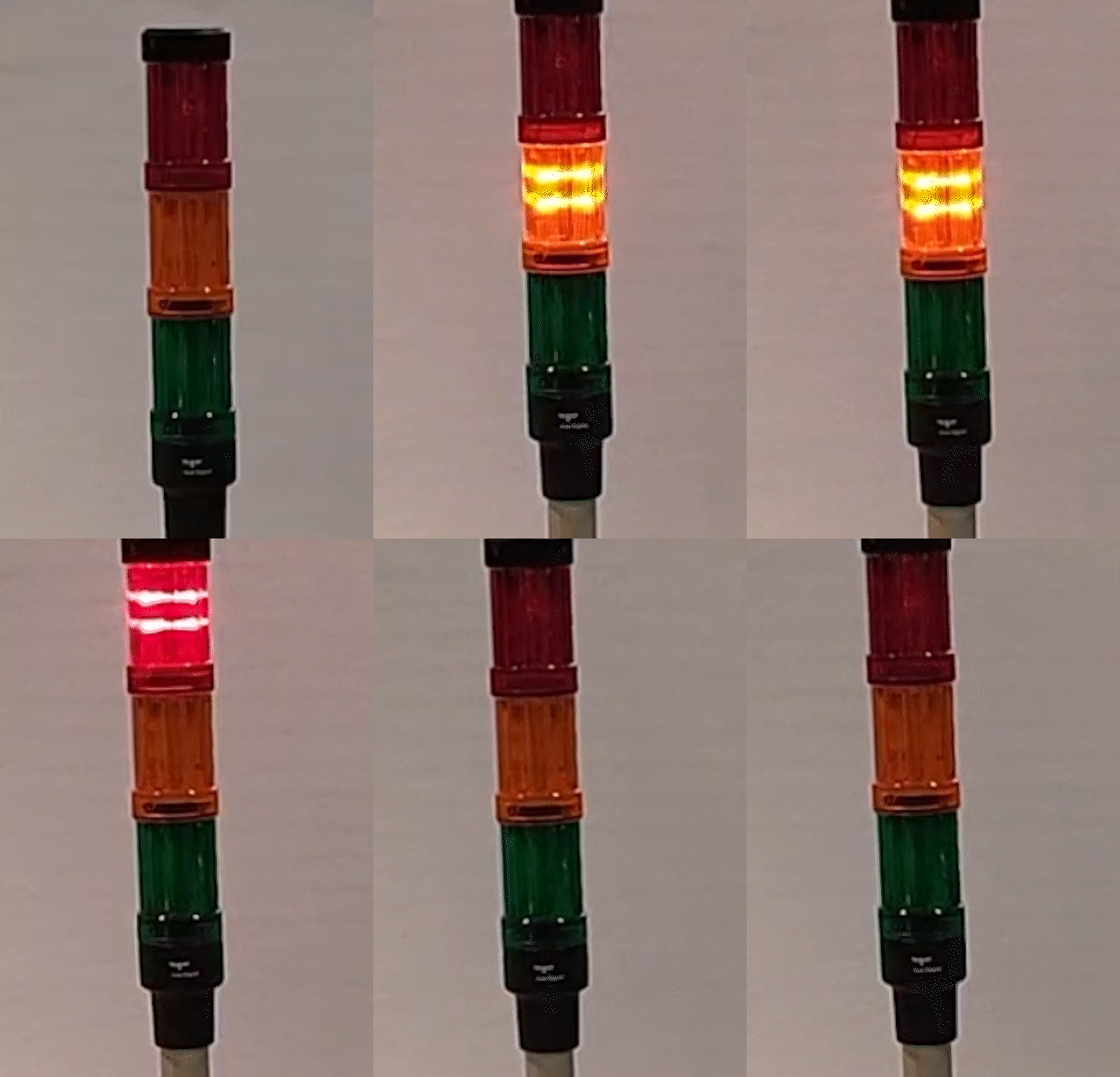
The Tagsurance 3 system takes the lead by providing timely signals, either on lot completion or even a predetermined quantity before completion (e.g., 500 labels before the lot concludes). These signals can be utilized by the machine to trigger visual alerts, such as signal lights, or audible notifications through loudspeakers. This integrated communication ensures that operators are well-informed and can take prompt action, contributing to a more streamlined and efficient RFID tag manufacturing process.
Signal lights alert the machine operator.
Strategic considerations for a label manufacturer to optimize lot management
The seemingly minor features within the production machinery play a pivotal role in the seamless execution of lot management. Features such as
slow down signal input,
stop signal input,
serial port interface on some Muhlbauer DDA machines,
ability to print cut marks and,
ability to signal the operator
might appear subtle, but their absence can pose challenges in implementing effective lot management.
When investing in a new label manufacturing machine, ensure that lot management-related details are explicitly specified. The absence of connectors and signaling means can prevent lot management from working optimally. As RFID technology evolves, these features become indispensable for RFID production and quality managers seeking to elevate standards and achieve greater efficiency in the tag manufacturing process.
Connect with us to learn more about Tagsurance 3 lot management features and integration into production machines.
Voyantic Tagsurance® 3 is the new generation production testing system that replaces Voyantic Tagsurance 1 and 2 systems.
Today Voyantic announces the end-of-life schedule for legacy Voyantic Tagsurance and Reelsurance products as follows:
The last order date for the following listed products will be June 28th, 2024
Tagsurance UHF 1.0 hardware
Tagsurance 1.x software
Tagsurance 2.x software
IO controller with 6-channel multiplexer hardware
The last order date for the following listed products will be November 24th, 2023
Reelsurance lite
Reelsurance Pro
There are no planned software updates for Tagsurance 1.x or Tagsurance 2.x software or any other software, firmware or hardware related to the above-listed products or product components. The last versions of the software are listed below. There will only be critical patches made if necessary.
Tagsurance 1.10.2
Tagsurance 2.6.4
Technical Support Continues
Updated March 5, 2026: Technical support, calibration service, and spare part availability for Tagsurance UHF 1.0 hardware, Tagsurance 1.x software, Tagsurance 2.x software, and IO controller with 6-channel multiplexer hardware will continue for 7 years from the announcement (until 28th June 2030).
Technical Support Continues with limitations for Reelsurance lite and Reelsurance Pro until 28th June 2030.
User support, advising on the machine use, continues until 28th June 2030.
Spare parts are no longer available
Failure diagnostics is no longer available
Repair service is no longer available
The reason for limiting the support is that manufacturing partner Reconcile Engineering ended its operations and machine-related expert support.
Tagsurance 3 replaces all the core functionalities of the announced end-of-life products
Compared to Tagsurance 1 and 2 UHF and HF quality testing on production lines and machines, the Tagsurance 3 System offers:
All the functionalities included in the legacy systems plus many improved functionalities
2-3 times faster operation for UHF testing
Much easier integration to almost any production line or machine
Complete REST API (+streaming) for data integrations
Machine IO for digital IO integrations with production line or machine PLC (e.g. stop at splicing table at lot end, stop/signal at low yield, etc.)
Reel-to-reel / offline testing (Reelsurance)
Various machine vendors offer similar reel-to-reel machines where Tagsurance 3 can be integrated. Contact our sales team for assistance.
What about the “manual test station” and Bendurance?
Do you need help with figuring out the changes needed in your machine or other integration?
The Voyantic technical sales team is more than happy to help you get your journey started for upgrading to Tagsurance 3. Please contact sales@voyantic.com.